Home | Contact | Sitemap | 中文 | CAS
Search: 
About Us Research People Cooperation News Education & Training Join Us Societies & Publications Newsletter Resources Links
 
inlcude
About Us
People
Newsroom
Resources
International
Join Us
Video
Quick Access
LINKS
轮播新闻
Search
内页banner
--以上为2022改版网站--
old
About Us
Research
People
International Cooperation
News
Education & Training
Join Us
Societies & Publications
Papers
Resources
Links
资源库
Sitemap
搜索头尾
首页图片
  Location:Home > 首页图片
首页图片
 
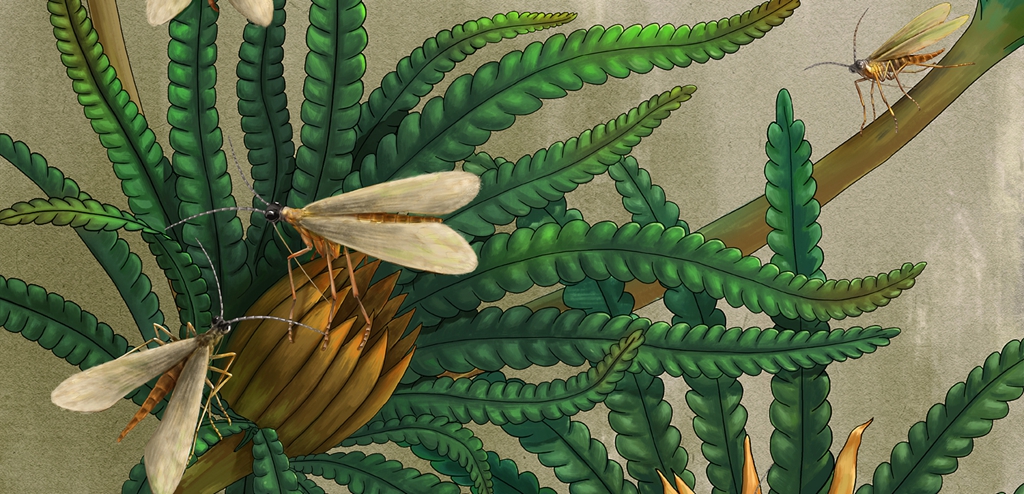
Amber Specimens Reveal Origin of Long Mouthpart of Scorpionflies
Mesopsychoid scorpionflies are peculiar Mesozoic insects with a distinctly elongate mouthpart and are considered to be a critical group of pollinators prior to the rise of angiosperms.
  A new genus found from 99-million-year-old Burmese amber reveals the origin of scorpionflies’ long mouthpar...
 
Researchers Say Animal-like Embryos Preceded Animal Appearance
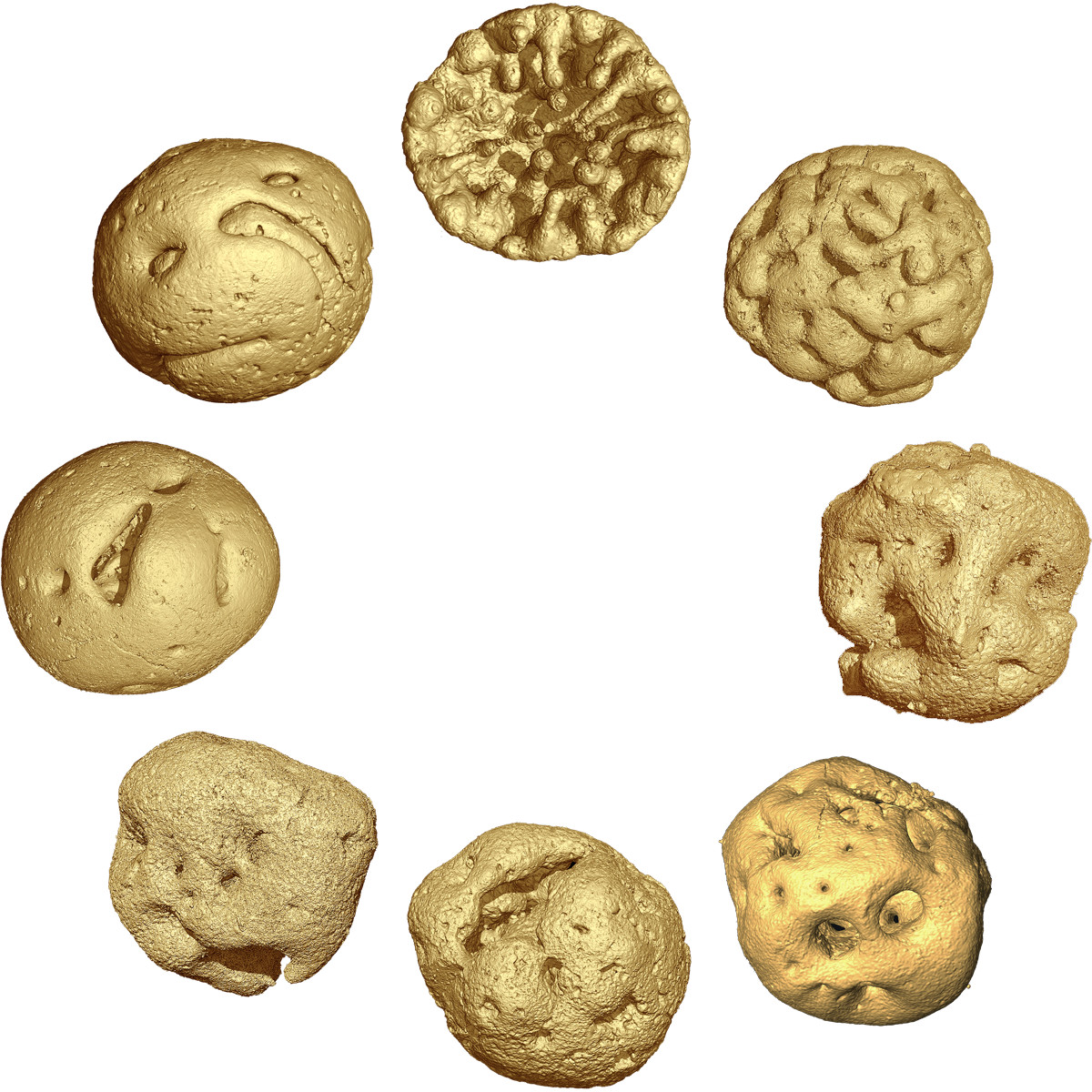
Proposed life cycle of Caveasphaera (Image by NIGPAS)
  Animals evolved from single-celled ancestors before diversifying into 30-40 distinct anatomical designs. When and how animal ancestors made the transition from single-celled microbes to complex multicellular organisms is unclear. But a new...
 
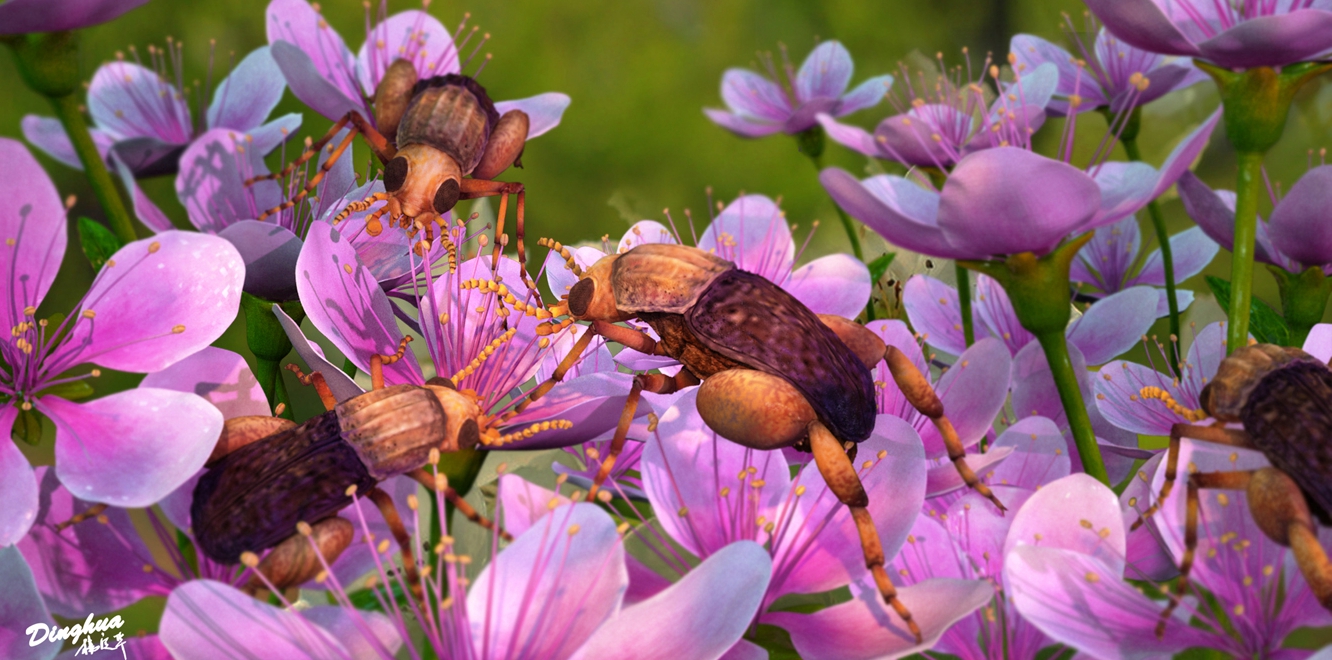
Earliest Evidence of Insect-angiosperm Pollination Found in Cretaceous Burmese Amber
Most of our food is from angiosperms, while more than 90% of angiosperms require insect pollination – making this pollination method hugely important. Nevertheless, scientists have long been unclear as to when insect pollination first appeared.
  Now, however, an international research group f...
 
Death March of Segmented Animal Unravels Critical Evolutionary Puzzle
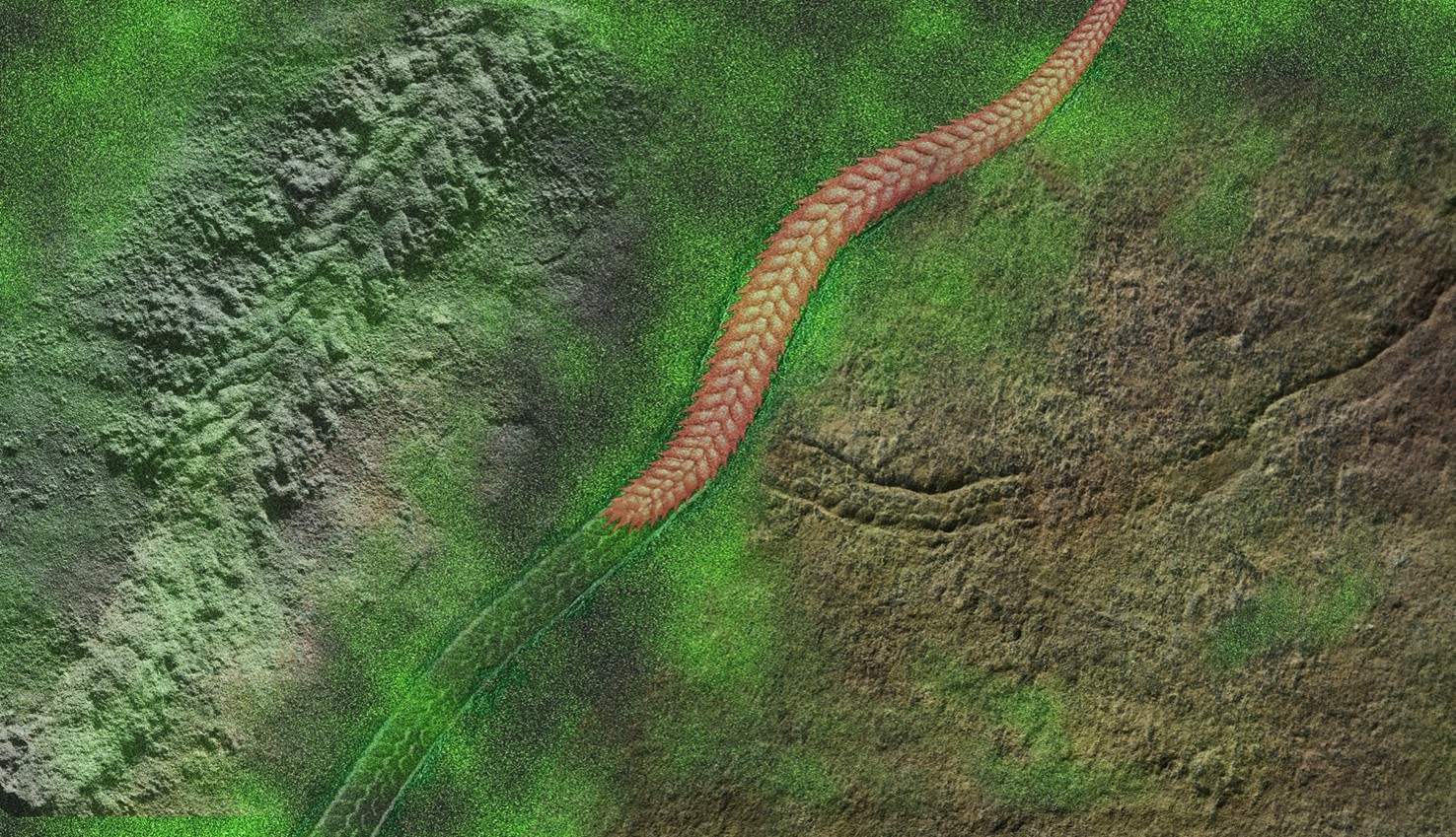
Yilingia spiciformis body fossil (left), trace (right), and artist’s reconstruction (middle). (Image by NIGPAS)
  The death march of a segmented bilaterian animal unearthed from ~550-million-year-old rocks in China shows that the oldest mobile and segmented animals evolved by the Ediacaran Per...
 
Coastal Organisms Trapped in 99-Million-Year-Old Amber
 
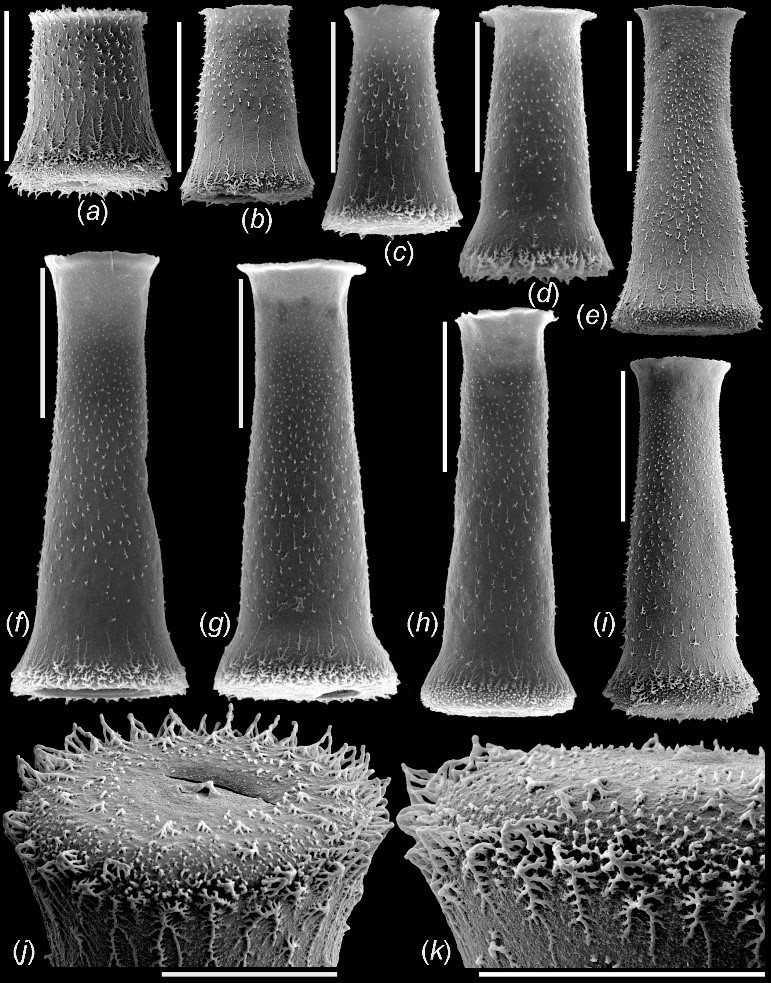
Chitinozoans May Be Fossils of Individual Microorganisms Rather than Metazoan Eggs: Study
Chitinozoans are organic-walled microfossils widely recorded in Ordovician to Devonian (about 400 million years ago) marine sediments and usually shaped like "bottles". Their biological affinity remains unknown, but most commonly, they are interpreted as eggs of marine metazoans.
  Recently, re...
Nanjing Institute of Geology and Palaeontology Chinese Academy of Sciences
No.39 East Beijing Road ,Nanjing 210008, CHINA Phone: 0086-25-83282105 Fax: 0086-25-83357026 Email: ngb@nigpas.ac.cn