|
|
| |
|
New Cretaceous Fossils Shed Light on the Early Evolution of Ants
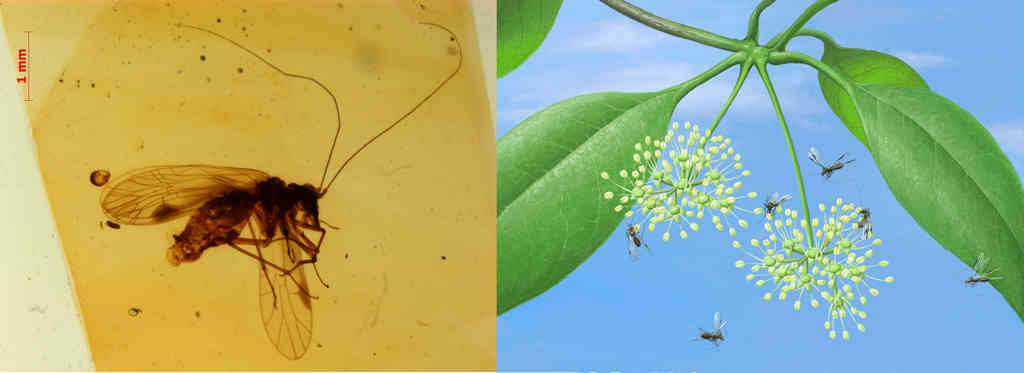
General dorsal view of holotype of new late Cretaceous worker ants Ceratomyrmex ellenbergeri (Image by WANG bo)
Ants comprise one lineage of the triumvirate of eusocial insects and experienced their early diversification within the Cretaceous. The success of ants is generally attributed ... |
| |
|
1.56-billion-year-old Complex Life Discovered in North China
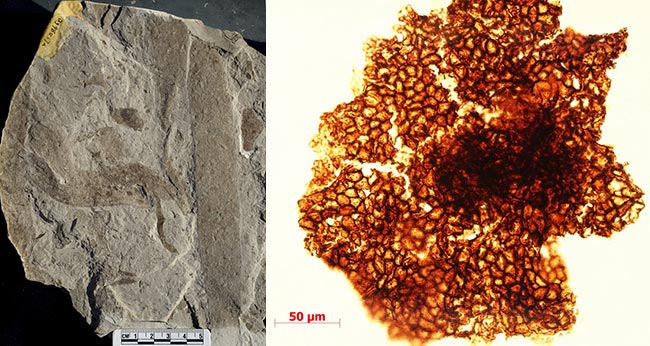
Decimetre-scale multicellular fossils from the 1.56-billion-year-old rocks of North China (Picture by ZHU Maoyan)
New fossils discovered in Northern China suggest that life "went large" on Earth more than 1.5 billion years ago, or nearly one billion years earlier than previously thought.... |
| |
|
A Unique Angiosperm from the Middle Jurassic of Inner Mongolia, China
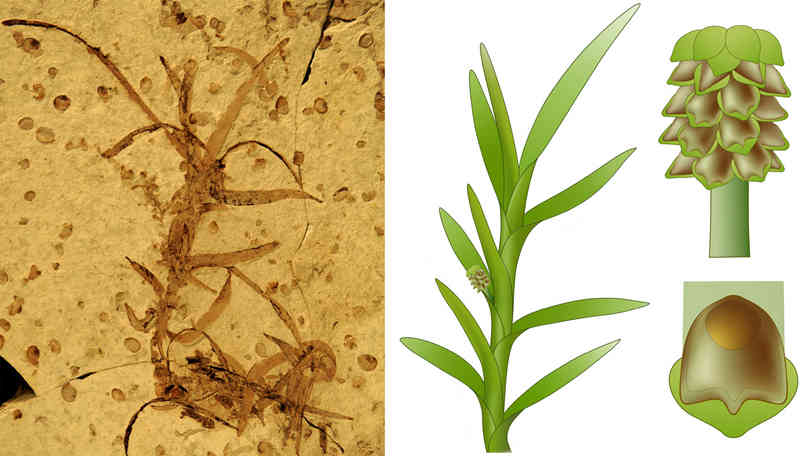
Left: Type specimen of Yuhania daohugouensis. Right: Reconstructions of partial plant, aggregate fruit, and fruit/carpel of Yuhania daohugouensis.
Despite increasing claims of pre-Cretaceous angiosperms, whether there really are angiosperms in the Jurassic is apparently still an open question... |
| |
|
Middle Visean (Late Devonian) coral biostrome found from South China
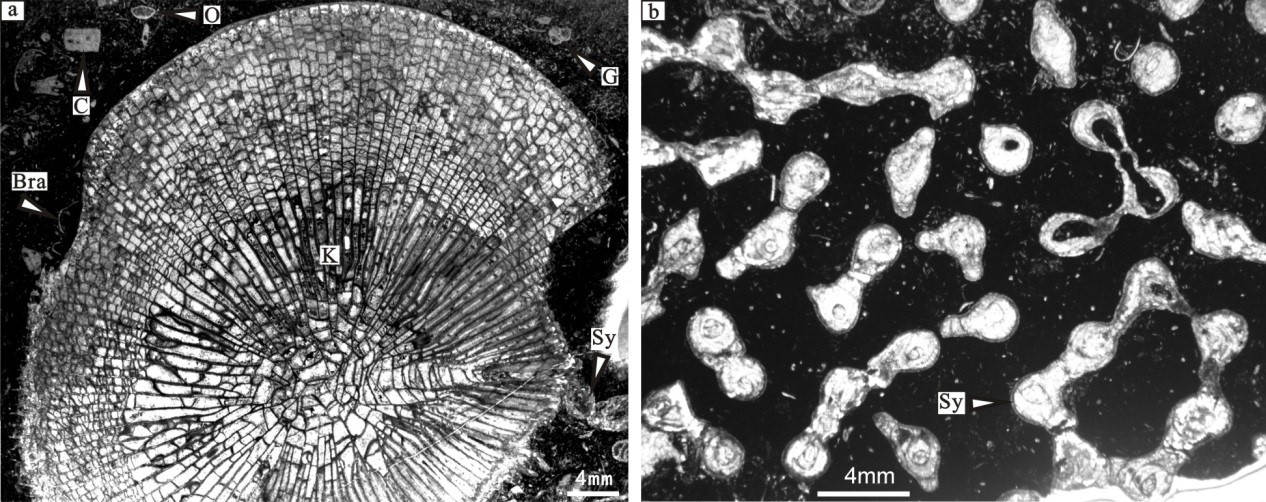
Microfacies types of the coral biostrome. (a) Kueichouphyllum bafflestone. (b-d) Syringopora, Siphonodendron and Kueichouphyllum-Syringopora bafflestone and framestone. (e-h) Coral, bryozoan, calcareous algae and microbial floatstone.
The Mississippian was an important interval for reef evolu... |
| |
|
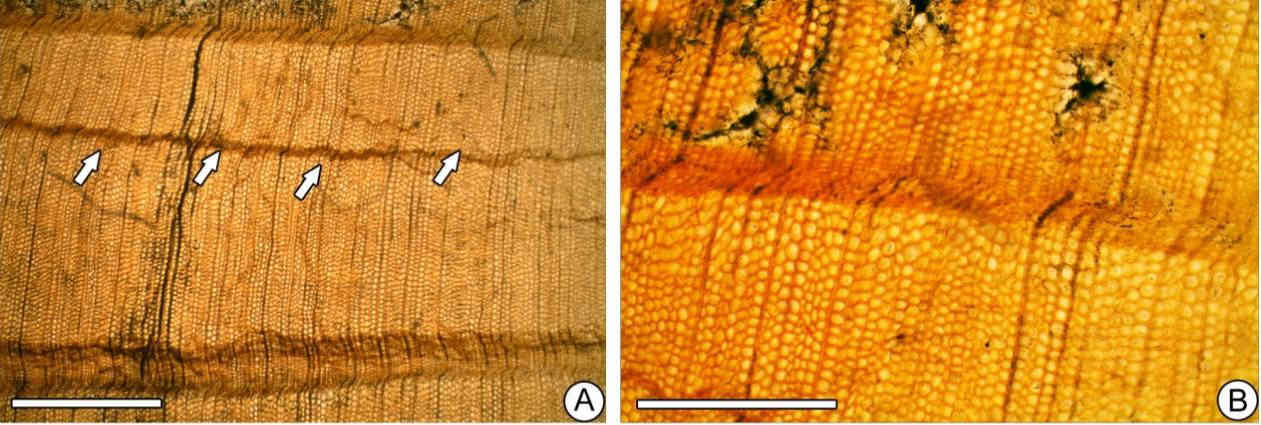
New findings of fossil wood from the Early Cretaceous Jehol Biota
The Early Cretaceous Jehol Biota, one of the most important Mesozoic lagerstätten in East Asia, is especially well-known for occurrences of fossil feathered dinosaurs and early angiosperms. However, the terrestrial biodiversity, especially the fossil wood record, is poorly known.
In recent y... |
|
|
|


 inlcude