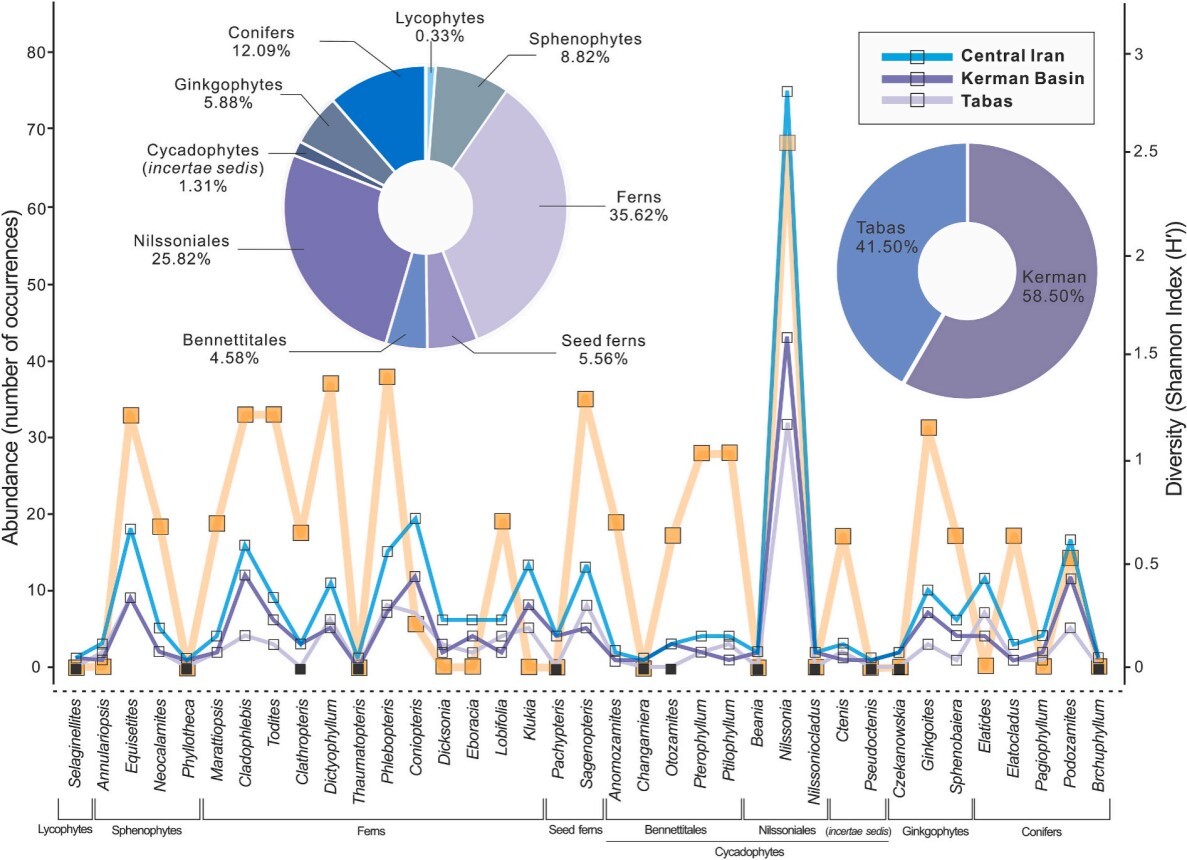
Recently, an international research team led by Professor WANG Yongdong from the Nanjing Institute of Geology and Palaeontology, Chinese Academy of Sciences (NIGPAS) conducted a multidisciplinary integrated study on the Middle Jurassic floras of Central Iran. The research clarified the floral composition, palaeoecological and palaeoenvironmental conditions, and Eurasian palaeobiogeographic affinities of the region, challenging the long-standing classical hypothesis of widespread homogeneous Middle Jurassic vegetation across Eurasia by Vakhrameev. The findings have been published in the international geoscience journal Palaeogeography, Palaeoclimatology, Palaeoecology.The Middle Jurassic represents a critical greenhouse climate epoch in Earth's evolutionary history. During this period, the Pangea supercontinent underwent extensive breakup, and terrestrial plants experienced significant radiation and diversification, fundamentally shaping the landscape of Mesozoic terrestrial ecosystems. Located on the southern margin of Eurasia, the Iranian Plateau is a key component of the Cimmerian microcontinent and serves as a vital biogeographic hub linking European and Central Asian floras, making it an ideal region for comparative research on Eurasian palaeophytogeography.Although previous studies have documented fossil plants from Iran, systematic and comprehensive investigations of Middle Jurassic floras from the Tabas and Kerman basins in central Iran remain lacking. The biodiversity, palaeoecology, and systematic relationships of these floras with coeval Eurasian assemblages are poorly understood, hindering a holistic understanding of vegetation evolution on the southern Eurasian margin during the Middle Jurassic.Recently, an international research team led by Professor WANG Yongdong from the Nanjing Institute of Geology and Palaeontology, Chinese Academy of Sciences (NIGPAS) conducted a multidisciplinary integrated study on the Middle Jurassic floras of Central Iran. The research clarified the floral composition, palaeoecological and palaeoenvironmental conditions, and Eurasian palaeobiogeographic affinities of the region, challenging the long-standing classical hypothesis of widespread homogeneous Middle Jurassic vegetation across Eurasia by Vakhrameev. The findings have been published in the international geoscience journal Palaeogeography, Palaeoclimatology, Palaeoecology.The study was first-authored by Dr. Mohammad Taghi Badihagh, a special research assistant at NIGPAS, and corresponded by Professor WANG Yongdong. It was jointly completed by palaeobotanists from Poland, Germany, Romania and Italy. The team integrated newly obtained fossil materials from Exploration Well 233 in the South Kochak-Ali area of Iran and compiled published palaeobotanical data from 21 fossil localities in the region, establishing a comprehensive palaeoflora dataset for the Middle Jurassic (early Bajocian) Hojedk Formation in Central Iran consists of Kerman and Tabas basins.A total of 93 macrofossil taxa belonging to 37 plant genera were identified. The flora is dominated by ferns (35.62%), nilssonialeans (25.82%), and conifers (12.09%), while sphenopsids, seed ferns (pteridosperms), ginkgophytes, and bennettitaleans constitute subordinate components. Lycopsid fossils are extremely rare and only found in a few localities, indicating their marginal ecological role in the contemporary vegetation.Multi-proxy evidence from sedimentology, palaeobotany and palynology indicates that central Iran was dominated by a warm temperate to subtropical humid climate during the Middle Jurassic. The palaeoenvironment consisted of a complex landscape of fluvial, deltaic, swamp and tide-influenced coastal settings. Frequent sea-level fluctuations drove alternating marine and terrestrial sedimentation, forming a stratigraphic sequence of interbedded coal seams and terrigenous clastic rocks.Using quantitative methods including the Sørensen-Dice similarity index and network analysis, the team systematically compared the floral assemblages of Central Iran with coeval floras from the Alborz Mountain, Afghan Block, Europe, and Central Asia. The results of statistical analyses reveal a close floral affinity between the Tabas and Kerman basins as an integral unit with an strong biogeographic links with Alborz Mountain and Afghan Block, confirming that these terranes all belong to the Cimmerian microcontinent during the Middle Jurassic.In contrast, significant floral differences exist between Central Iran and most coeval regions in Europe and Central Asia. This indicates that regional environmental heterogeneity and basin sedimentary evolution, rather than palaeolatitudinal gradients, served as the primary controlling factors of regional vegetation composition. The study does not support the widely accepted model of uniform Eurasian Middle Jurassic vegetation proposed by Vakhrameev, and reveals the complex evolutionary characteristics of terrestrial vegetation on the southern Eurasian margin during the Middle Jurassic.This study provides fundamental data for reconstructing the palaeovegetation and palaeoenvironmental evolution of the Cimmerian microcontinent and partitioning Middle Jurassic palaeophytogeographic regions of Eurasia. It also offers new empirical evidence for understanding the responses of terrestrial ecosystems to tectonic and climatic evolution during the breakup of Pangea.The research was jointly supported by the Key Program of the National Natural Science Foundation of China, the National Major Science and Technology Project for Deep Earth Exploration, the ANSO Talent Scholarship of the Chinese Academy of Sciences, and the Open Project of the State Key Laboratory of Palaeobiology and Stratigraphy.Reference: Mohammad Taghi Badihagh, Maria Barbacka, Dieter Uhl, Mihai Emilian Popa, Giovanni Giuseppe Scanu, Yongdong Wang*. A comprehensive synthesis of the Middle Jurassic flora of Central Iran: Integrating new data and approaches for unravelling the Eurasian palaeobiogeography. Palaeogeography, Palaeoclimatology, Palaeoecology, 2026, 701:114112. https://doi.org/10.1016/j.palaeo.2026.114112Fig.1 Showing the position of Iran in relation to the Northern Hemisphere and a detail showing Jurassic outcrops in the Tabas Block and the location of well No. 233.Fig.2 Represented Middle Jurassic floral composition in Central Iran, Tabas Basin. Specimens come from well No. 233 from the South Kochak–Ali area.Fig.3 Diversity and abundance of the Middle Jurassic palaeovegetation elements of Central Iran (Tabas and Kerman basins. The filled black boxes indicate the absence of taxa. Ferns represent the most diverse component of the flora at the species level, whereas among gymnosperms, Nilssoniales exhibits the highest species diversity.Fig.4 Palaeogeographic position of the Middle Jurassic flora of Central Iran and coeval floras from Europe and Mid–Asian (modified from Thierry, 2000). The numbers roughly indicate the European and Mid–Asian floras.Fig.5 Network analysis illustrating taxonomic connectivity among Middle Jurassic floristic assemblages across Europe and Mid–Asia. Node size (circles) represents individual sites and reflects taxonomic richness. Numbers inside the nodes represent the number of shared and common taxa between localities. Edge thickness corresponds to the strength of connectivity, with thicker lines indicating a higher number of shared taxa between localities. Nodes and edges are colour–coded by geographic region
A new study combining genomic analyses and fossil evidence sheds light on the century-old “Palaeoptera Problem,” a longstanding debate over the evolutionary relationships among major groups of winged insects.
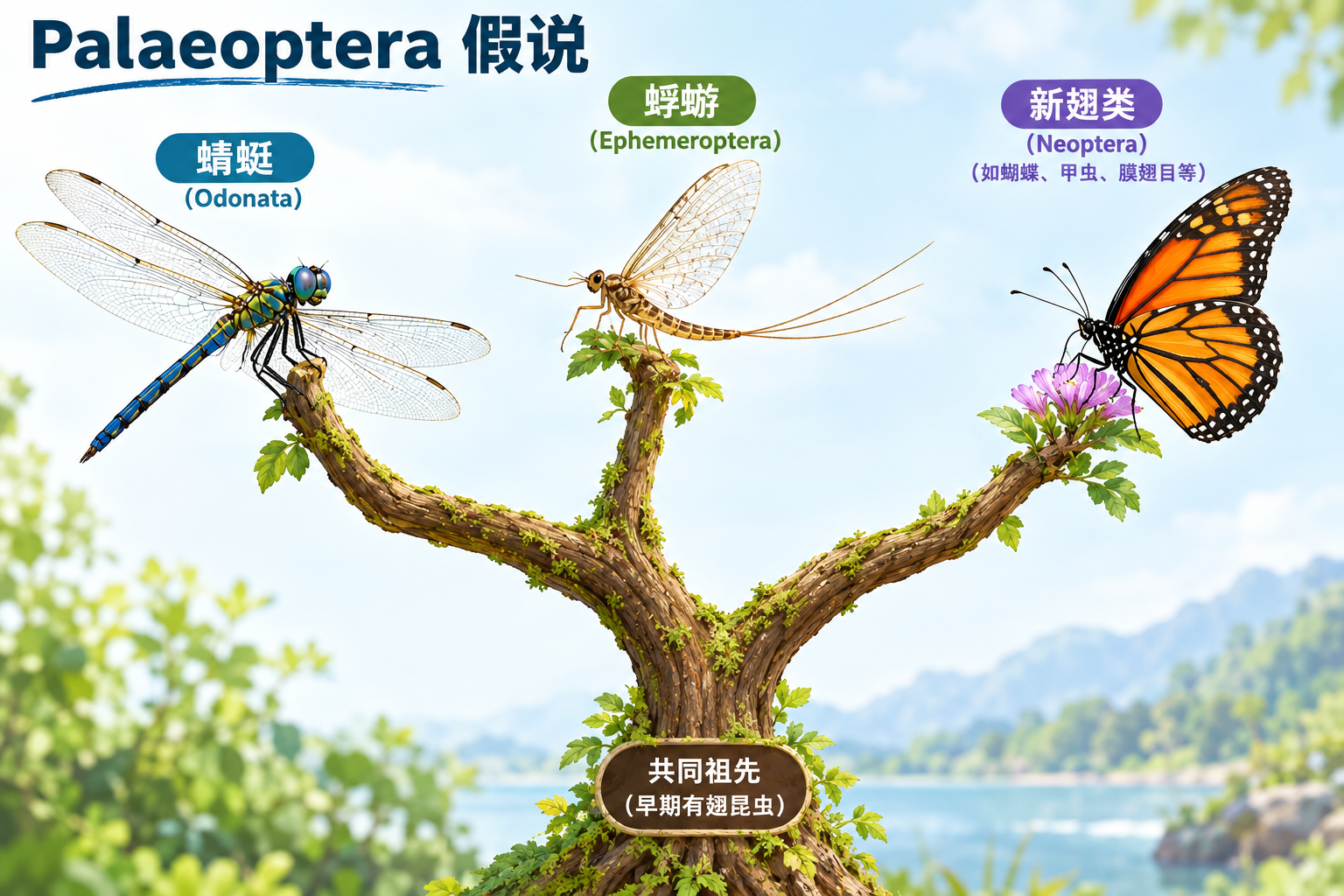
The findings, published in PNAS on October 13, support the hypothesis that mayflies (Ephemeroptera) and dragonflies and damselflies (Odonata) form a single evolutionary group, Palaeoptera, which is the sister group of Neoptera, the lineage comprising insects capable of folding their wings over their bodies.A new study combining genomic analyses and fossil evidence sheds light on the century-old “Palaeoptera Problem,” a longstanding debate over the evolutionary relationships among major groups of winged insects.The findings, published in PNAS on October 13, support the hypothesis that mayflies (Ephemeroptera) and dragonflies and damselflies (Odonata) form a single evolutionary group, Palaeoptera, which is the sister group of Neoptera, the lineage comprising insects capable of folding their wings over their bodies.The study, conducted by Professor CAI Chenyang’s team from the Nanjing Institute of Geology and Palaeontology of the Chinese Academy of Sciences (NIGPAS) and Professor ZHOU Changfa’s team from Nanjing Normal University, reconstructs the early evolutionary history of winged insects and provides new estimates for when their major lineages emerged.[Note: “led” implies that other people besides these teams participated in the research. If the research was solely accomplished by these teams, use the term “conducted” instead of “led.”]Insects are the most species-rich group of animals on Earth, with more than one million formally described living species. The evolution of winged insects (Pterygota) stands among the most transformative events in terrestrial evolution. However, the timing of the origin of winged insects and the phylogenetic relationships among the three major pterygote lineages, Ephemeroptera (mayflies), Odonata (dragonflies and damselflies), and Neoptera (insects with foldable wings), have remained unresolved for over a century, making the Palaeoptera Problem a longstanding challenge in reconstructing the insect tree of life.To address the problem, the researchers sequenced 16 new genomes from Chinese mayflies and integrated genomic and transcriptomic data from more than 100 insect species, achieving unprecedented coverage of this historically undersampled key lineage and substantially addressing gaps in taxon and gene sampling from previous studies.The researchers first constructed two large amino-acid supermatrices using universal single-copy orthologous nuclear genes. They then systematically examined phylogenetic signals using concatenation and multispecies coalescent methods, multiple evolutionary models, topological tests, site-level signal dissection, and simulation analyses.The results from these diverse phylogenomic approaches consistently support the monophyly of Palaeoptera. The genomic data also strongly indicate that Ephemeroptera and Odonata are sister groups—together forming Palaeoptera, the sister clade of Neoptera. These findings suggest that the non-foldable wings of Palaeoptera and the foldable wings of Neoptera are both novel traits independently acquired from ancestral winged insects, thereby largely resolving the long-standing Palaeoptera Problem.The researchers found that during the rapid early radiation of winged insects, a combination of incomplete lineage sorting (ILS) and gene tree estimation error (GTEE) affected approximately 40% of gene trees, creating topological discordance between gene trees and the species tree. This phenomenon caused competing conclusions across different analytical frameworks and explains why earlier phylogenomic studies failed to fully resolve the phylogenetic relationships of basal winged insects. It also highlights the systematic rigor of the present study’s analytical approach.The researchers also used molecular-clock analyses calibrated with 13 carefully selected fossil reference points to estimate the timing of early winged-insect evolution. Their results indicate that crown-group Pterygota originated in the Early Devonian, while crown-group Palaeoptera arose in the Late Devonian. Insect wings evolved only once. The neopteran wing-folding mechanism, enabled by rotation of the independent third axillary sclerite to tuck hindwings over the abdomen, provided morphological and ecological foundations for the explosive radiation of Neoptera after the Carboniferous. In contrast, both mayflies and dragonflies evolved highly specialized rigid wing-base complexes adapted for gliding or high-speed predatory flight. The reconstructed evolutionary scenario shows that after the initial divergence of winged insects, Palaeoptera and Neoptera rapidly diverged and evolved distinct wing structures, with Neoptera evolving its unique wing-folding apparatus and Palaeoptera developing rigid wing bases for high-performance direct flight.Together, these innovations shaped the flight biomechanics and species diversity of winged insects observed in nature today.This study was funded by the National Key R&D Program of China, the National Natural Science Foundation of China, and the China Postdoctoral Science Foundation.Reference: Du, S., Wang, Y., Zhang, F., Engel, M. S., Zheng, X., Gong, D., Zhou, C., Cai, C. (2026). Phylogenomics confirms Palaeoptera monophyly and illuminates the origin of winged insects. Proceedings of the National Academy of Sciences, https://doi.org/10.1073/pnas.2614706123.Fig.1 Three hypotheses for the early branching events within pterygote evolution. (A) Palaeoptera hypothesis (H1): [[Ephemeroptera + Odonata] + Neoptera]. (B) Chiastomyaria hypothesis (H2): [Odonata + [Ephemeroptera + Neoptera]]. (C) Metapterygota hypothesis (H3): [Ephemeroptera + [Odonata + Neoptera]].Fig.2 Phylogeny of Pterygota. Main topology inferred from Matrix1 using the CAT-PMSF molecular evolutionary model.Fig.3 Analysis of incomplete lineage sorting and gene tree estimation error.Fig.4 Divergence time estimation of winged insects.
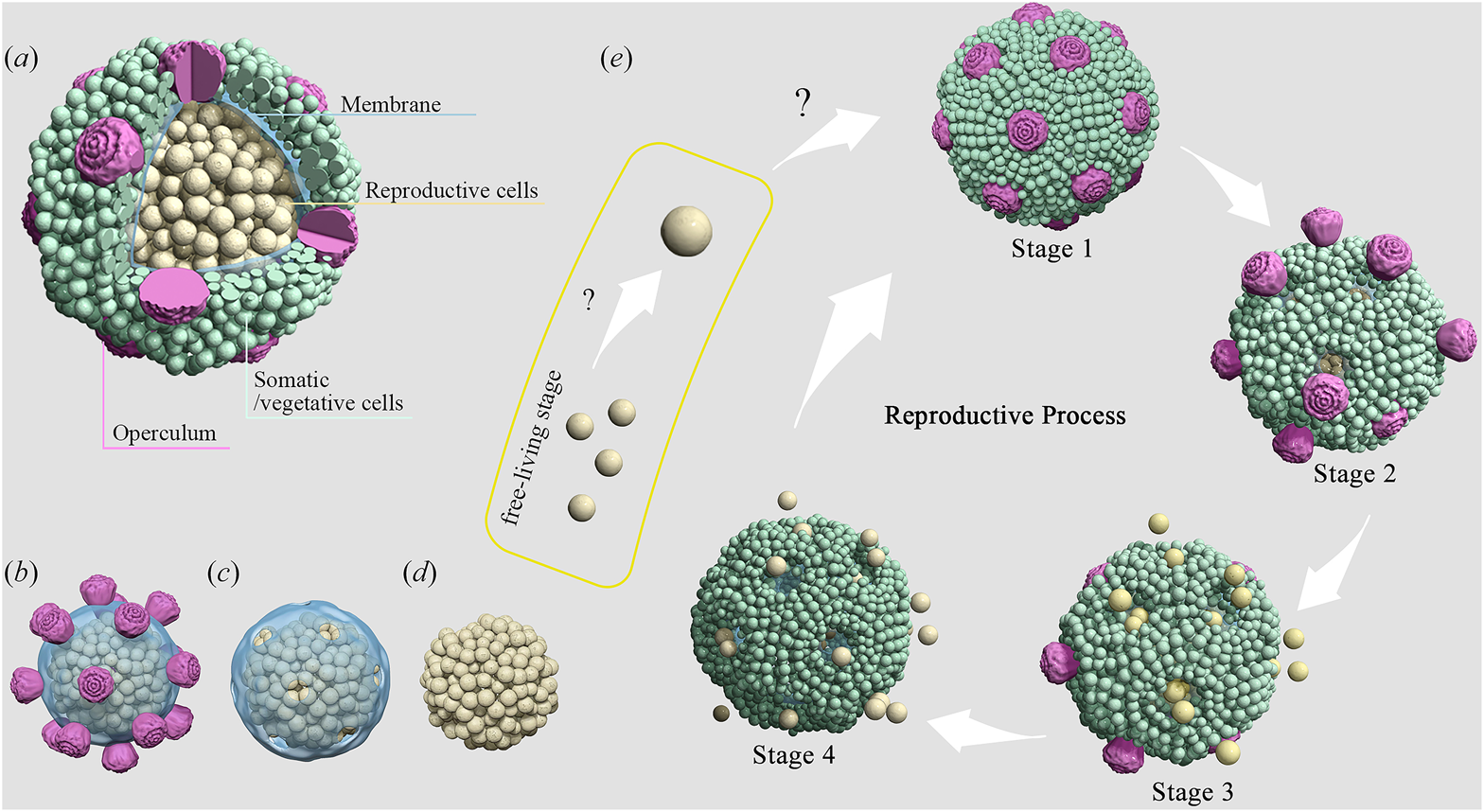
A new discovery from the early Cambrian Kuanchuanpu Biota in Shaanxi, South China, offers a surprising answer. A team led by Prof. Zongjun Yin at the Nanjing Institute of Geology and Palaeontology, Chinese Academy of Sciences, has described a new multicellular alga, Polyostiosphaera operculata gen. et sp. nov. The study is published as the cover article in Proceedings of the Royal Society B.The Cambrian explosion is often told as an animal story: predators, filter feeders and a rapidly expanding food web. But what about the planktonic algae at the base of the food chain? Did they simply wait to be eaten?A new discovery from the early Cambrian Kuanchuanpu Biota in Shaanxi, South China, offers a surprising answer. A team led by Prof. Zongjun Yin at the Nanjing Institute of Geology and Palaeontology, Chinese Academy of Sciences, has described a new multicellular alga, Polyostiosphaera operculata gen. et sp. nov. The study is published as the cover article in Proceedings of the Royal Society B.The fossils are tiny spheres, only 0.53—0.85 mm across. High-resolution X-ray microtomography reveals a three-part anatomy: an outer envelope of many small cells; an inner cluster of about 200—500 larger cells; and, in the best-preserved specimens, a non-cellular membrane between them. The envelope surface bears regular circular apertures. Some are sealed by plug-like opercula with concentric rings—like tiny hatches on a capsule.Cell measurements show a clear bimodal size distribution, suggesting spatial and functional differentiation. The researchers interpret the small outer cells as somatic or vegetative cells, and the larger internal cells as reproductive cells or propagules. When propagules mature, the plugs may detach, allowing them to exit through pre-formed channels without catastrophic rupture of the parent. This makes staged or repeated release anatomically plausible, although the fossils do not directly prove multiple reproductive events, and the fate of released propagules remains unknown.Using 27 phenotypic traits, the team compared Polyostiosphaera with Cambrian multicellular algae and modern Volvocaceae. It ranks among the most complex Cambrian algae examined and falls within the range of highly organized volvocine algae in preserved cell differentiation and reproductive architecture. It is not a direct ancestor of Volvox, but a useful functional benchmark.Why evolve such an elaborate system? The study proposes a life-history trade-off. During the Cambrian radiation, animal consumers increased mortality risks, while environmental conditions fluctuated. Investment in a protective envelope and controlled release could protect fragile propagules and spread reproduction over time. Polyostiosphaera thus shows that early Cambrian primary producers were active participants in ecological change. Consumer–producer interactions may have shaped not only who ate whom, but also when and how producers reproduced.This research was supported by the National Key Research and Development Program, the National Natural Science Foundation of China, and the Guizhou Provincial Science and Technology Fund.Reference: Chen L, Yin Z, Liu W, Xiang K, Qin S, Yang X, Li G, Zhu M. 2026 Complex reproduction reflects life-history trade-offs in early Cambrian multicellular algae. Proc. R. Soc. B 293: 20261709. https://doi.org/10.1098/rspb.2026.1709.The holotype of Polyostiosphaera operculata gen. et sp. nov. from the early Cambrian Kuanchuanpu BiotaThe paratype of Polyostiosphaera operculata gen. et sp. nov. from the early Cambrian Kuanchuanpu BiotaArtistic reconstruction and hypothesized propagule-release process of Polyostiosphaera operculata gen. et sp. NovComparison of complexity and traits in Cambrian and modern multicellular algae
Recently, a research team led by Associate Professor ZHANG Yong at the Nanjing Institute of Geology and Palaeontology, Chinese Academy of Sciences (NIGPAS), investigated the Troodos ophiolite in Cyprus (Fig.1). By integrating rock magnetic measurements, triple oxygen isotope analyses, mineralogical observations, and major-element geochemistry, the researchers identified serpentinization processes associated with different tectonic stages and established links among fluid sources, reaction temperatures, Fe redistribution, magnetite formation, and rock magnetic properties. These findings provide new constraints on the mechanisms responsible for the formation of secondary magnetic minerals during chemical remagnetization. The results have been published in the international geoscience journal Geology.Following rock formation, primary magnetic records are commonly modified by diagenesis, tectonic deformation, and fluid activity, resulting in secondary magnetization, or remagnetization. Chemical remagnetization (CRM), which results from fluid–rock reactions and the formation of new magnetic minerals, can not only overprint primary paleomagnetic records but also preserve information about subsequent tectonic, diagenetic, and fluid-related processes. Understanding the mechanisms of chemical remagnetization therefore requires addressing not only when a magnetic record was acquired, but also why the secondary magnetic minerals carrying that record formed, and under what conditions of fluid source, temperature, and fluid–rock interaction.Magnetite is an important carrier of remanent magnetization in natural rocks, and its formation is closely associated with Fe mobilization and redistribution during fluid–rock reactions. Serpentinization, a typical fluid–rock reaction that can generate abundant secondary magnetite, provides a natural laboratory for investigating the physicochemical conditions governing magnetic mineral formation. However, previous studies have rarely established direct, systematic links among reaction temperature, Fe redistribution, magnetite formation, and rock magnetic properties within the same samples. Furthermore, identifying fluid sources and reaction temperatures can help distinguish serpentinization associated with oceanic crust formation at mid-ocean ridges from that occurring in later subduction settings.Recently, a research team led by Associate Professor ZHANG Yong at the Nanjing Institute of Geology and Palaeontology, Chinese Academy of Sciences (NIGPAS), investigated the Troodos ophiolite in Cyprus (Fig.1). By integrating rock magnetic measurements, triple oxygen isotope analyses, mineralogical observations, and major-element geochemistry, the researchers identified serpentinization processes associated with different tectonic stages and established links among fluid sources, reaction temperatures, Fe redistribution, magnetite formation, and rock magnetic properties. These findings provide new constraints on the mechanisms responsible for the formation of secondary magnetic minerals during chemical remagnetization. The results have been published in the international geoscience journal Geology.1. Rock Magnetism and Triple Oxygen Isotopes Distinguish Different Stages of Fluid–Rock InteractionOphiolites may undergo multiple episodes of serpentinization during their evolution, from formation in an oceanic setting through subduction-related processes to eventual emplacement. Because fluid–rock interaction signatures acquired at different stages may overlap, distinguishing their formation environments remains challenging.The research team combined rock magnetic measurements with triple oxygen isotope analyses, using δ18O to constrain reaction temperatures and Δ’17O to trace potential fluid sources. Together with magnetite abundance and rock magnetic properties, these measurements enabled the identification of distinct serpentinization episodes.The results reveal two types of serpentinization in the Troodos ophiolite, characterized by markedly different temperatures and magnetic properties. The Cumulate–STTFZ zone mainly experienced seawater-related serpentinization at approximately 200–310 °C, producing relatively high magnetite contents, magnetic susceptibilities, and natural remanent magnetization intensities. In contrast, the Olympus–Artemis zone predominantly records lower-temperature serpentinization at approximately 150–220 °C, associated with slab-derived fluids, and exhibits substantially lower magnetite contents and weaker magnetic properties (Fig.2).Combined with paleomagnetic evidence and the regional tectonic framework, these two serpentinization processes are interpreted to record fluid–rock interactions associated with oceanic crust formation and subsequent subduction-related processes, respectively.2. Temperature Controls Fe Redistribution and Magnetite FormationThe study identifies a significant quantitative relationship between serpentinization temperature and magnetite formation. Both magnetic susceptibility and magnetite abundance increase rapidly above approximately 200–220 °C.At lower temperatures, Fe is largely retained in Fe-rich serpentine minerals, limiting magnetite formation. At higher temperatures, Fe is redistributed from serpentine, accompanied by the formation of Fe-poor serpentine and increased magnetite production. The temperature interval of approximately 200–220 °C therefore represents an important transition in Fe redistribution and magnetite formation within the investigated serpentinization system.These findings establish a quantitative link among reaction temperature, Fe behavior, magnetite formation, and rock magnetic properties. They demonstrate that even where fluid–rock reactions occur, the resulting magnetic mineral assemblages and magnetic responses can differ substantially depending on reaction temperature (Fig.3).3. Implications for Understanding the Mechanisms of Chemical RemagnetizationChemical remagnetization requires the formation of secondary magnetic minerals capable of carrying stable remanent magnetization during subsequent geological processes. Consequently, fluid activity alone does not necessarily produce significant chemical remagnetization. Instead, fluid sources, reaction temperatures, elemental mobility, and mineral reactions can all influence the formation and magnetic properties of secondary minerals.This study demonstrates that, in serpentinization systems, temperature governs Fe redistribution between serpentine and magnetite, thereby influencing secondary magnetite formation and the enhancement of rock magnetic properties. These findings provide new evidence for how fluid–rock reactions can modify rock magnetism through mineralogical and chemical transformations, offering important insights into the physicochemical conditions that may favor chemical remagnetization.More broadly, the study highlights the potential to extend remagnetization research beyond the traditional objectives of identifying secondary magnetization and determining its acquisition age toward understanding the physicochemical mechanisms governing magnetic mineral formation.Integrating rock magnetism and paleomagnetism with stable isotope geochemistry, mineralogy, and other geochemical approaches offers opportunities to constrain the fluid sources, temperatures, and fluid–rock reaction conditions under which secondary magnetic minerals form. Such an integrated framework may provide new avenues for using chemical remagnetization to investigate ancient fluid activity in fault zones, sedimentary basins, orogenic belts, and mineralizing systems.ZHANG Yong is the corresponding author of the paper. Dr. Qi Liang of the Institute of Geology and Geophysics, Chinese Academy of Sciences, and Dr. WU Guanghui of Nanjing University are co-first authors.This research was supported by the National Natural Science Foundation of China.Reference: Qi, L.#, Wu, G.#, Muxworthy, A.R., Cao, X., Yang, X., Allerton, S., and Zhang, Y.*, 2026. From ridge to subduction zone: Dual-temperature serpentinization of the ophiolitic mantle revealed by triple oxygen isotopes and magnetite formation. Geology. https://doi.org/10.1130/G54915.1.Fig.1 Sampling locations and regional geological setting.Fig.2 Scanning electron microscopy (SEM) images, geochemical data, and rock magnetic results.Fig.3 Relationships among temperature, magnetite formation, and iron redistribution.
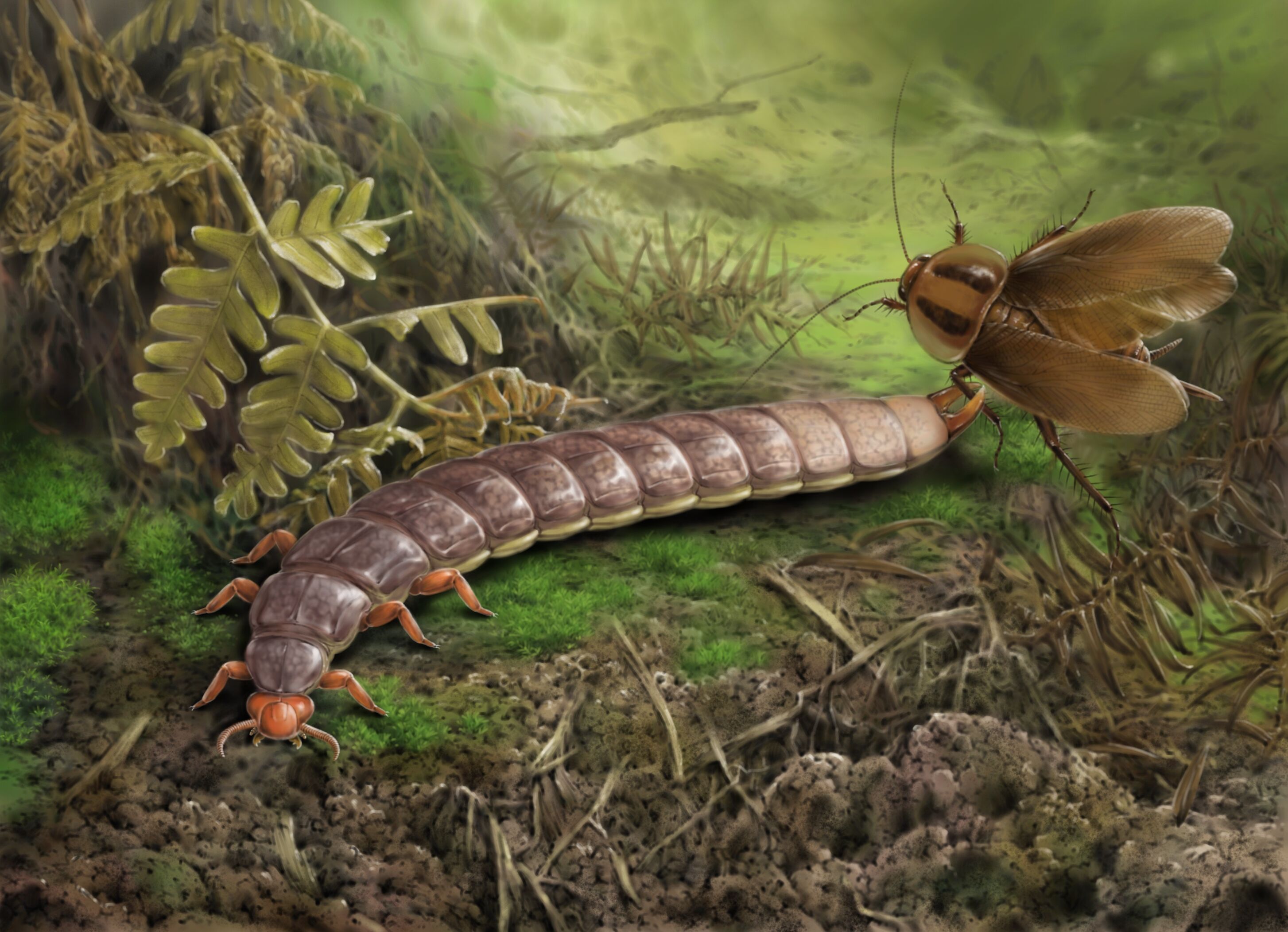
Now, a team led by Prof. HUANG Diying at the Nanjing Institute of Geology and Palaeontology, Chinese Academy of Sciences (NIGPAS), has described a rare giant two-pronged bristletail from the Middle Jurassic Daohugou Biota (~ 165 myr) in Inner Mongolia. They named it Sinojapyx giganteus and established a new family, Sinojapygidae. The find offers fresh anatomical evidence for the group's evolutionary history and new clues for rethinking hexapod mouthpart evolution and Jurassic soil ecosystems. The results were published online in Proceedings of the Royal Society B.Two-pronged bristletails (Diplura) are a group of non-insect hexapods, living alongside springtails and proturans as one of the earliest branches in hexapod evolution. Because they are closely related to insects, they are key to understanding how insects originated and evolved. Two-pronged bristletails live almost everywhere, in caves, soil, and leaf litter, and play a role in soil ecosystems. Their most striking feature is a pair of highly specialized cerci. But their soft bodies and underground lifestyle make them hard to fossilize, so their fossil record is extremely sparse. The oldest known fossil before this study came from the Early Cretaceous of Brazil.Now, a team led by Prof. HUANG Diying at the Nanjing Institute of Geology and Palaeontology, Chinese Academy of Sciences (NIGPAS), has described a rare giant two-pronged bristletail from the Middle Jurassic Daohugou Biota (~ 165 myr) in Inner Mongolia. They named it Sinojapyx giganteus and established a new family, Sinojapygidae. The find offers fresh anatomical evidence for the group's evolutionary history and new clues for rethinking hexapod mouthpart evolution and Jurassic soil ecosystems. The results were published online in Proceedings of the Royal Society B.1. Mouthparts: "Hidden" jaws may have evolved more than onceHexapods include insects plus three early-diverging groups: proturans, springtails, and two-pronged bristletails. Traditionally, only insects were thought to have exposed mouthparts (ectognathy), while the other three had mouthparts hidden inside the head capsule (entognathy) — which is why they were once grouped as "Entognatha." But Sinojapyx giganteus, though clearly a two-pronged bristletail, has exposed mouthparts, especially visible mandibles. The team proposes that the common ancestor of all hexapods had exposed mouthparts, and that the "hidden" condition evolved independently in the three non-insect groups rather than from a single shared origin.+2. Pincer-like cerci: a snapshot of evolution in progressOne of the best-known groups of two-pronged bristletails, the superfamily Japygoidea, is famous for its hard, pincer-like tail cerci, usually used for hunting and defense. Evolutionary analysis places Sinojapyx giganteus on the stem lineage of living Japygoidea. Unlike modern forms with highly specialized, tooth-bearing pincers and tightly fused abdominal segments, this Jurassic giant had symmetric pincers with smooth inner edges and an abdomen that was neither shortened nor heavily armored. This mix of features suggests the fossil captures a transitional stage, cerci shifting from sensory organs into efficient hunting weapons, and points to an arms race between predator and prey lasting hundreds of millions of years.3. Over 5 cm long: a top predator in the Jurassic undergroundLiving two-pronged bristletails are usually tiny (mostly under 2 cm) and hide deep in the soil. Sinojapyx giganteus was over 5 cm long, larger than almost all living species, making it the oldest confirmed and largest two-pronged bristletail fossil known. The team notes it had very strong mandibles with sharply curved teeth and thick, robust pincers. In the warm, humid Daohugou forest soil 165 million years ago, this giant likely played a role similar to modern centipedes or scorpions — lurking in leaf litter and soil cracks, ambushing small invertebrates with its powerful pincers and jaws, sitting at the top of the Jurassic soil food web.Notably, although the Daohugou Biota has yielded hundreds of thousands of insect fossils, no two-pronged bristletail had ever been found there. The specimen was collected 20 years ago, and after decades of fieldwork and screening hundreds of thousands of specimens, the team found just this one. The study is part of the institute's ongoing research on the origin and evolution of modern ecosystems; the team has previously reported the earliest fleas, webspinners, and gladiators from Daohugou. Researchers from the University of Valencia, Spain, contributed to the work. The study was supported by the National Key Research and Development Programme of China.Reference: Wang Y, Cai C, Sánchez-García A, Sendra A, Huang D. 2026. A giant Jurassic hunter: the earliest dipluran and its implications for hexapod body pattern evolution. Proc. R. Soc. B 293: 20261207. https://doi.org/10.1098/rspb.2026.1207.Fig.1 General morphology of Sinojapyx giganteusFig.2 Holotype details of Sinojapyx giganteus and comparison with extant taxaFig.3 Phylogeny and evolutionary framework of DipluraFig.4 Palaeoecological reconstruction of Sinojapyx giganteus
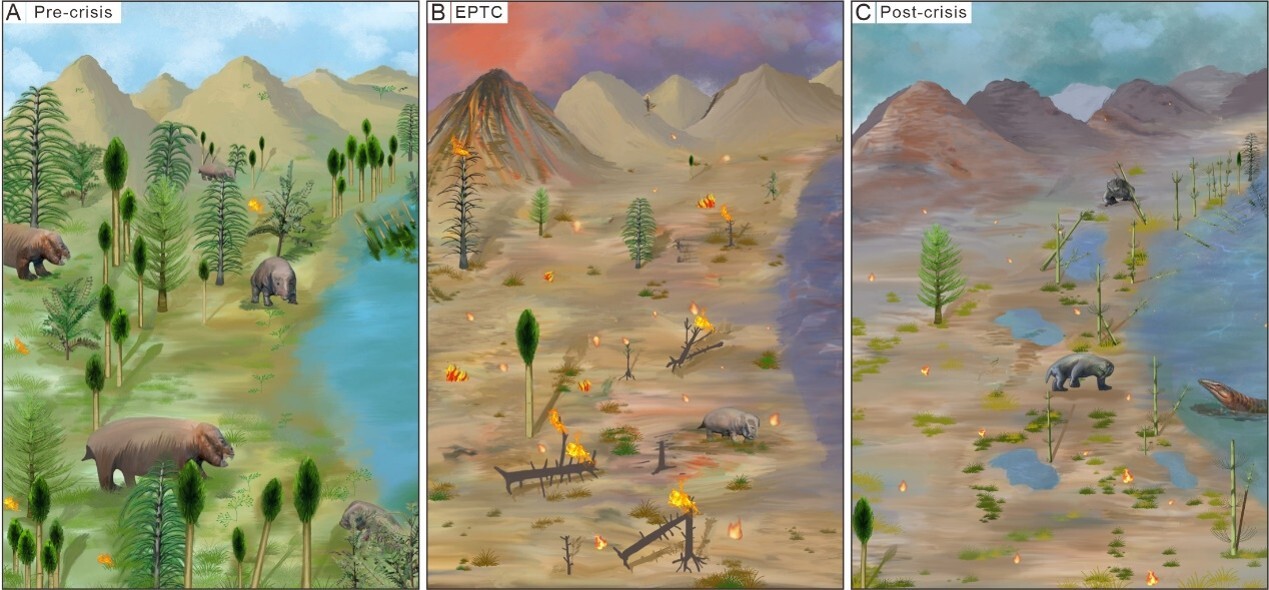
Recently, an international research team led by Professor Hua Zhang of the Nanjing Institute of Geology and Palaeontology, Chinese Academy of Sciences, published a study in Earth and Planetary Science Letters. The researchers investigated the South Taodonggou (STDG) terrestrial section in Northwest China, which represents a mid-latitude setting at the Permian–Triassic transition. Combining a high-resolution chronological framework with multiproxy geochemical, wildfire, and paleontological records, the team reconstructed the environmental and ecological evolution of mid-latitude terrestrial ecosystems during the end-Permian crisis.Approximately 252 million years ago, Earth experienced the most severe biotic crisis of the Phanerozoic at the Permian–Triassic transition, resulting in profound disruptions to both marine and terrestrial ecosystems. Extensive geological evidence has linked this global crisis to large-scale magmatism, particularly the Siberian Traps Large Igneous Province and associated volcanic activity in the Tethyan realm. However, how volcanic activity at different stages influenced terrestrial ecosystems through successive environmental processes, and whether terrestrial ecosystems at different latitudes responded synchronously, remain poorly understood within high-resolution chronological frameworks.Recently, an international research team led by Professor Hua Zhang of the Nanjing Institute of Geology and Palaeontology, Chinese Academy of Sciences, published a study in Earth and Planetary Science Letters. The researchers investigated the South Taodonggou (STDG) terrestrial section in Northwest China, which represents a mid-latitude setting at the Permian–Triassic transition. Combining a high-resolution chronological framework with multiproxy geochemical, wildfire, and paleontological records, the team reconstructed the environmental and ecological evolution of mid-latitude terrestrial ecosystems during the end-Permian crisis.The study shows that the end-Permian terrestrial crisis at mid-latitudes was not triggered by a single, instantaneous environmental stress. Instead, it developed through a sequence of successive environmental perturbations, characterized by a transition from intensified surface wildfires to subsurface volcanic pyrolysis, ultimately contributing to terrestrial ecosystem collapse and reorganization.The study reveals: 1. Volcanism initiated the mid-latitude terrestrial environmental crisis at ~252.165 Ma, while ecosystem responses differed among latitudesThe research team used high-resolution mercury (Hg) records to trace the environmental influence of volcanic activity. The results show that terrestrial environmental deterioration in the Northern Hemisphere mid-latitudes began at approximately 252.165 Ma, accompanied by pronounced Hg enrichment, a negative carbon-isotope excursion, and a decline in terrestrial organic carbon accumulation.The temporal coincidence of Hg enrichment and carbon-cycle perturbation within the uncertainty of the age model indicates enhanced volcanic input and associated disruption of the global carbon cycle during this interval. These findings provide important chronological evidence linking volcanism with the onset of terrestrial environmental deterioration.The high-resolution age framework further reveals that the collapse of mid-latitude forest ecosystems preceded the final collapse of tropical rainforest ecosystems by approximately 300 kyr. This asynchronous pattern indicates that terrestrial ecosystems did not collapse simultaneously worldwide. Instead, the end-Permian terrestrial crisis exhibited pronounced spatial and temporal heterogeneity, potentially reflecting differences in wildfire activity, hydroclimate conditions, vegetation composition, and the timing and distribution of volcanic disturbances.2. Mid-latitude forests experienced severe wildfire disturbance during the early phase of the crisisDuring the early phase of environmental deterioration, charcoal abundance and combustion-derived polycyclic aromatic hydrocarbons (PAHs) increased substantially, indicating enhanced landscape-scale wildfire activity. Combined with previously documented palynological and plant-fossil evidence, these records suggest that environmental stress during this interval was closely associated with the decline of mid-latitude gymnosperm-dominated forests.The intensified wildfire activity likely represented an important disturbance mechanism affecting terrestrial ecosystems during the early stage of the end-Permian crisis. However, wildfire activity did not persist throughout the entire crisis interval.During the Early Triassic, charcoal abundance declined markedly, indicating a reduction in large-scale combustion of surface vegetation. Meanwhile, a distinct high-temperature combustion-related geochemical signal emerged, suggesting a fundamental shift in the dominant combustion process affecting terrestrial environments.3. A transition from surface burning to subsurface volcanic pyrolysisThe researchers identified a distinct combustion signal in charcoal-poor Early Triassic sediments. These deposits contain anomalously high concentrations of thermally generated PAHs, accompanied by exceptionally high fluoranthene/pyrene ratios.Unlike typical signatures produced by surface wildfires, these geochemical characteristics are more consistent with high-temperature thermal alteration of buried organic matter. The results suggest that combustion-related processes shifted from surface biomass burning during the early crisis phase to subsurface pyrolysis of sedimentary organic carbon during the later stage.The researchers propose that intrusive magmatism associated with large igneous province activity may have provided a prolonged heat source for this process. When magma intruded into organic-rich sedimentary basins, sustained heating could have caused buried peat, coal, and dispersed organic matter to undergo high-temperature pyrolysis, releasing thermally generated compounds and producing geochemical signals distinct from those associated with landscape fires.This mechanism is consistent with previously proposed volcanic combustion and pyrolysis models from regions such as the Tunguska Basin of Siberia and South China. However, the continuous, high-resolution, and age-constrained record from the STDG section provides new constraints on the temporal succession between wildfire activity and subsurface thermal alteration.The findings indicate that as volcanic activity and its thermal effects evolved, terrestrial combustion processes may have transitioned from early surface biomass burning to later subsurface volcanic pyrolysis. Therefore, the environmental impacts of volcanism may have extended beyond volcanic eruptions and atmospheric emissions, involving a prolonged pathway of: magma intrusion → heating of sedimentary organic matter → subsurface pyrolysis → release of thermally generated compounds. This process may have provided a sustained source of environmental stress during the recovery interval.4. Sequential environmental stress prolonged the terrestrial crisis and ecosystem reorganizationBy integrating combustion, weathering, and paleontological records, the researchers reconstructed a sequence of environmental and ecological changes extending from the initial wildfire phase into the Early Triassic.The transition from intensified surface wildfires to subsurface pyrolysis was accompanied by changes in weathering regimes and major reorganizations of terrestrial biota. Plant communities underwent substantial turnover, while terrestrial vertebrate communities experienced major restructuring, including the decline of Permian dicynodonts and the subsequent appearance and expansion of the stress-tolerant herbivore Lystrosaurus.Together, these observations suggest that the terrestrial crisis was not simply a short-lived episode of widespread fire. Instead, it developed through a sequence of interacting processes: volcanic forcing → carbon-cycle perturbation → wildfire intensification → vegetation loss and environmental degradation → subsurface volcanic pyrolysis → prolonged ecosystem reorganization.The researchers suggest that continued intrusive heating may have contributed to the delayed recovery of terrestrial ecosystems. Thus, even after large-scale surface wildfires diminished, terrestrial environments may have remained exposed to persistent thermal and geochemical disturbances associated with intrusive magmatism, potentially prolonging ecological stress and delaying recovery.Overall, this study reveals a stage-dependent structure of the end-Permian terrestrial crisis. Different phases of volcanic activity generated distinct environmental pressures, which interacted with ecosystem vulnerability and feedbacks to drive terrestrial ecosystem collapse and reorganization.The high-resolution record from Northwest China provides new geological evidence that deep Earth volcanic processes can influence terrestrial ecosystems through both surface and subsurface pathways. It also demonstrates that terrestrial ecosystem collapse during global environmental crises may occur asynchronously across latitudes, reflecting complex interactions among volcanism, climate change, wildfire dynamics, and ecosystem resilience.The findings emphasize that understanding the environmental consequences of large igneous provinces requires consideration of both eruptive and intrusive magmatism, as well as their potentially different effects on terrestrial ecosystems. They also demonstrate that terrestrial mass extinction may unfold as a prolonged and spatially heterogeneous process, in which successive environmental stressors interact with the intrinsic vulnerability of different biomes.This study provides new geological evidence for understanding how large igneous province activity can drive terrestrial ecosystem crises through successive surface and subsurface processes, and how terrestrial ecosystems at different latitudes may respond differently to global environmental change.Professor Hua Zhang led the study. PhD student Shenglin Jiao and Assistant Researcher Yaofeng Cai of the Nanjing Institute of Geology and Palaeontology are co-first authors. Other members of the research team include Professor Wan Yang of Missouri University of Science and Technology, Professor Mingli Wan of the Nanjing Institute of Geology and Palaeontology, and Professor Shuzhong Shen, an Academician of the Chinese Academy of Sciences at Nanjing University.The study was supported by projects funded by the National Natural Science Foundation of China, the National Key Research and Development Program of China, the Jiangsu Innovation Support Plan for International Science and Technology Cooperation Program, and the U.S. National Science Foundation.Reference: Jiao, S.L.#, Cai, Y.F.#, Yang, W., Wan, M.L., Shen, S.Z., Zhang, H.*, 2026. Succession of environmental stressors from wildfires to volcanic pyrolysis drove mid-latitude terrestrial ecosystem collapse during the end-Permian crisis. Earth Planet. Sci. Lett. 695, 120319. https://doi.org/10.1016/j.epsl.2026.120319.Fig.1 High-resolution, age-calibrated proxy records of environmental change and terrestrial ecosystem collapse across the Permian–Triassic transition.Fig.2 Comparative synthesis of the end-Permian terrestrial crisis across paleolatitudes.Fig.3 Paleoecological reconstructions of terrestrial ecosystems from the Lopingian to Early Triassic based on fossil records, wildfires, climatic conditions, and sedimentological evidence from the STDG section.
Recently, Associate Professor LI Lixia from the Nanjing Institute of Geology and Palaeontology, Chinese Academy of Sciences (NIGPAS), in collaboration with Professor Joachim Reitner from the University of Göttingen, Germany, conducted a systematic study of sponge fossils from the Early Ordovician Cabrières Biota in France. The findings were published in the journal Lethaia.The Cabrières Biota in the Montagne Noire region of southern France is one of the key Early Ordovician faunas, as it represents a Lagerstätte close to the Ordovician South Pole. This biota exhibits remarkably high biodiversity, with more than 30 taxa identified to date, including algae, arthropods, brachiopods, echinoderms, bryozoans, sponges, and worms. It has fundamentally transformed our view of Early Ordovician ecosystems by preserving both characteristic Ordovician taxa and typical Cambrian animals, thereby highlighting a continuum between the Cambrian Explosion and the Great Ordovician Biodiversification Event. As one of the closest Early Ordovician Lagerstätten to the ancient South Pole, the Cabrières Biota probably served as a high-latitude biotic refuge, and shows ecological structures comparable to those of modern polar communities. Consequently, it offers invaluable insights into Early Paleozoic polar ecosystems.Of special interest are active filter-feeding benthic organisms such as sponges. Given that sponges play a significant role in modern polar environments, the presence of Lower Ordovician polar sponges holds considerable importance for understanding early high-latitude ecosystems.Recently, Associate Professor LI Lixia from the Nanjing Institute of Geology and Palaeontology, Chinese Academy of Sciences (NIGPAS), in collaboration with Professor Joachim Reitner from the University of Göttingen, Germany, conducted a systematic study of sponge fossils from the Early Ordovician Cabrières Biota in France. The findings were published in the journal Lethaia.The studied material consists of nine specimens collected from the Cabrières Lagerstätte, located in the southern Montagne Noire, France. According to the associated trilobites, the Cabrières Lagerstätte from the Landeyran Formation corresponds to the trilobite Apatokephalus incisus biozone, indicating the late Floian age (ca. 470 Ma). Palaeogeographically, this Lagerstätte is part of Gondwana in high-latitude close to the South Pole.A detailed study of the sponge fauna from the Cabrières Biota revealed four distinct hexactinellid morphotypes that can be assigned to the Hintzespongiidae and Protospongiidae, indicating potentially unknown groups. The discovery of two isolated root tufts with hexactinellid affinity also supports this interpretation, as these features collectively indicate the presence of previously undocumented diversity.All currently identifiable sponges in the Cabrières Biota are hexactinellids, including two types of reticulosan sponges (hintzespongiids and protospongiids) along with root tufts attributable to two distinct hexactinellid morphotypes. Phylogenetically, hintzespongiids exhibit characteristics of both Cambrian protospongiids (regular arrangement of stauractines) and late Palaeozoic brachiospongiids (irregular hexactines in the sponge wall), potentially representing an intermediate form between these groups. Although our current specimens have yielded body fossils of only protospongiids and hintzespongiids, with no brachiospongiids identified, the isolated root tufts that have been discovered show a close similarity to those of brachiospongiids (Stioderma or Hyalostelia). Therefore, the hexactinellids in the Cabrières Biota appear to combine both Cambrian and late Palaeozoic sponge characteristics, providing a link between these two evolutionary lineages.From an ecological perspective, the presence of long and flexible root tufts in the Cabrières Biota serves as an indicator of the palaeoenvironment. Hexactinellid sponges possessing such structures typically inhabited high-energy hydrodynamic environments, which enabled them to regulate their osculum and canal systems in adaptation to water currents, thereby enhancing their efficiency in filtering nutrients from the surrounding water. Moreover, the long root tufts probably enabled the sponges to anchor to soft bottoms in the absence of hard substrate. The evidence presented above coincides with sedimentological interpretations, which indicate that the Cabrières Biota inhabited a soft-substrate in the distal mid-shelf environment.The sponges of the Cabrières Biota show both shared and distinct features when compared to those of other Early Ordovician polar ecosystems, such as the Fezouata and Klabava biotas. The Cabrières Biota shares hintzespongiids and protospongiids with Klabava Biota. The Fezouata Biota exhibits higher sponge diversity, is demosponge-dominated, with low-diversity monospecific populations near storm wave base. The Cabrières and Klabava biotas are reticulosan-dominated, indicating deeper, open-marine settings below normal wave base. Thus, water depth and local environmental conditions strongly shaped faunal composition across these polar ecosystems, revealing greater ecological complexity. Therefore, sponges from the Cabrières Biota offer key insights into the complexity and environmental dynamics of Early Ordovician polar ecosystems.This research was supported by the National Key Research and Development Program of China, the National Natural Science Foundation of China, and the Strategic Priority Research Program of the Chinese Academy of Sciences (Category B).Reference:Lixia Li* & Joachim Reitner. 2026. Hexactinellid sponges from the Early Ordovician Cabrières Biota, France: insights into Early Palaeozoic polar ecosystems. Lethaia, 59(2),1-9. https://doi.org/10.18261/let.59.2.13.Fig.1 Hintzespongiids from the Cabrières BiotaFig.2 Root tufts from the Cabrières Biota
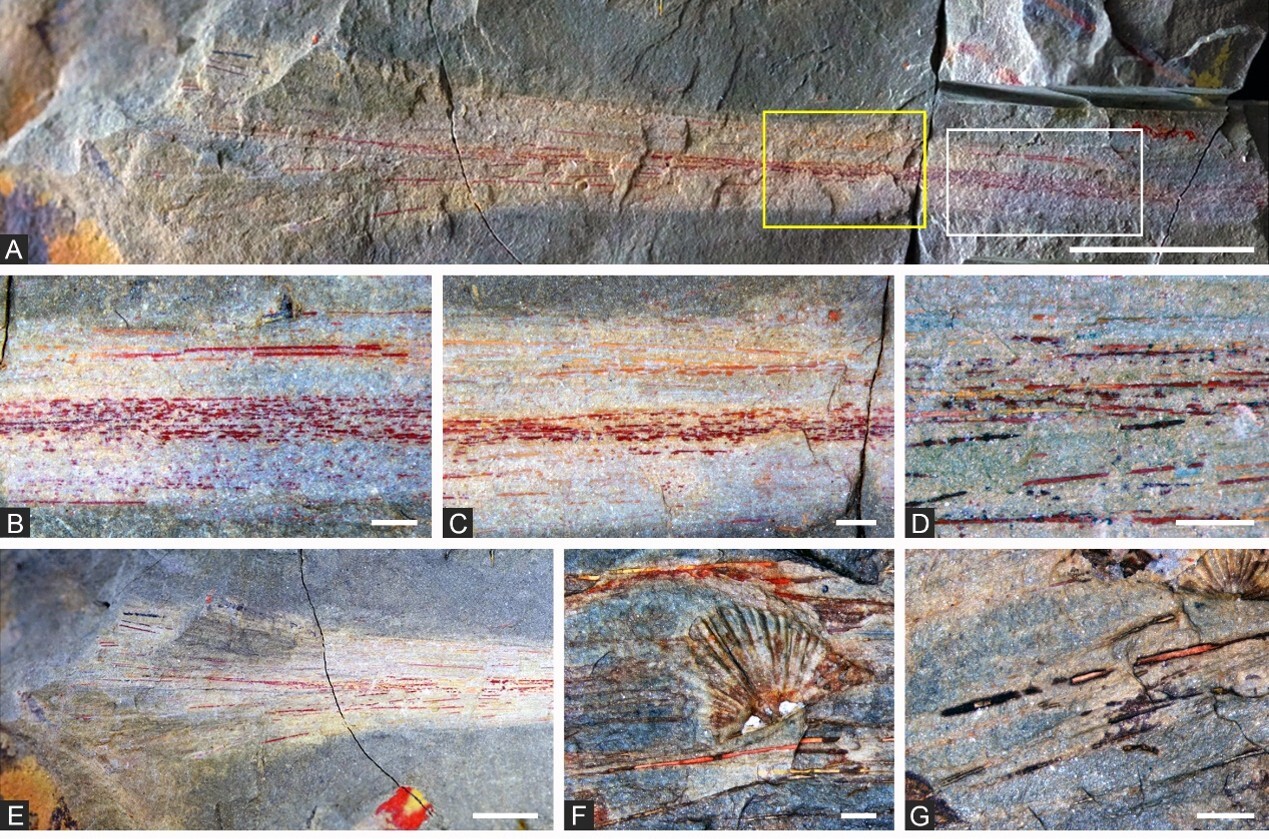
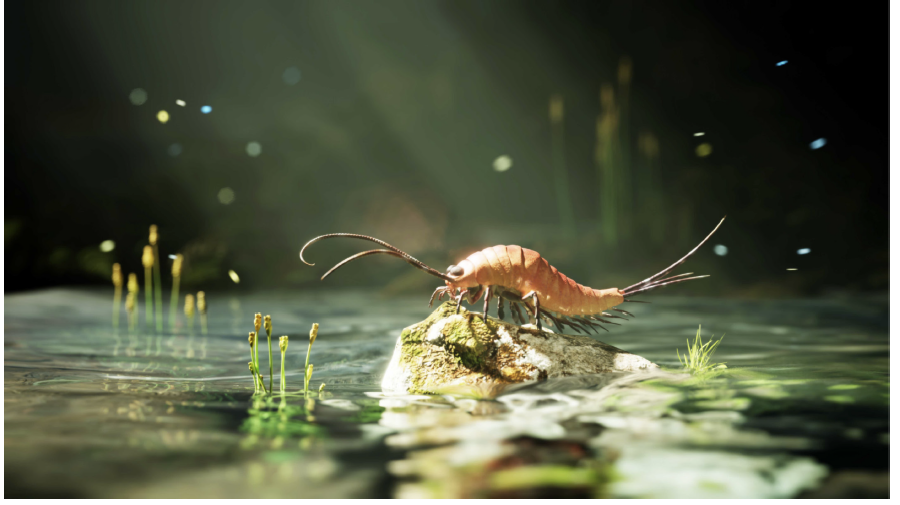
Recently, an international research team including Prof. CAI Chenyang (Nanjing Institute of Geology and Palaeontology, Chinese Academy of Sciences) and Erik Tihelka (joint-training PhD student, University of Cambridge), together with collaborators from the United States, Spain and other countries, reported a new stem‑group insect, Chosha praecursor Tihelka, Engel & Cai, 2026 (Fig. 1), from the Late Mississippian (~324 Ma) of Texas, USA. The team also investigated enigmatic stem‑insect material from the Early Devonian chert biota of Britain and the Late Carboniferous Mazon Creek biota of the United States (Fig. 2). These insect fossils fill critical gaps in early insect evolution, revise long‑standing interpretations of insect body-plan transformation and pancrustacean terrestrialization, and furnish key empirical evidence for the gradual aquatic‑to‑terrestrial evolutionary transition of insects. The findings were published online 26 August 2026 in Nature.The establishment of complex terrestrial ecosystems represents a milestone innovation in the evolutionary history of life on Earth. It marks the definitive release of organisms from marine constraints and inaugurates a brand-new phase for the diversification of terrestrial biota. Evidence from molecular‑clock estimates, trace fossils and exceptional‑preservation biotas indicates that the terrestrialization of arthropods stretches back to the Cambrian‑Ordovician, far earlier than inferred from conventional body-fossil records. As the most species‑rich animal group on our planet, insects have long posed major gaps in research regarding their early origins and the evolutionary transition to land.Paleontology has long grappled with the well-known hexapod gap. Molecular‑clock reconstructions suggest that hexapods diverged from marine crustacean relatives and initiated terrestrial adaptation as early as the Cambrian‑Ordovician. However, globally undisputed hexapod body fossils are only documented from the Early Devonian Rhynie Chert (ca. 405 Ma), and unambiguous insect fossils do not occur in abundance until the Late Carboniferous. This creates an 80-million-year gap in the fossil record. Moreover, direct fossil evidence documenting how early insects gradually adapted to terrestrial habitats from aquatic and semi‑aquatic settings, as well as the transformation of their body plans, has remained scarce. Consequently, evolutionary pathways, morphological innovations and ecological adaptive mechanisms underlying insect terrestrialization have remained poorly constrained.Recently, an international research team including Prof. CAI Chenyang (Nanjing Institute of Geology and Palaeontology, Chinese Academy of Sciences) and Erik Tihelka (joint-training PhD student, University of Cambridge), together with collaborators from the United States, Spain and other countries, reported a new stem‑group insect, Chosha praecursor Tihelka, Engel & Cai, 2026 (Fig. 1), from the Late Mississippian (~324 Ma) of Texas, USA. The team also investigated enigmatic stem‑insect material from the Early Devonian chert biota of Britain and the Late Carboniferous Mazon Creek biota of the United States (Fig. 2). These insect fossils fill critical gaps in early insect evolution, revise long‑standing interpretations of insect body-plan transformation and pancrustacean terrestrialization, and furnish key empirical evidence for the gradual aquatic‑to‑terrestrial evolutionary transition of insects. The findings were published online 26 August 2026 in Nature.Fossils of Chosha praecursor derive from calcareous claystone concretions within the Tesnus Formation of the Marathon Uplift, western Texas, and exhibit exquisite, well‑preserved anatomical details. Using cross-polarized light imaging, the team resolved its distinctive morphological traits and corrected long‑standing misinterpretations that these specimens represented crustacean larvae. The studied material corresponds to adult females with a body length of 32.09 mm; a median caudal filament plus two cerci extend the total length to 49.66 mm. The fusiform body displays derived traits diagnostic of hexapods and insects, while retaining plesiomorphic ancestral features (Fig. 1).Systematic analyses demonstrate that Chosha praecursor possesses hallmark insect structures including an ovipositor and terminal caudal filament. Its thorax bears a segmented trunk and six walking legs, conforming to the canonical insect body plan. Most strikingly, however, segments 1‑9 of the abdomen bear segmented appendages; posterior abdominal limbs are modified into paddle‑like structures — a morphology unknown among extant crown‑group insects (Fig. 1). Palaeoenvironmental reconstructions indicate that the host strata represent near‑shore shallow‑water delta‑coastal settings, confirming that this early stem‑insect led a semi‑aquatic, amphibious lifestyle, occupying humid microhabitats across aquatic‑terrestrial interfaces.Based on detailed comparative morphology and phylogenetic analyses, the researchers re‑evaluated three enigmatic Palaeozoic hexapod fossils: Leverhulmia from the Early Devonian of Scotland, and an unnamed hexapod from the Mazon Creek biota, USA. Phylogenetic results recover Chosha praecursor together with these taxa as a primitive insect stem clade. Representing the oldest documented insect assemblage globally, this clade substantially connects the evolutionary genealogy of early insects (Fig. 3).This study delivers paradigm-shifting scientific advances that reshape our framework for understanding insect terrestrial evolution. First, it fills the long‑persistent 80‑million‑year hexapod gap. Reliable evidence for insect origins and early diversification is pushed back from the Late Carboniferous into the Early Devonian, reconciling to some degree discrepancies between molecular‑clock estimates and the body-fossil record. Prior models assumed that insects evolved fully terrestrial body plans immediately following land colonization. The paddle‑shaped abdominal appendages and amphibious habit demonstrated here prove that insect terrestrialization was not an abrupt leap, but unfolded via a prolonged semi-aquatic amphibious transitional phase (Fig. 4).Second, the fossils illuminate pivotal transformations in the insect body plan. Extant hexapods retain only six thoracic legs; abdominal appendages are almost entirely lost. By contrast, Palaeozoic stem-insects commonly preserve segmented abdominal limbs. This confirms that reduction of abdominal appendages constituted a key evolutionary innovation for terrestrial adaptation. These structures were progressively simplified and lost from the swimming appendages of crustacean ancestors, ultimately yielding the body organization seen in modern insects. The findings clarify the morphological transition from pancrustacean ancestors to hexapod insects (Figs 1, 4). Furthermore, the plesiomorphic ovipositor preserved in Chosha praecursor demonstrates that early insects already possessed diverse oviposition adaptations, providing the structural foundation for subsequent colonization of heterogeneous terrestrial microhabitats and later insect radiations.In addition, the research reconstructs ecological scenarios for early insects. Stem-group insects combined aquatic locomotor and respiratory adaptations with terrestrial body architectures. Their diets likely included humus, plant detritus and fungal spores. Early insects thus fulfilled multifunctional ecological roles as decomposers and consumers within aquatic‑terrestrial ecotones, acting as pivotal components driving the maturation of Palaeozoic terrestrial ecosystems (Figs 2, 4).Fossils of Chosha praecursor and related Palaeozoic stem-insects reconstruct the early terrestrialization trajectory of Earth’s most species‑rich animal group, revising interpretations of body-size evolution, ecological adaptation and co‑evolution with terrestrial ecosystems. Terrestrial colonization by insects was a gradual process; retention, remodelling and reduction of ancestral aquatic structures permeated their early evolutionary history. An amphibious transitional phase formed the critical evolutionary bedrock enabling insects to conquer land. These results supply invaluable fossil evidence for deciphering hexapod origins and body‑plan evolution, and offer fresh perspectives on the origin and early diversification of complex terrestrial ecosystems on Earth.This research was supported by the National Key Research and Development Program of China and the National Natural Science Foundation of China. Mr. Chao Tan prepared the palaeoecological reconstructions.Reference: Tihelka E., Vásquez C., Engel M.S., Schram F.R., Lozano‑Fernandez J., Cai C., 2026. Amphibious stem‑insect sheds light on colonization of land. Nature. https://doi.org/10.1038/s41586‑026‑10961‑2. Fig. 1 The stem-group insect Chosha praecursor Tihelka, Engel & Cai, 2026 from the Carboniferous Tesnus Formation (ca. 324 Ma), Texas, USA.Fig. 2 Comparative anatomical details of stem-insects and extant apterygote insects.Fig. 3 Phylogeny of early hexapods and the evolution of key morphological traits.Fig. 4 Palaeoecological reconstruction of the Carboniferous stem-insect Chosha praecursor.
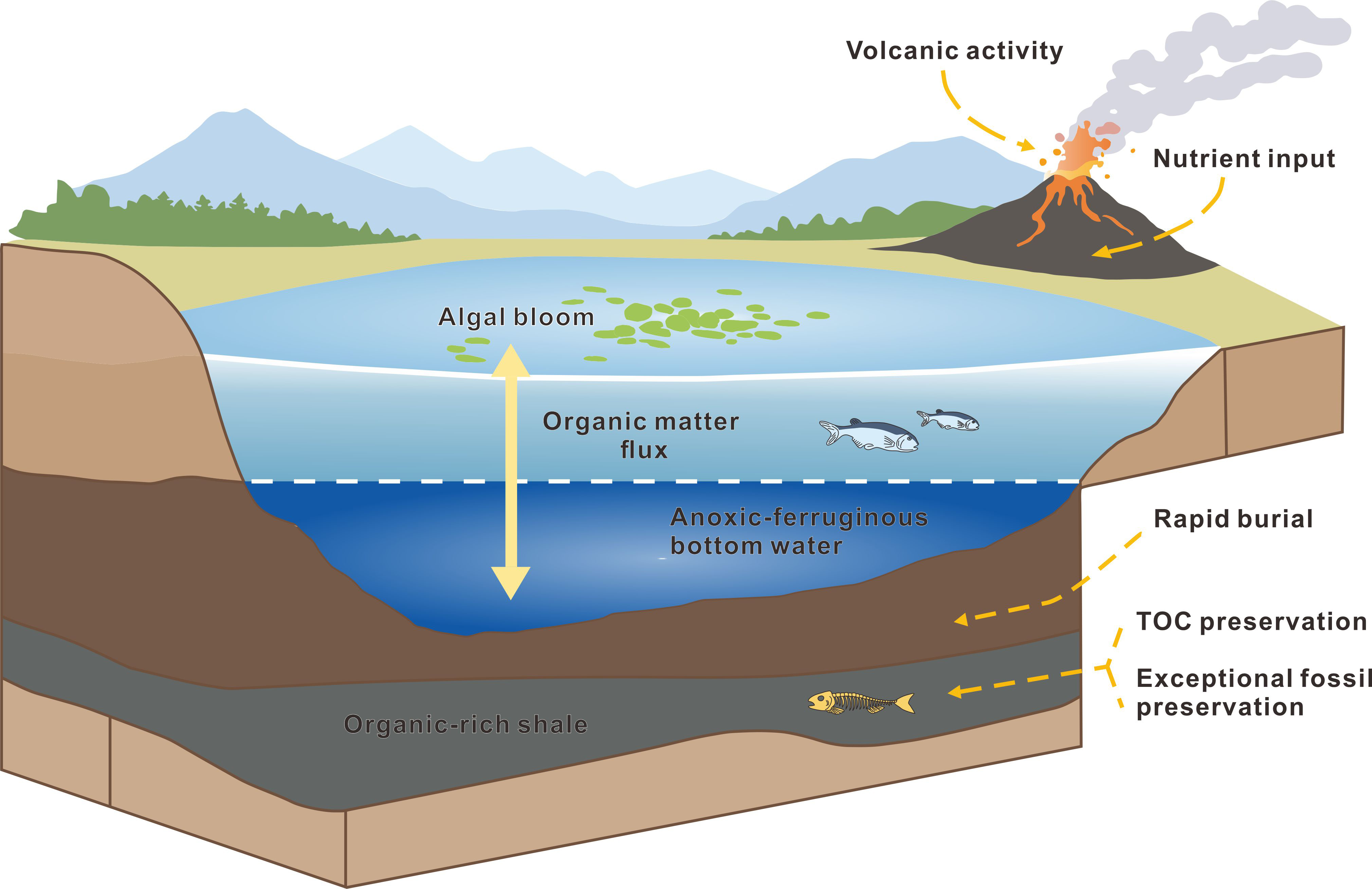
Recently, XUE Yan, a PhD candidate at the Nanjing Institute of Geology and Palaeontology, Chinese Academy of Sciences (NIGPAS), working under the supervision of Professors ZHENG Daran and LI Gang and collaborating with Professor JING Zhenhua from the Chengdu University of Technology, conducted a multi-proxy geochemical investigation on the Jiufengshan Formation at the Shiyoukuangtun section in the Dayangshu Basin, eastern Inner Mongolia. Along with systematic paleontological and comprehensive stratigraphical work, this study integrated stable organic carbon isotope analyses, Rock-Eval pyrolysis, iron speciation, and redox-sensitive trace-element geochemistry to reconstruct the lake ecosystem and bottom-water conditions that prevailed when the Jehol Biota inhabited the basin. It further examined the relationship between organic-matter enrichment and fossil preservation. The results were published in the journal Palaeogeography, Palaeoclimatology, Palaeoecology.The Jehol Biota is one of the most representative Cretaceous terrestrial biotas, and provides an important window into the evolution of terrestrial ecosystems. Previous paleoenvironmental reconstructions on the Jehol Biota have focused mainly on its core distribution region in northern Hebei and western Liaoning, while non-core distribution regions remain poorly studied. The organic-rich shales of the Lower Cretaceous Jiufengshan Formation in the northern Great Xing’an Range yield abundant fossils, providing a valuable archive for elucidating the palaeoenvironmental mechanisms that promoted the flourishing and preservation of the Jehol Biota, as well as the evolution of Early Cretaceous lacustrine ecosystems.Recently, XUE Yan, a PhD candidate at the Nanjing Institute of Geology and Palaeontology, Chinese Academy of Sciences (NIGPAS), working under the supervision of Professors ZHENG Daran and LI Gang and collaborating with Professor JING Zhenhua from the Chengdu University of Technology, conducted a multi-proxy geochemical investigation on the Jiufengshan Formation at the Shiyoukuangtun section in the Dayangshu Basin, eastern Inner Mongolia. Along with systematic paleontological and comprehensive stratigraphical work, this study integrated stable organic carbon isotope analyses, Rock-Eval pyrolysis, iron speciation, and redox-sensitive trace-element geochemistry to reconstruct the lake ecosystem and bottom-water conditions that prevailed when the Jehol Biota inhabited the basin. It further examined the relationship between organic-matter enrichment and fossil preservation. The results were published in the journal Palaeogeography, Palaeoclimatology, Palaeoecology.The Jiufengshan Formation is a classic unit for studying the Jehol Biota, containing the characteristic Eosestheria-Ephemeropsis trisetalis-Lycoptera davidi (“EEL”) assemblage. This study first reports the clam shrimp genus Diestheria in this formation, and assigns the clam shrimp to the Eosestheria-Diestheria assemblage. Together with isotopic age constraints, the paleontological evidence supports the correlation of the Jiufengshan Formation with the Yixian and lower Jiufotang formations in western Liaoning. This indicates that the Dayangshu Basin hosted a lacustrine ecosystem rich in the Jehol Biota, comparable to the basins in the core area.The Jehol Biota in the Jiufengshan Formation is concentrated mainly in the organic-rich shales, which have an average total organic carbon (TOC) content of approximately 7.75% and thus exhibit good hydrocarbon-generating potential. Rock-Eval results show that the organic matter in these shales is dominated by hydrogen-rich Type I kerogen, indicating that lacustrine algae were an important source. This interpretation is consistent with the C/N ratios and relatively negative δ13Corg values. Iron speciation data and redox-sensitive trace elements further reveal distinctive bottom-water chemistry during intervals of organic-matter enrichment: bottom waters were predominantly anoxic and ferruginous during organic-shale deposition, but oxic to suboxic during mudstone deposition.On this basis, the research team proposed a “productivity-preservation coupling” model for the Jehol Biota in the Jiufengshan Formation of the Dayangshu Basin. High algal primary productivity sustained thriving lacustrine communities of fishes, insects, and clam shrimps, while delivering large amounts of organic matter to the lake floor and creating favorable conditions for organic-shale generation. Continued microbial degradation of organic matter consumed dissolved oxygen in the bottom waters and promoted the development of anoxia. With limited sulfide availability, ferruginous bottom waters were characterized by the accumulation of Fe2+. This oxygen-depleted setting inhibited aerobic degradation of organic matter and benthic bioturbation, while reactive iron may have further enhanced preservation through organic-matter stabilization and early mineralization.The above study proposes that high algal productivity supplies organic matter for the ecosystem, whereas ferruginous-anoxic bottom waters promote fossil preservation. Together, these processes generated the organic-rich, fossil-rich lacustrine deposits of the Jiufengshan Formation. This study provides a new geochemical perspective on the expansion, ecological evolution, and exceptional preservation of the Jehol Biota during the Early Cretaceous.This research was supported by the National Natural Science Foundation of China and the Strategic Priority Research Program of the Chinese Academy of Sciences (Category B).Reference: Xue, Y., Jing, Z.H.*, Teng, X., Zhang, X., Liu, P.H., Song, S.Y., Fang, R., Li, G., Zheng, D.R.*, 2026. Biodiversity and paleoenvironmental reconstruction of the Jehol Biota in the Jiufengshan Formation of eastern Inner Mongolia, northeastern China. Palaeogeography, Palaeoclimatology, Palaeoecology, 700, 114111.https://doi.org/10.1016/j.palaeo.2026.114111.Fig.1 Conceptual model for flourishing and preservation of Jehol Biota in Jiufengshan Formation of Shiyoukuangtun section.Fig.2 Fossil clam shrimp from Jiufengshan Formation of Shiyoukuangtun section.Fig.3 Changes in water-column redox conditions recorded in Jiufengshan Formation of Shiyoukuangtun section.
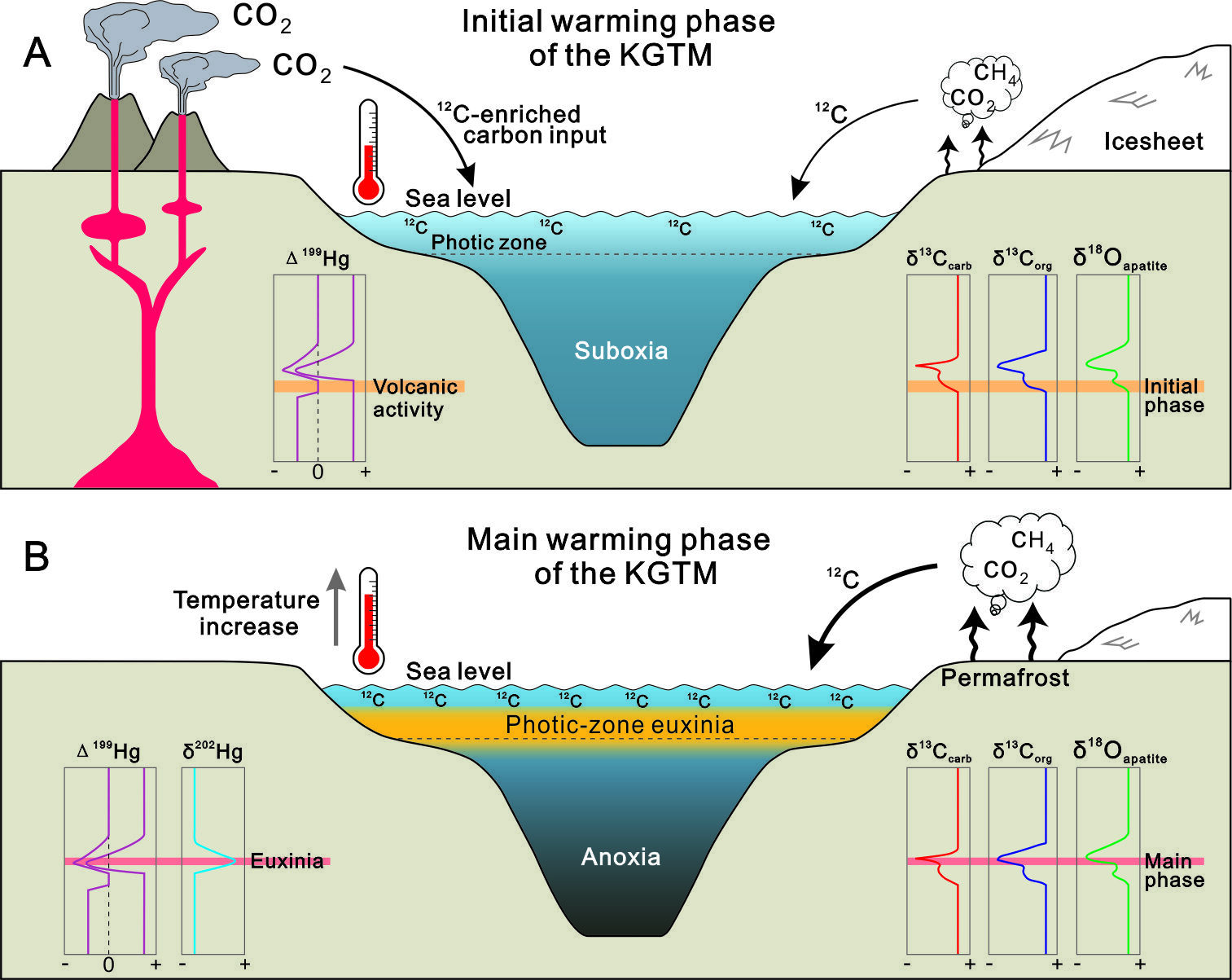
In a study published in the prestigious international journal Proceedings of the National Academy of Sciences (PNAS) on Aug. 11, researchers led by Associate Professor YAO Le from the Nanjing Institute of Geology and Paleontology of the Chinese Academy of Sciences (NIGPAS), together with colleaguesat domestic and international institutions, revealed the process and mechanism of a hyperthermal event during the Earth’s penultimate icehouse, known as the Late Paleozoic Ice Age (LPIA).In a study published in the prestigious international journal Proceedings of the National Academy of Sciences (PNAS) on Aug. 11, researchers led by Associate Professor YAO Le from the Nanjing Institute of Geology and Paleontology of the Chinese Academy of Sciences (NIGPAS), together with colleaguesat domestic and international institutions, revealed the process and mechanism of a hyperthermal event during the Earth’s penultimate icehouse, known as the Late Paleozoic Ice Age (LPIA).This study documents that the Earth experienced a transient global warming event triggered by volcanic activity and orbital pacing during an icehouse climate condition about 300 million years ago. This transient warming event was marked by a ~7.5 ℃ rise in global mean surface temperature (GMST) and an increase in atmospheric CO2 concentrations (pCO2) from ~300 to ~700 ppm.The modern world is experiencing unprecedented warming within an icehouse climate state, resulting in ocean acidification and deoxygenation and widespread deterioration of marine ecosystems. During geological times, multiple hyperthermal events occurred, however, reported hyperthermals during greenhouse climate states are inadequate as an alogues for modern climate warming given their dissimilar boundary conditions (i.e., occurrence during a greenhouse instead of an icehouse climate state).The LPIA is the only deep-time icehouse interval known to have atmospheric pCO2 levels comparable to those of the Quaternary (∼300 ppm). Conodont and brachiopod oxygen isotope (δ18O) recordsfrom North America and the Donets Basin indicate climate warming near the Kasimovian-Gzhelian Boundary (KGB) during the LPIA. However, due to low resolution of the available datasets, the magnitude and temporal expression of these δ18O excursions are inconsistent.The research team conducted secondary ion mass spectrometry (SIMS) oxygen isotopeanalysis (δ18Oapatite) of conodonts from the Naqing and Narao sections in South China and the Usolka section in the southern Urals of Russia. Large negative δ18Oapatite shifts at the KGB record a pronounced warming event, herein named the Kasimovian-Gzhelian Thermal Maximum (KGTM).The KGTM consists of two warming phases, the initial and main warming phases, which were characterized by sea-surface temperature (SST) rises of ~2.0 ℃ and ~3.5 ℃, respectively. Cyclostratigraphy at Naqing constrains the duration of the initial and main phases to~60 kyr and ~35 kyr, respectively. Comparison of SSTs from Usolka with Community Earth System Model (CESM) simulations of pCO2 indicates a rise of atmospheric pCO2 from~300 to ~700 ppm. These results reveal that the KGTM spans the modern climatic state (~300 to 400 ppm), although present-day rates of temperature rise are far higher (~10-15 ℃/kyr) than estimates for the KGTM (~0.04 to ~0.10 ℃/kyr).Mercury isotoperecords (∆199Hg and δ202Hg) indicate the development of photic-zone euxinia (PZE) during the main phase of the KGTM. Marine ecosystems changed at that time, as reflected in decreases in conodont size and diversity and shifts from metazoanto macroalgal reef ecosystems. The coherence of ∆199Hg values (0 to +0.04‰) during the initial phase of the KGTM across South China and the southern Urals indicates a contemporaneous increase in local to regional volcanic activity, which triggered the initial climatic warming. On the other hand, a distinct negative shift in ∆199Hg valuesduring the main phase implies no volcanic activity during that interval.The KGB was marked by coupled and rhythmic variations in the δ18Oapatite and Δ13C (=δ13Ccarb – δ13Corg) records of the Naqing section that conform to 405-kyr long-eccentricity cycles, supporting regulation of atmospheric pCO2 by orbital forcing. During the KGTM event, the initial and main warming phases coincided with maxima of the 100-kyr short-eccentricity cycle and high values of the 405-kyr long-eccentricity cycle.In conclusion, YAO and his colleagues inferred that the KGTM was initiated by volcanic activity with superimposed orbital forcing, which induced carbon emissions and rapid temperature increases. Based on atmospheric CO2 accumulation during the initial phase, sustained orbital forcing is inferred to have triggered positive climate-carbon cycle feedbacks across a critical climatic tipping point, leading to massive carbon release and abrupt large-scale warming during the main phase of the KGTM.A major implication of this study is that humanity needs to pay attention to modest warming events during the modern icehouse climate, which have the potential to lead to accelerated melting of high-latitude icesheets and carbon emissions from permafrost. Through positive climate-carboncycle feedbacks, the Earth system could potentially cross a climatic tipping pointand trigger massive carbon release and abrupt large-scale warming, leading to a major expansion of oceanic anoxia and biodiversity collapse.This study was funded by the National Natural Science Foundation of China, the Youth Innovation Promotion Association of the CAS, and the State Key Laboratory of Paleobiology and Stratigraphy of Nanjing Institute of Geology and Paleontology, CAS.Reference: Le Yao*, Thomas J. Algeo, Qiulai Wang*, Wang Zheng, Qiang Wei*, Yu-ping Qi, Guzel M. Sungatullina, Genming Luo, Ganqing Jiang, Guoqiang Tang, Jian Zhang, Hui Wang, Yaqiu Zhao, Xing Huang, Qiu-Li Li, Xiang-dong Wang, Shucheng Xie, and Xian-Hua Li, 2026. A transient global warming event during Earth’s penultimate icehouse. Proceedings of the National Academy of Sciences of the United States of America. https://doi.org/10.1073/pnas.2601643123.Fig.1 Schematic diagram shows the process and mechanism of the Kasimovian-Gzhelian Thermal Maximum (KGTM) event during the Pennsylvanian Subperiod.Fig. 2 Isotopic and biotic records from the Kasimovian-Gzhelian carbonate successions at the Naqing and Narao sections in South China, and the Usolkasection in southern Urals.The light orange and dark pink bars indicate the initial and main phases of the Kasimovian-Gzhelian Thermal Maximum (KGTM), respectively.Fig.3 Mercury isotope and concentration records from the Kasimovian-Gzhelian carbonate successions at the Naqing, Narao and Usolkasections.The light orange and dark pink bars represent the initial and main phases of the KGTM, respectively.Fig.4 Geochemical, biotic and orbital records for the Kasimovian-Gzheliantransitionat Naqing. The light pink and light blue bars indicate warming and cooling stages of the background interval during the Kasimovian-Gzhelian transition, respectively. The light orange and dark pinkbars represent the initial and main phases of the KGTM, respectively.Fig.5 Comparison of sea-surface temperature (SST) obtained from conodont SIMS oxygen isotopes (δ18Oapatite) and the CESM simulations, andglobal distribution of SST under various atmospheric pCO2 conditions.