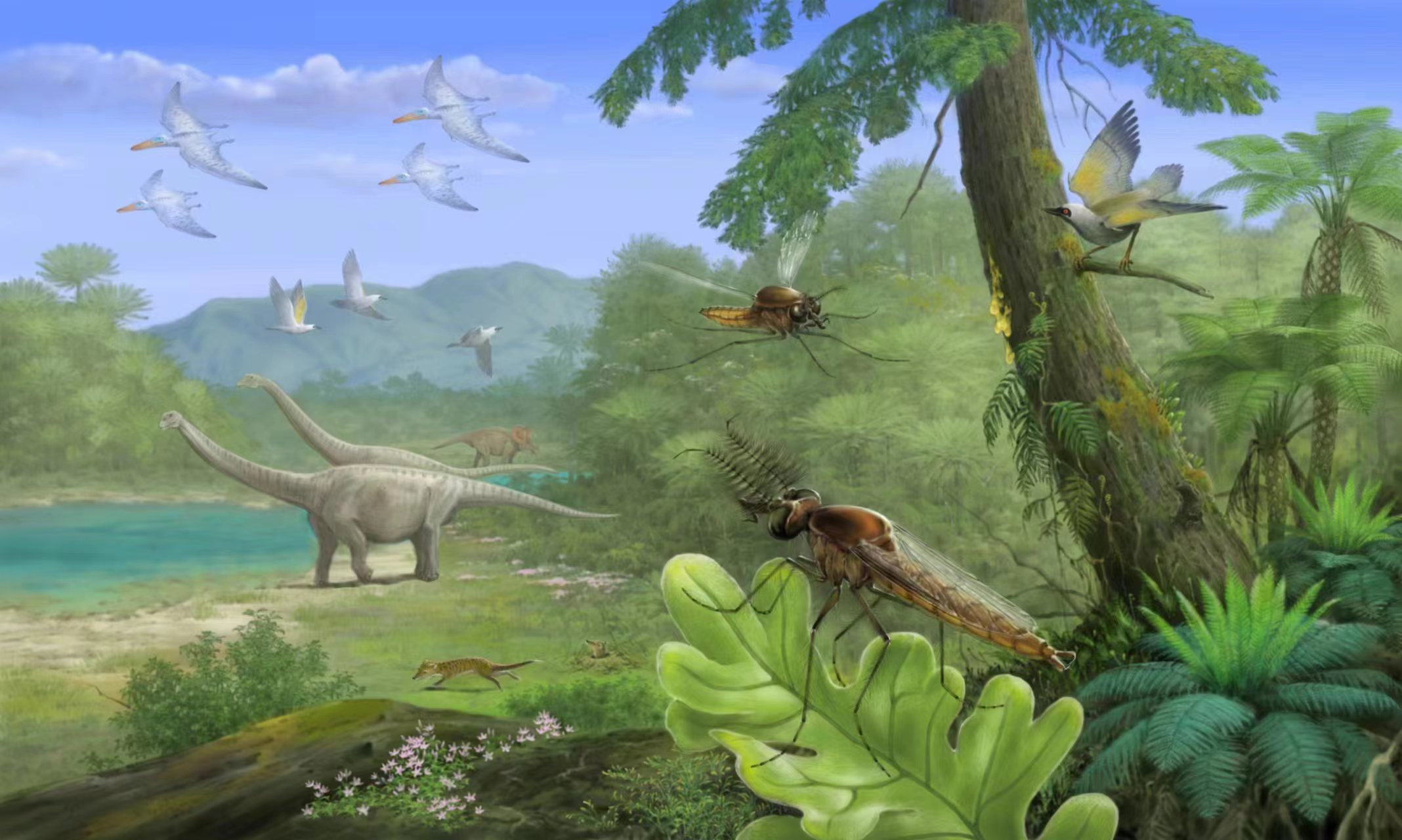
A new study has shown that cicadas about 100 million years ago had yet to learn to produce the iconic buzzing sound that now characterizes summer days. A new study has shown that cicadas about 100 million years ago had yet to learn to produce the iconic buzzing sound that now characterizes summer days. Cicada, referring to the superfamily Cicadoidea, includes the globally widespread Cicadidae, commonly known as singing cicadas, and Australia-only Tettigarctidae. The former can produce the loudest sounds among insects, reaching nearly 120 decibels via tymbal mechanisms. In the study published in Nature Communications, a team of international scientists looked at 11 pieces of Cicadoidea fossils from Myanmar with a 100-million-year history and compared them with other fossils and extant cicadas. Although tymbal was identified in these fossils, the majority lacked intricate sound production and auditory systems, said Jiang Hui, lead author of the paper and a researcher with the Nanjing Institute of Geology and Palaeontology, Chinese Academy of Sciences. "This suggests that most cicadas from 100 million years ago might have relied on more primitive means of communication -- to transmit body vibrations through substrates like tree trunks -- rather than amplifying sounds through abdominal vibrations and transmitting them through the air," said Jiang. "In other words, they might not have sung like today's cicadas," Jiang said. This study also reports powerful fossorial forelegs from nymphal fossils, akin to modern cicadas, suggesting similar robust capabilities for digging, subterranean long-term living, and root-feeding. (Xinhua)
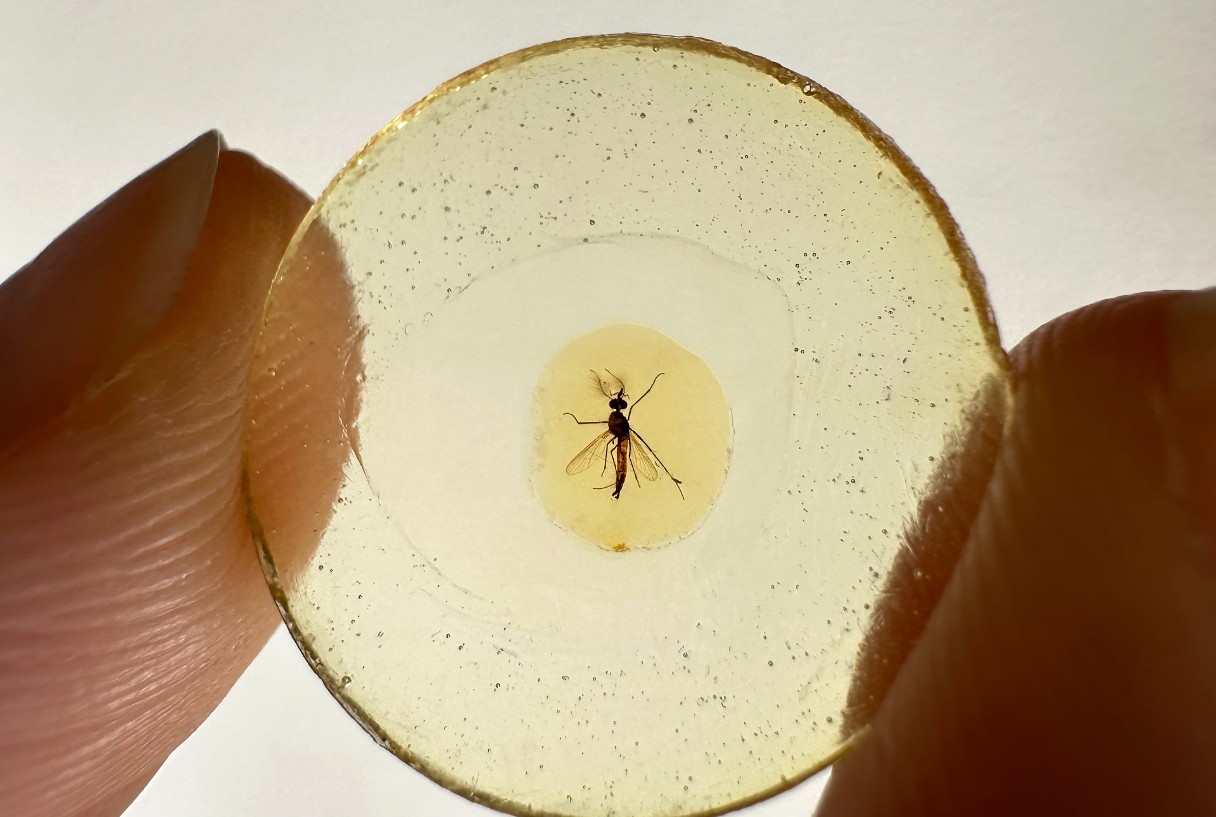
An international team of scientists said a fossil dating back to about 130 million years ago suggests male mosquitoes likely sucked blood in ancient times. An international team of scientists said a fossil dating back to about 130 million years ago suggests male mosquitoes likely sucked blood in ancient times. Among modern-day mosquitoes, only females are hematophagous, meaning that they use piercing mouth parts to feed on the blood of humans and other animals. Scientists believe that insect hematophagy evolved from piercing-sucking mouthparts used to extract plant fluids but have difficulty studying this evolution due to the lack of insect fossil records. The scientists from China, Lebanon, France and the United States found in a Lower Cretaceous amber from Lebanon that the piercing mouthparts of two well-preserved male mosquitoes included an exceptionally sharp, triangular mandible and elongated structure with small, toothlike denticles, which suggested that they were then fed on blood. The new findings, published online in the journal Current Biology, may provide new evidence for the study of the evolution of mosquitoes, according to the scientists. "Lebanese amber is to date the oldest amber with intensive biological inclusions, and it is a very important material as its formation is contemporaneous with the appearance and beginning of radiation of flowering plants, with all that follows of co-evolution between pollinators and flowering plants," said Dany Azar, from Nanjing Institute of Geology and Paleontology under the Chinese Academy of Sciences, and the Lebanese University, who led the research. The new findings extended the definitive occurrence of the mosquito family of insects into the early Cretaceous, and with blood-sucking male mosquitoes, suggested that the evolution of hematophagy was more complicated than suspected. According to André Nel of the National Museum of Natural History of Paris, the scientists are going to study the "utility" of having hematophagy in ancient male mosquitoes and why they later stopped sucking blood. (Xinhua)
Researchers found these ancient bloodsuckers entombed in amber, which had been collected 15 years ago in central Lebanon. They represent the oldest known mosquito fossils yet found. If you smack at a mosquito on your arm or neck, chances are it’s a female. Only female mosquitoes suck blood, which they need for protein to produce their eggs. Males, which lack females’ skin-piercing mouthparts, feed on nectar and plant juices. But that might not have always been the case: Researchers reported Monday in Current Biology that some 125 million years ago, during the early Cretaceous, at least some male mosquitoes sported sharp mandibles and a long appendage with toothlike bristles, similar to modern females’ piercing parts. Researchers found these ancient bloodsuckers entombed in amber, which had been collected 15 years ago in central Lebanon. They represent the oldest known mosquito fossils yet found. The findings offer good evidence that the earliest known mosquitoes—male and female alike—supped blood from hosts, The New York Times reported on Monday. Rather than evolving to suck blood later in evolution, the researchers say, mosquitoes may have started off as bloodsuckers. If so, males may have only lost the ability as flowering plants proliferated during the Cretaceous period, offering them a food source without the risk of getting swatted. https://www.science.org/content/article/oldest-known-mosquito-fossils-show-males-too-once-sucked-blood
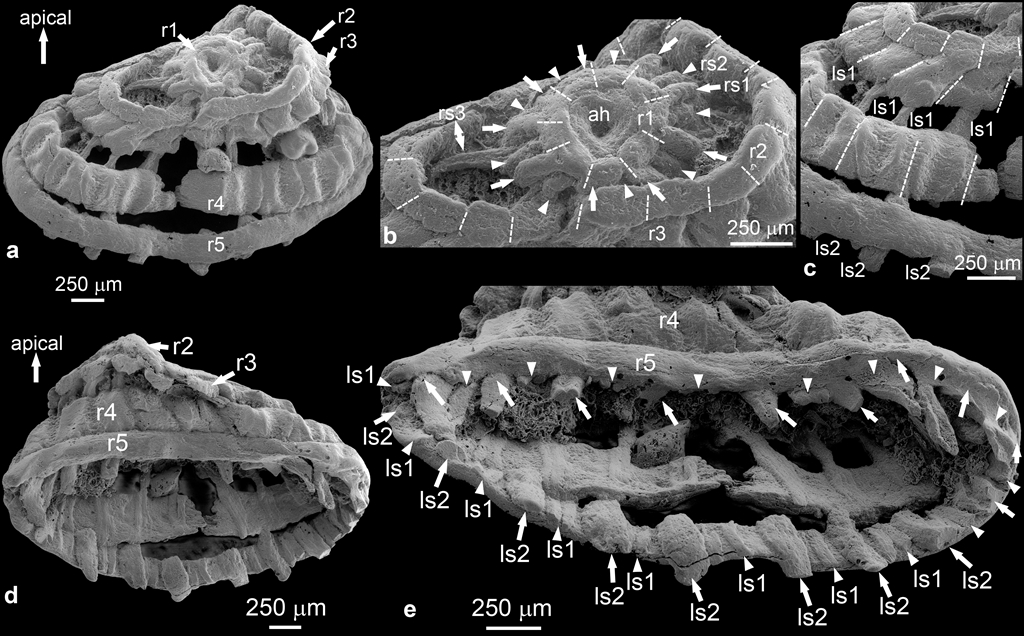
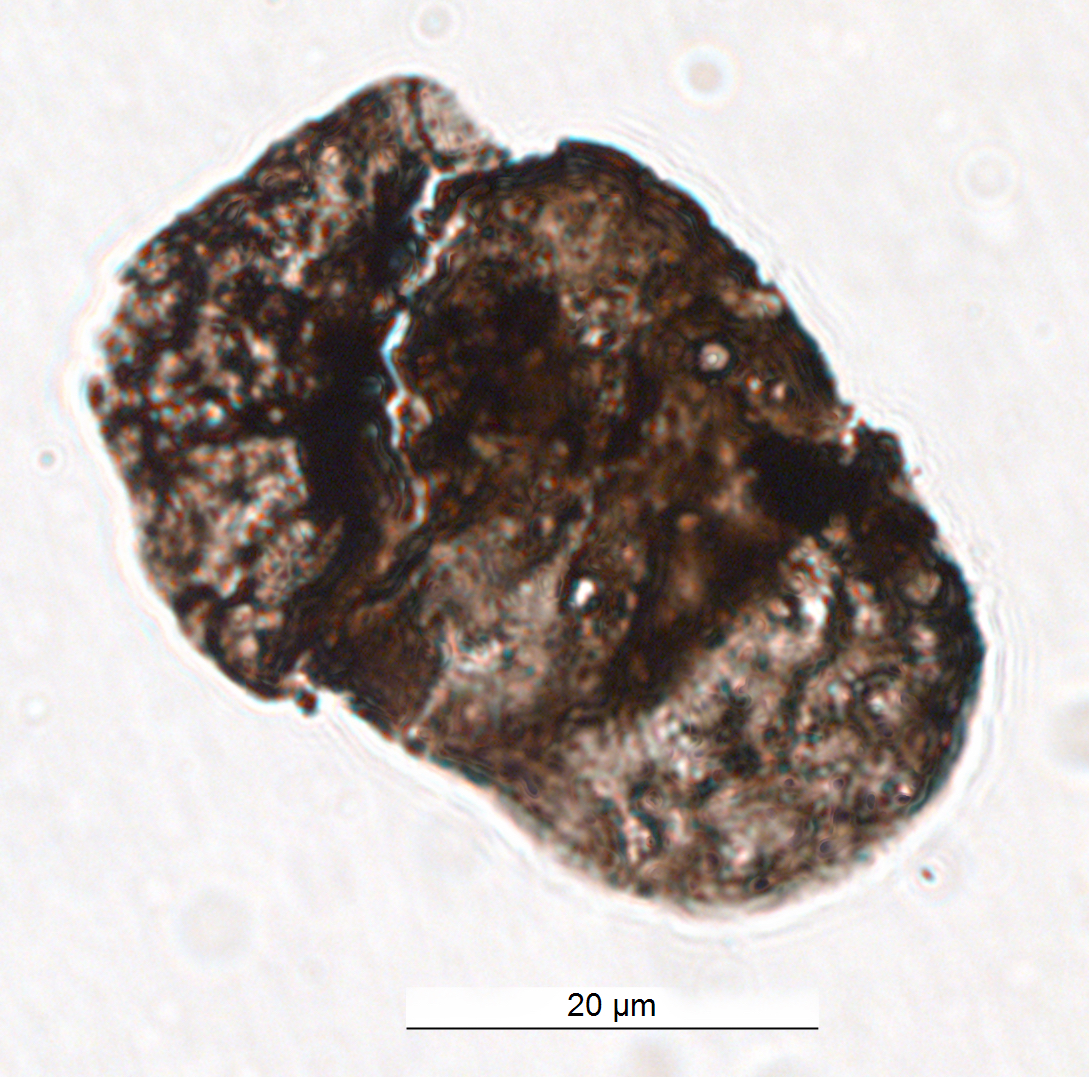
An international research team led by Prof. ZHANG Huaqiao from the Nanjing Institute of Geology and Palaeontology of the Chinese Academy of Sciences (NIGPAS) has reported the discovery of extraordinary early Cambrian (ca. 535 million years ago, or Ma) microfossils preserving the introvert musculature of cycloneuralians, a group of animals that include roundworms, horsehair worms, mud dragons, and many other creatures. An international research team led by Prof. ZHANG Huaqiao from the Nanjing Institute of Geology and Palaeontology of the Chinese Academy of Sciences (NIGPAS) has reported the discovery of extraordinary early Cambrian (ca. 535 million years ago, or Ma) microfossils preserving the introvert musculature of cycloneuralians, a group of animals that include roundworms, horsehair worms, mud dragons, and many other creatures. The discovery added fleshy insights into early Cambrian cycloneuralians, which are closely related to arthropods, the most successful animals on Earth. The study was published in Proceedings of the Royal Society B: Biological Sciences on Oct. 11. The Ecdysozoa superphylum represents the most diverse bilaterally symmetric animals. It contains Scalidophora (Kinorhyncha, Loricifera, Priapulida), Nematoida (Nematoda, Nematomorpha), and Panarthropoda (Tardigrada, Onychophora, Arthropoda). Scalidophora and Nematoida constitute the Cycloneuralia, whose monophyly is debated. Unambiguous ecdysozoan body fossils first appeared in the early Fortunian Age (ca. 535 Ma) and are represented by the total-group ecdysozoan taxon Saccorhytus and several crown-group cycloneuralian species. However, the preservation of Fortunian ecdysozoans is limited to cuticular integuments, with no labile internal tissues (e.g., muscles or nerve tissues) preserved, hampering further understanding of their functional morphology and evolutionary significance. In this study, the researchers described three phosphatized and millimeter-sized specimens from the early Fortunian Kuanchuanpu Formation (ca. 535 Ma) of China. Among them, one specimen (NIGP179459) is better preserved and consists of five successively larger rings that are interconnected with 19 radial and 36 longitudinal structures. The rings were compressed to certain degrees, implying that they were pliable when alive. The first ring is separated from the remaining four larger rings by a gap and is located almost co-planarly at the center of, or slightly apical to, the second ring. The radial structures connect the first ring with the third ring, whereas the longitudinal structures extend from the third ring to beyond the fifth ring. Some longitudinal structures become more fibrous in textural appearance toward the abapical end. In the reconstruction, the second to fifth rings are coaxially stacked and constitute an apically truncated cone, with hexaradially arranged internal longitudinal structures. Based on their patterns of arrangement, the fibrous texture, and the inferred pliability, the rings as well as the radial and longitudinal structures were interpreted as fossilized muscles. The preserved musculature consists of four groups of muscles, i.e., an inner circular, four outer circular, 19 radial, and 36 longitudinal muscles. This complex topology differs from that of the body-wall musculatures of basal animals such as cnidarians or ctenophores, and instead it likely represents musculature of bilaterian animals. The hexaradial symmetry imparted by the arrangement of the longitudinal muscles invites a comparison with scalidophorans, whose introvert exhibits radial symmetry both externally (i.e., longitudinal rows of scalids are radially disposed) and internally (i.e., longitudinal muscles are radially arranged). With a scalidophoran affinity, the researchers interpreted specimen NIGP179459 as the anterior introvert musculature. The authors interpreted the second to fifth rings as body-wall circular muscles, and the 36 longitudinal structures as body-wall longitudinal muscles. The body-wall circular and longitudinal muscles constitute a muscular grid. Since a similar body-wall muscular grid is present in priapulans but absent in loriciferans and kinorhynchs, specimen NIGP179459 was proposed to belong to the priapulans. Considering that the priapulan-like introvert may have characterized the last common ancestor of the Scalidophora, it is also possible that specimen NIGP179459 belongs to total-group Scalidophora. The total-group scalidophoran affinity of NIGP179459 is further supported by the first ring and radial structures. The researchers interpreted the first ring as an introvert circular muscle and the 19 radial structures as introvert circular muscle retractors. An introvert circular muscle is present in loriciferans, kinorhynchs, and the hatching larvae of priapulans, whereas introvert circular muscle retractors are present in kinorhynchs and the hatching larvae of priapulans. Furthermore, specimen NIGP179459 lacks a mouth cone and scalid-associated muscles, but these muscles are common in loriciferans and kinorhynchs. Thus, the total evidence supports a total-group scalidophoran affinity, possibly related to the priapulans. Scalidophorans as represented by specimen NIGP179459 were millimeter-sized and had an introvert with hexaradially arranged scalids, which correspond to the hexaradially arranged body-wall longitudinal muscle bundles inside. This musculature may have controlled the inversion of the introvert and thus facilitated locomotion and feeding. The absence of long introvert retractors indicates that the animals may have had very limited ability to retract their introvert, differing from modern scalidophorans that have long introvert retractors and thus can completely retract their introvert. Fig. 1 SEM images of NIGP179459 (Image by ZHANG Huaqiao) Fig. 2 Reconstructions of NIGP179459 (Image by ZHANG Huaqiao) Fig. 3 Schematic representation of scalidophoran musculatures (Image by ZHANG Huaqiao) Fig. 4 Phylogenetic position of scalidophorans represented by NIGP179459 (Image by ZHANG Huaqiao)
The findings link the Mesoproterozoic Horodyskia moniliformis with Ediacaran Horodyskia minor specimens, reinforcing their biogenicity and suggesting they represent a colonial giant-celled protist, possibly a coenocytic alga. This reveals an ancient and stable macrofossil taxon and shows coenocytic and colonial body plans dating back at least 1.48 billion years.
PANG Ke set aside some time to discuss the group’s findings with SCINQ. The enigmatic Proterozoic macrofossil genus Horodyskia, characterized by strings of bead-like structures, offers vital insights into early eukaryotic evolution. Despite its global distribution and fossil records extending from the early Mesoproterozoic Era (~1.48 Ga) to the terminal Ediacaran Period (~550 Ma), Horodyskia’s biological affinity is debated, with theories ranging from brown alga to green alga. A recent study by Li Guangjin et al. examined new Horodyskia specimens from the Tonian Period (~850-720 Ma) found in North China and have allowed for in-depth analysis using advanced techniques like light microscopy, SEM, and Raman spectroscopy. These specimens displayed diverse preservational styles, including carbonaceous compressions, 3D preserved organic-walled fossils, shallow impressions, and molds, offering invaluable phylogenetic insights. The findings link the Mesoproterozoic Horodyskia moniliformis with Ediacaran Horodyskia minor specimens, reinforcing their biogenicity and suggesting they represent a colonial giant-celled protist, possibly a coenocytic alga. This reveals an ancient and stable macrofossil taxon and shows coenocytic and colonial body plans dating back at least 1.48 billion years. PANG Ke set aside some time to discuss the group’s findings with SCINQ. PANG Ke Horodyskia has been described as an extremely old multicellular macroorganism. Could you explain to us in simple terms what makes Horodyskia so unique and why it has garnered so much scientific interest? Horodyskia is unique because of its mysterious “string of beads” body construction, which has not been found in extant macro-organisms or extinct macroscopic species. Some microbes present their cells in a similar manner via a common sheath or extracellular gelatinous matrix, but they are much smaller in size. Horodyskia is a fossil taxon of intense scientific interest because it is one of the oldest macroscopic fossils visible to the naked eye, with its earliest occurrence in the Mesoproterozoic (~1.48 Ga). If the biogenicity and eukaryotic nature of Horodyskia are proven, it will greatly help us to understand the tempos and modes of early eukaryotes, particularly in terms of how and when early eukaryotes developed complex multicellular grades of organization and acquired macroscopic body sizes. Your research suggests that Horodyskia might have grown to its macroscopic size through a mix of coenocytism and simple clonal coloniality. Could you break down what these two concepts mean and how they might have contributed to the organism’s growth? “Coenocytism” means that each bead of Horodyskia, although representing just one cell, possesses multiple nuclei inside its protoplasm; “simple clonal coloniality” means that all the beads/cells of a string come from a common mother cell by dividing, and they are not disassembled, but form a simple and not fully integrated string/colony after dividing. Therefore, “coenocytism” helps each bead/cell to become extremely larger in size because there are many nuclei inside that can regulate the giant mass of protoplasm (growth for individual bead/cell), whereas “simple clonal coloniality” helps each string/colony to become longer because there are halos/extracellular gelatinous matrix which envelop all the beads/cells and keep them in the manner of a string after dividing (growth for the whole string/colony). In terms of preservation, Horodyskia specimens have been previously found in cast-and-mold form within fine-grained siliciclastic rocks or cherts. In your new findings, however, there are multiple preservational styles. Could you explain these differences and why they’re significant? The most important preservational styles in our findings include carbonaceous compression and three-dimensional organic walls. These kinds of preservational styles are different from those previously reported in that there are organic films/walls preserved. These organic films/walls, similar to those of co-existing macroalgal fossils, provide convincing evidence for the biogenicity of Horodyskia. Schematic reconstruction of Horodyskia moniliformis (larger beads) and Horodyskia minor (smaller beads) Your research also disputes the possibility of these specimens being sedimentary structures, mud flocs, or intraclasts. What evidence supports this and why is this important to the study of Horodyskia? It is important to exclude the possibility of sedimentary structures before we can discuss the evolutionary significance of Horodyskia or any other Precambrian fossils. Apart from the preservation of organic films/walls, evidence supporting our conclusion includes the consistent morphology, bead size distribution, and bead spacing of Horodyskia. The bimodal size distribution with a narrow average/standard deviation ratio for the beads of Horodyskia is a characteristic of biogenic organisms, rather than sedimentary structures, mud flocs, or intraclasts. You mention two distinct groups of fossils with different bead sizes found on the same bedding plane. Could you talk about why this matters and how it supports the assignment of specimens with submillimetric beads to the genus Horodyskia? Horodyskia preserved in Mesoproterozoic rocks (1.6-1.0 Ga) usually have millimetric beads. Later, people also assigned specimens with submillimetric beads from the late Ediacaran Period (~550 Ma), which are much younger in age, smaller in size, and different in preservational style, to the genus of Horodyskia. This taxonomic assignment has been a topic of long debate. We found two groups of fossils with distinct bead sizes on the same bedding plane in the North China material. These two groups of specimens have the same preservational style, exhibit similar positive correlations between bead diameter and spacing, and share a largely overlapping chemospace distribution, suggesting that they are congeneric organisms belonging to the same genus—Horodyskia. Particularly, the ranges of their bead diameters overlap with that of Horodyskia minor (submillimetric beads) from the Ediacaran Period and that of Horodyskia moniliformis (millimetric beads) from the Mesoproterozoic, respectively. Therefore, our study supports the assignment of specimens with submillimetric beads, including those from the Ediacaran Period, to the genus Horodyskia. The large cell size of Horodyskia indicates it’s likely a multinucleated or coenocytic eukaryote. For those of us who aren’t experts, could you explain what this means and why it’s a significant finding? Because the cell size of Horodyskia is orders of magnitude larger than typical prokaryotic cells, including the largest prokaryotes such as the sulfur-oxidizing bacterium Thiomargarita, we interpret it as a eukaryote. But such a large size is even unusual for a eukaryote. In extant eukaryotes, a millimetric cell usually is multinucleated or coenocytic. Because the cell is too large, a single nucleus, which can only control a limited volume of the protoplasm, cannot fully control the whole protoplasm. Therefore, we infer that there must be a number of nuclei inside the beads/cells of Horodyskia, making it a multinucleated or coenocytic eukaryote. Finally, your research proposes that Horodyskia is a multicellular, giant-celled protist, which provides important temporal constraints on the origin of coenocytic eukaryotes. Could you explain the implications of this finding, both for our understanding of Horodyskia and for our broader understanding of the evolution of eukaryotes? The direct implication of this finding is that it proves the biogenicity and multicellular and eukaryotic nature of Horodyskia, making this taxon among the oldest bona fide macroscopic organisms. Scientists have inferred that early eukaryotes may have achieved a macroscopic size through multicellularity. Horodyskia does present multicellularity via simple clonal coloniality. On the other hand, the individual beads/cells of Horodyskia are also visible to our naked eyes. This is achieved by another way—possessing multiple nuclei in each bead/cell, i.e., coenocytism. This is a new understanding about early eukaryotes. We now know that early eukaryotes can acquire a large body size through the combination of coenocytism and simple clonal coloniality. They utilized both pathways simultaneously.
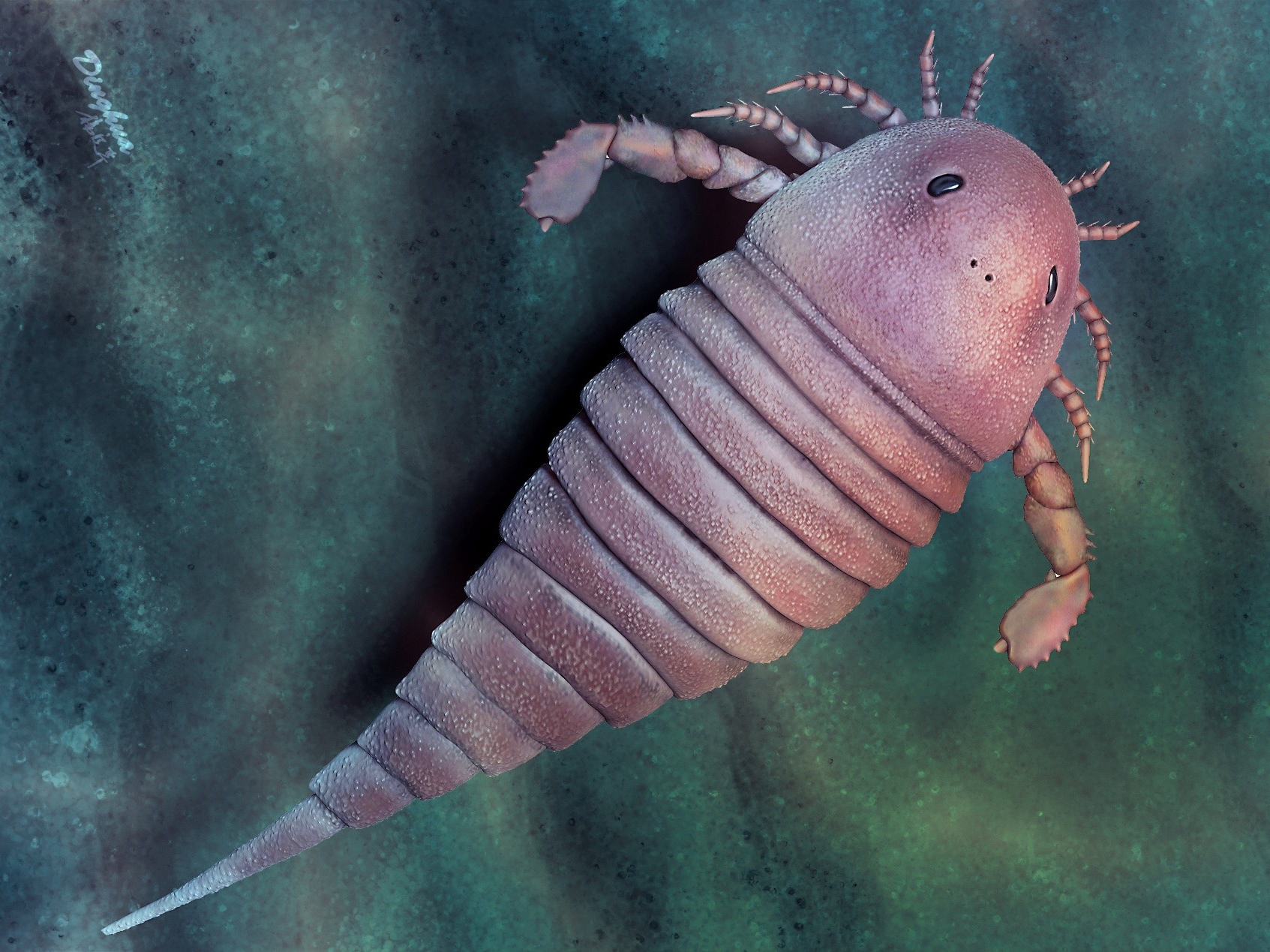
Researchers from China and the United Kingdom have discovered fossils of a previously unknown eurypterid, more commonly referred to as a sea scorpion, dating back 450 million years to the Ordovician period in east China's Zhejiang Province, the earliest recorded in the country.
This picture provided by the Nanjing Institute of Geology and Palaeontology of the Chinese Academy of Sciences shows the restored image of a sea scorpion based on some 450-million-year-old fossils. Researchers from China and the United Kingdom have discovered fossils of a previously unknown eurypterid, more commonly referred to as a sea scorpion, dating back 450 million years to the Ordovician period in east China's Zhejiang Province, the earliest recorded in the country. A joint working group led by the Nanjing Institute of Geology and Palaeontology reported the rare eurypterid from Wenchang Formation of Anji County. (Xinhua) Researchers from China and the United Kingdom have discovered fossils of a previously unknown eurypterid, more commonly referred to as a sea scorpion, dating back 450 million years to the Ordovician period in east China's Zhejiang Province, the earliest recorded in the country. A joint working group led by the Nanjing Institute of Geology and Palaeontology, Chinese Academy of Sciences, reported the rare eurypterid from Wenchang Formation of Anji County. The study was published in the Journal of Paleontology earlier this month. Having a round head with a parabolic shell, the 15-cm-long species looks cuter than previously found eurypterid species, said Wang Han, a major participant in the research and a Ph.D. student with the institute. However, it was actually a fierce ocean predator, Wang added. Zhang Yuandong, a researcher with the institute and also a member of the research team, said the eurypterid found in Anji is the earliest recorded in China, shedding light on the early evolution of eurypterids. Fossils of other marine life found in the deep sea, such as sponges, were also discovered. The emergence of new materials and the progress of paleontological research methods will provide the basis for further comprehensive studies of Chinese eurypterids, said Zhang. (Xinhua)
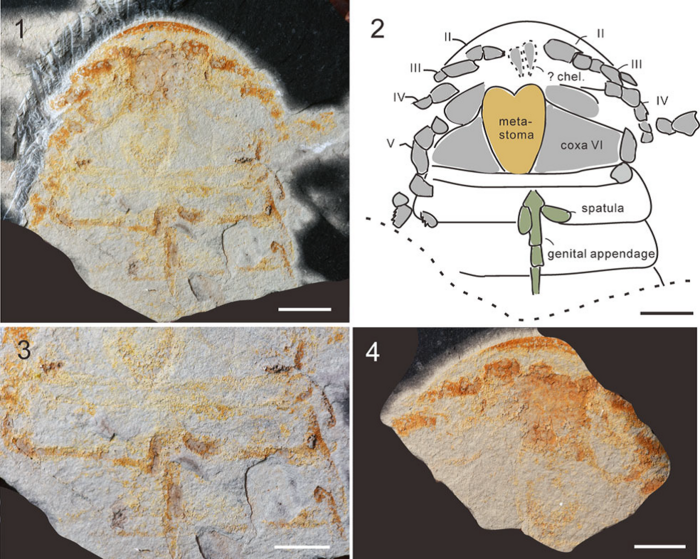
Eurypterids (Arthropoda: Chelicerata), normally known as sea scorpions, are an important extinct group of Paleozoic chelicerate arthropods. Eurypterids (Arthropoda: Chelicerata), normally known as sea scorpions, are an important extinct group of Paleozoic chelicerate arthropods. Researchers led by Profs. ZHANG Haichun, WANG Bo, ZHANG Yuandong, and PhD student WANG Han from the Nanjing Institute of Geology and Palaeontology of the Chinese Academy of Sciences (NIGPAS), in collaboration with their colleagues from the UK, have described a new Ordovician eurypterid, Archopterus anjiensis n. gen. n. sp., from the latest Ordovcian (Hirnantian) Anji Biota of Zhejiang Province, South China. It represents the first unequivocal Ordovician eurypterid recorded in China as well as the oldest one ever found in the country, adding new knowledge to the early evolution of eurypterids in Gondwana. The study was published in the Journal of Paleontology on May 10. Eurypterids first appeared in the Ordovician, attained their maximum diversity during the late Silurian and early Devonian, and became extinct at the end of Permian. With bizarre morphology and high ecological diversity, they occupied marine, freshwater, and even terrestrial environments, becoming an important medium for us to understand the transition of ecological environments in the Paleozoic. However, Ordovician eurypterids are extremely rare. To date, only 12 species of Ordovician eurypterids are known in the world, so any reported occurrence is of great significance to understanding their early evolutionary history. The current study reported a rare Ordovician eurypterid from the Wenchang Formation of Anji County, Zhejiang Province. "Archopterus anjiensis is characterized by a parabolic carapace, Hughmilleria-type prosomal appendages, vase-shaped metastoma, and a three-segmented type A (female) genital appendage, estimated to be 15 cm long," said WANG Han, first author of the study. Associated with diverse sponges, Archopterus anjiensis was found in a deep-water environment at a depth of several hundred meters. This occurrence, along with some Ordovician eurypterids from a normal marine environment, may indicate that some early eurypterids favored living in deeper waters than their post-Ordovician relatives. In addition, Archopterus anjiensis represents the oldest adelophthalmid and extends the stratigraphic range of this family to the Late Ordovician (by about 10 million years), making Adelophthalmidae the longest-living eurypterid family (Ordovician to Permian), and indicates that adelophthalmids have been found in the widest range of habitats of all eurypterid groups. This rare Ordovician sea scorpion from Zhejiang Province, along with continuous discoveries of eurypterid fossils in China, indicates that there is great potential for exploration of eurypterids in Paleozoic Gondwana areas.
Scientists from China, Germany and the UK led by Prof. LIU Feng from the Nanjing Institute of Geology and Palaeontology of the Chinese Academy of Sciences (NIGPAS) have revealed that pollen preserved in 250-million-year-old rocks contains abundant compounds that function like sunscreen but are produced by plants to protect themselves from harmful ultraviolet (UV-B) radiation. Scientists from China, Germany and the UK led by Prof. LIU Feng from the Nanjing Institute of Geology and Palaeontology of the Chinese Academy of Sciences (NIGPAS) have revealed that pollen preserved in 250-million-year-old rocks contains abundant compounds that function like sunscreen but are produced by plants to protect themselves from harmful ultraviolet (UV-B) radiation. The presence of these compounds suggests that a pulse of UV-B played an essential role in the end-Permian mass extinction event. The study was published in Science Advances on Jan. 6. The end-Permian mass extinction event (250 million years ago) is the most severe of the big five mass extinction events, with the loss of ~80% of marine and terrestrial species. This catastrophic loss of biodiversity resulted from a palaeoclimate emergency triggered by continental-scale volcanism that covers much of modern-day Siberia. The volcanic activity drove the release into the atmosphere of massive amounts of carbon that had been locked up in Earth's interior, thus generating large-scale greenhouse warming. Accompanying this global warming event was a collapse of the Earth's ozone layer. Support for this theory comes from the abundant occurrence of malformed spores and pollen grains that testify to an influx of mutagenic UV irradiation. Plants require sunlight for photosynthesis but need to protect themselves and particularly their pollen from the harmful effects of UV-B radiation. "To do so, plants load the outer walls of pollen grains with compounds that function like sunscreen to protect vulnerable cells to ensure successful reproduction. Without the 'sunscreen' compounds, forests could have been sterilized, leading to the collapse of the terrestrial ecosystem," said Prof. Barry Lomax from the University of Nottingham. "We have developed a method to detect these phenolic compounds in fossil pollen grains (Alisporites-type) recovered from southern Tibet and detected much higher concentrations in those grains that were produced during the end-Permian mass extinction and peak phase of volcanic activity," said Prof. LIU. The researchers found an increase in UV-B-absorbing compounds (UACs) that coincided with a spike in mercury concentration and a decrease in carbon isotopes in the latest Permian deposits, suggesting a close temporal link between large-scale volcanic eruptions, global carbon- and mercury-cycle perturbations, and ozone-layer disruption. Elevated UV-B levels exerted far-reaching and long-lasting impacts on the entire Earth system. Recent modelling studies have demonstrated that elevated UV-B stress reduced plant biomass and terrestrial carbon storage, thus exacerbating global warming. In addition, increased concentration of phenolic compounds also makes plant tissue less easily digestible, making a hostile environment even more challenging for herbivores. "Volcanism on such a cataclysmic scale influences all aspects of the Earth system, from direct chemical changes in the atmosphere, through changes in carbon sequestration rates, to reducing the volume of nutritious food sources available for animals," said Dr. Wes Fraser from Oxford Brookes University.
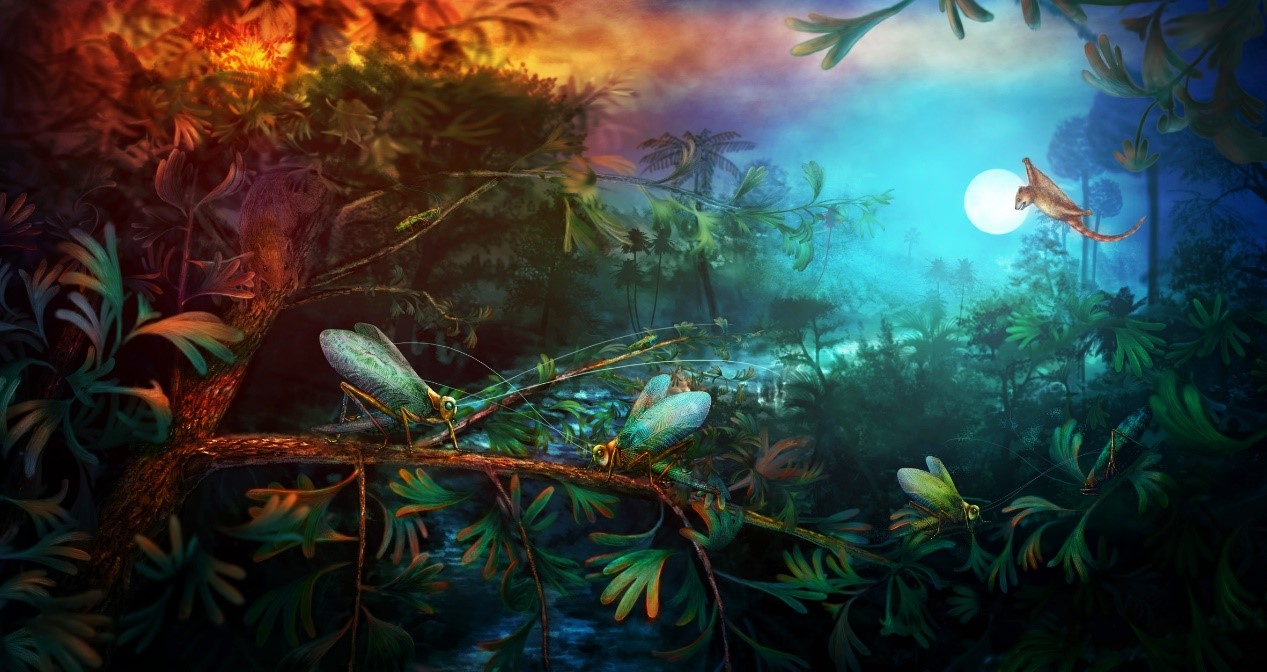
Acoustic communication has played a key role in the evolution of animals especially vertebrates and insects, ranging from mating to warning calls and even social learning. The reconstruction of ancient acoustic signals is challenging, however, due to the extreme rarity of fossilized organs. Acoustic communication has played a key role in the evolution of animals especially vertebrates and insects, ranging from mating to warning calls and even social learning. The reconstruction of ancient acoustic signals is challenging, however, due to the extreme rarity of fossilized organs. Insects were the first terrestrial animals to use airborne sound signals for long-distance communication. Among acoustically signaling insects, katydids stand out as an ideal source for investigating the evolution of acoustic organs and behavior. Recently, Ph.D. student XU Chunpeng, under the supervision of Profs. WANG Bo and ZHANG Haichun from the Nanjing Institute of Geology and Palaeontology of the Chinese Academy of Sciences (NIGPAS), working with an international team of paleoentomologists, carried out a detailed and global investigation of fossil katydids from the Mesozoic Era (commonly referred to as the age of the dinosaurs). The study provides novel insights on acoustic evolution of Mesozoic katydids and evolution of the Mesozoic soundscape. It was published in PNAS on Dec. 12. The research team reported the earliest tympanal ears and sound-producing system (stridulatory apparatus) in exceptionally preserved Mesozoic katydids. "The newly found tympanal ears in prophalangopsid katydids from the Middle Jurassic Daohugou Konservat-Lagerst?tte represent the earliest-known insect ears, extending the age range of the modern-type auditory tympana by 100 million years to the Middle Jurassic, some 160 million years ago," said XU. The reconstruction of singing frequencies of Mesozoic katydids and oldest tympanal ears demonstrate that katydids had evolved complex acoustic communication, including mating signals, inter-male communication, and directional hearing, at least by the Middle Jurassic. Also, katydids had evolved a high diversity of singing frequencies, including high-frequency musical calls, accompanied by acoustic niche partitioning, all at least by the Late Triassic (200 million years ago). This suggests that acoustic communication already could have been an important evolutionary driver in the early radiation of terrestrial insects after the Permo-Triassic mass extinction. The Early and Middle Jurassic katydid transition from extinct haglid- to extant prophalangopsid-dominated insect faunas coincided with the diversification of derived mammalian groups (clades) and improvement of hearing in early mammals, supporting the hypothesis of acoustic co-evolution of mammals and katydids. The high-frequency songs of Mesozoic katydids could even have driven the evolution of intricate hearing systems in early mammals, and conversely, mammals with progressive hearing ability could have exerted selective pressure on the evolution of katydids, including faunal turnover. These findings demonstrate that insects, especially katydids, dominated choruses during the Triassic—a situation different from the modern soundscape. After the appearance of birds and frogs in the Jurassic, the forest soundscape became almost the same as the modern one in the Cretaceous, except lacking the sound of cicadas (which have fewer musical calls). These results also highlight the ecological significance of insects in the Mesozoic soundscape, which has hitherto been largely unknown in the palaeontological record. This research was supported by the National Natural Science Foundation of China, the Strategic Priority Research Program of the Chinese Academy of Sciences, and the Deep-time Digital Earth (DDE) Big Science Program.
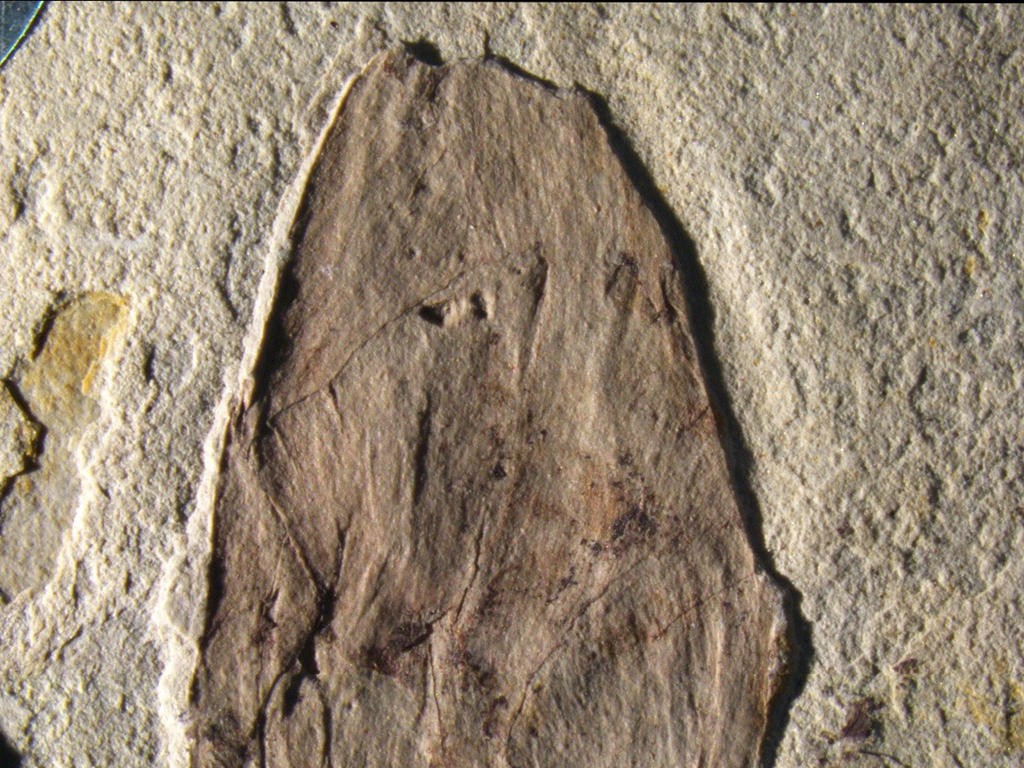
Chinese researchers have unveiled the earliest flower bud fossil from the Early Cretaceous (1.25 million years ago), which was found in the Yixian Formation of Lingyuan City, Northeast China's Liaoning Province, according to Nanjing Institute of Geology and Palaeontology on Monday. (ECNS) -- Chinese researchers have unveiled the earliest flower bud fossil from the Early Cretaceous (1.25 million years ago), which was found in the Yixian Formation of Lingyuan City, Northeast China's Liaoning Province, according to Nanjing Institute of Geology and Palaeontology on Monday. In the botanical sense, the word "flower" refers to the reproductive organs of angiosperm rather than a typical flower with beautiful petals. The fossil flower buds are oval, 17 millimeters in length, and 9 millimeters wide, on a 15-millimeter-long stalk. There is a larch-like structure at the bottom, which is covered with flower petals, the researchers said. The discovery of the flower bud fossil shows that the "flower" in ordinary meaning appeared in the Early Cretaceous. In addition to attracting insect pollination, another important function of the petals is to protect stamens. The flower bud fossil also reveals that angiosperms and insects from the Early Cretaceous are likely to have begun collaborative evolution. Although great diversity of reproductive organs among early angiosperms has been reported from the Yixian Formation (Lower Cretaceous) of China, no typical flower with petals has hitherto been seen from the Early Cretaceous. The research, jointly conducted by WangXinfrom the Nanjing Institute of Geology and Palaeontology and Chen Lijun from the Orchid Conservation & Research Center of Shenzhen, has been published in Biology.