
The Ginkgoales are rare living fossils and important members of the global terrestrial flora during the Mesozoic Era, once widely distributed across the world. Since the Triassic Period, they have exhibited unique evolutionary stasis and environmental adaptability, with their macromorphology and microstructure remaining relatively stable over an extended geological timescale. This long-term evolutionary continuity has emerged as a critical indicator for exploring palaeoclimatic and palaeoenvironmental changes. In this context, in-depth studies on the systematics and diversity dynamics of fossil ginkgophytes are of great significance for revealing variations in palaeoclimate and palaeoatmospheric CO2 concentrations.
Recently, an international research team led by Prof. WAGN Yongdong from the Nanjing Institute of Geology and Palaeontology, Chinese Academy of Sciences (NIGPAS) in collaboration with scholars from Germany, France and Ireland, has made new progress in the systematics and diversity evolution of Mesozoic ginkgophytes. The team conducted a systematic taxonomic investigations on the ginkgoalean fossils discovered in the Jurassic strata of the Qaidam Basin in northwestern China. Their work reveals the diversity characteristics of these plants and their responses to paleoenvironmental changes, providing a crucial comparative archive for studying the evolutionary history of Jurassic vegetation and climatic changes on the Qinghai-Tibet Plateau. The research findings have been published in Papers in Palaeontology, an international journal of palaeontology.
This study focuses on ginkgoales, a key fossil plant group, from the Early–Middle Jurassic of the Qaidam Basin in Qinghai Province. A total of 128 fossil specimens were systematically collected and analyzed from 8 consecutive fossil-bearing layers. Comprehensive investigations were conducted by integrating macromorphological traits (e.g., leaf shape and venation patterns) with micromorphological cuticular features (e.g., stomatal distribution and subsidiary cell structure). Through rigorous taxonomic identification, 10 species belonging to 3 genera, i.e. Ginkgoites, Baiera and Sphenobaiera, were recognized. Among these, Ginkgoites was the dominant genus, comprising 6 species, which reflects the high diversity of ginkgoales during this period. In addition, the diagnostic characteristics of two species, G. qaidamensis and S. ginkgooides, were revised with supplementary micromorphological cuticular data, thereby refining their taxonomic delimitations. Furthermore, two new records attributable to Baiera and Sphenobaiera were reported for the first time in the Qaidam Basin. These findings enrich the composition of the ginkgo flora in the study area and provide novel materials for cross-regional floral comparisons.
The research team innovatively adopted the Factor Analysis of Mixed Data (FAMD) method, which effectively integrated macromorphological and micromorphological data, and fully confirmed the complementary value and synergistic effect of macro- and micro-characteristics in the taxonomic classification of fossil ginkgoes. Furthermore, it was found that some species, including Ginkgoites qaidamensis and Ginkgoites longifolius, maintained stable morphological traits despite spanning the Early–Middle Jurassic strata. This finding provides critical fossil evidence and theoretical support for deepening our understanding of the evolutionary resilience of ginkgoales, their adaptive strategies in the face of Mesozoic environmental fluctuations, and the accurate reconstruction of the palaeoclimatic and palaeoecological patterns of the Early–Middle Jurassic in the Qaidam Basin and even the northeastern Qinghai-Tibet Plateau.
The study demonstrates that, despite the Qaidam Basin undergoing significant climatic changes over a temporal span of approximately 20 million years during the Early–Middle Jurassic, representative ginkgoalean still exhibited relative stability in leaf morphology and anatomical structures. This indicates that ginkgoales possessed the dual characteristics of morphological variability and ecological adaptability throughout their long-term evolutionary process. These findings deepen our understanding of the evolutionary history and adaptive capacity of ginkgoales, and provide a new perspective for elucidating the environmental adaptability of plants during this geological period.
Dr. ZHANG Li, a postdoctoral researcher from NIGPAS, is the first author of this paper, while Prof. WANG Yongdong serves as the corresponding author. Researchers from NIGPAS, the Nanjing Center of China Geological Survey, Chengdu University of Technology, as well as from the University of Lyon 1 (France), University College Dublin (Ireland), and the Senckenberg Research Institute (Germany) contributed to this study.
This research was supported by the National Natural Science Foundation of China, the Basic Research Program of Jiangsu Province, the China Postdoctoral Science Foundation, the China Scholarship Council and other funding sources.
Reference: ZHANG Li, WANG Yongdong*, CHEN Hongyu, ZHU Yanbin, XIE Aowei, AN Pengcheng, GUIGNARD Gaëtan, RUHL Micha, 2025. Early to Middle Jurassic Ginkgoales from the Qaidam Basin, northwest China. Papers in Palaeontology, 11: e70054. https://doi.org/10.1002/spp2.70054.
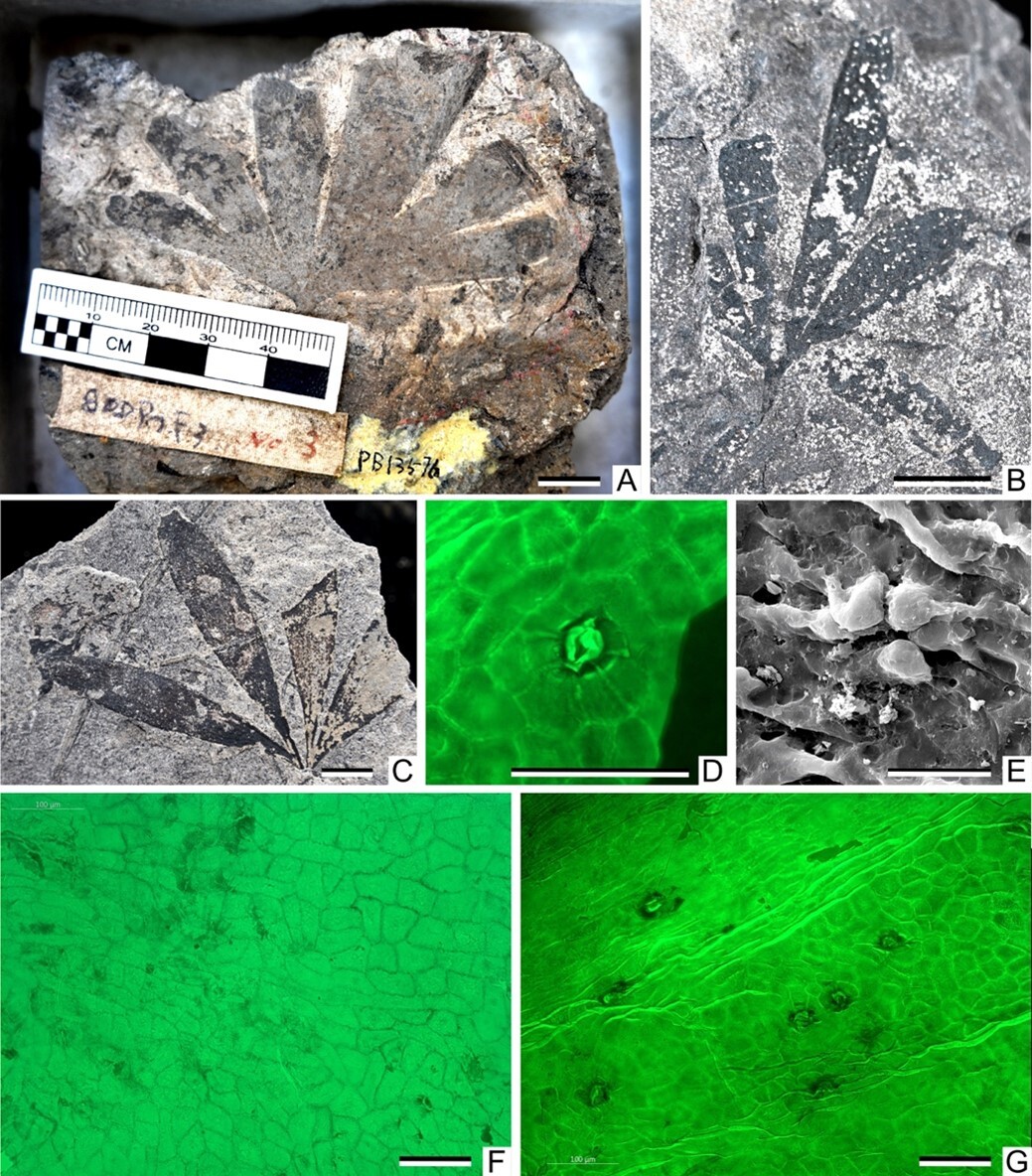
Fig.1 Representative leaf fossil specimens of Ginkgoites qaidamensis with cuticular structure.
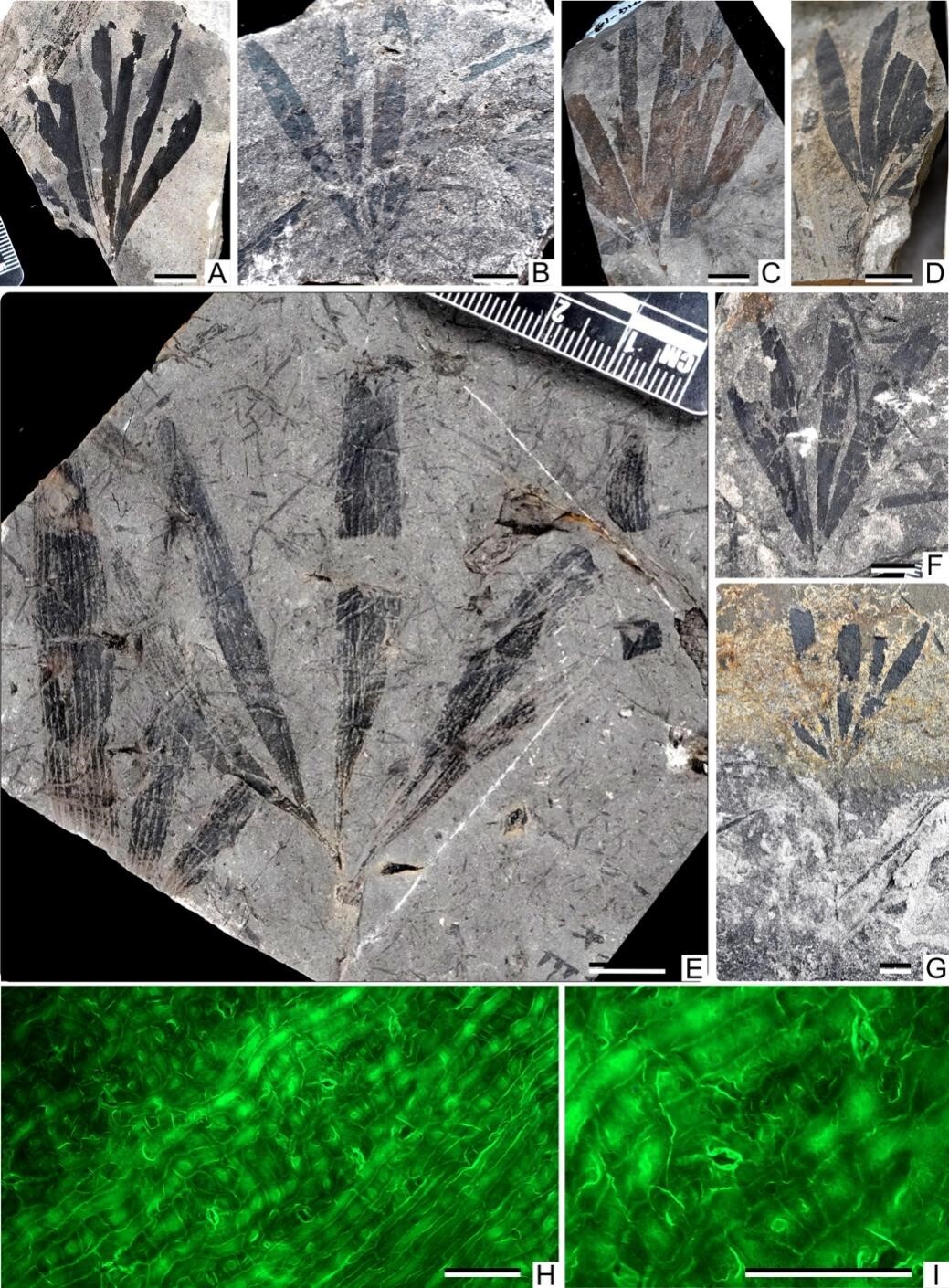
Fig.2 Representative leaf fossil specimens of Ginkgoites longifolius with cuticular structure.
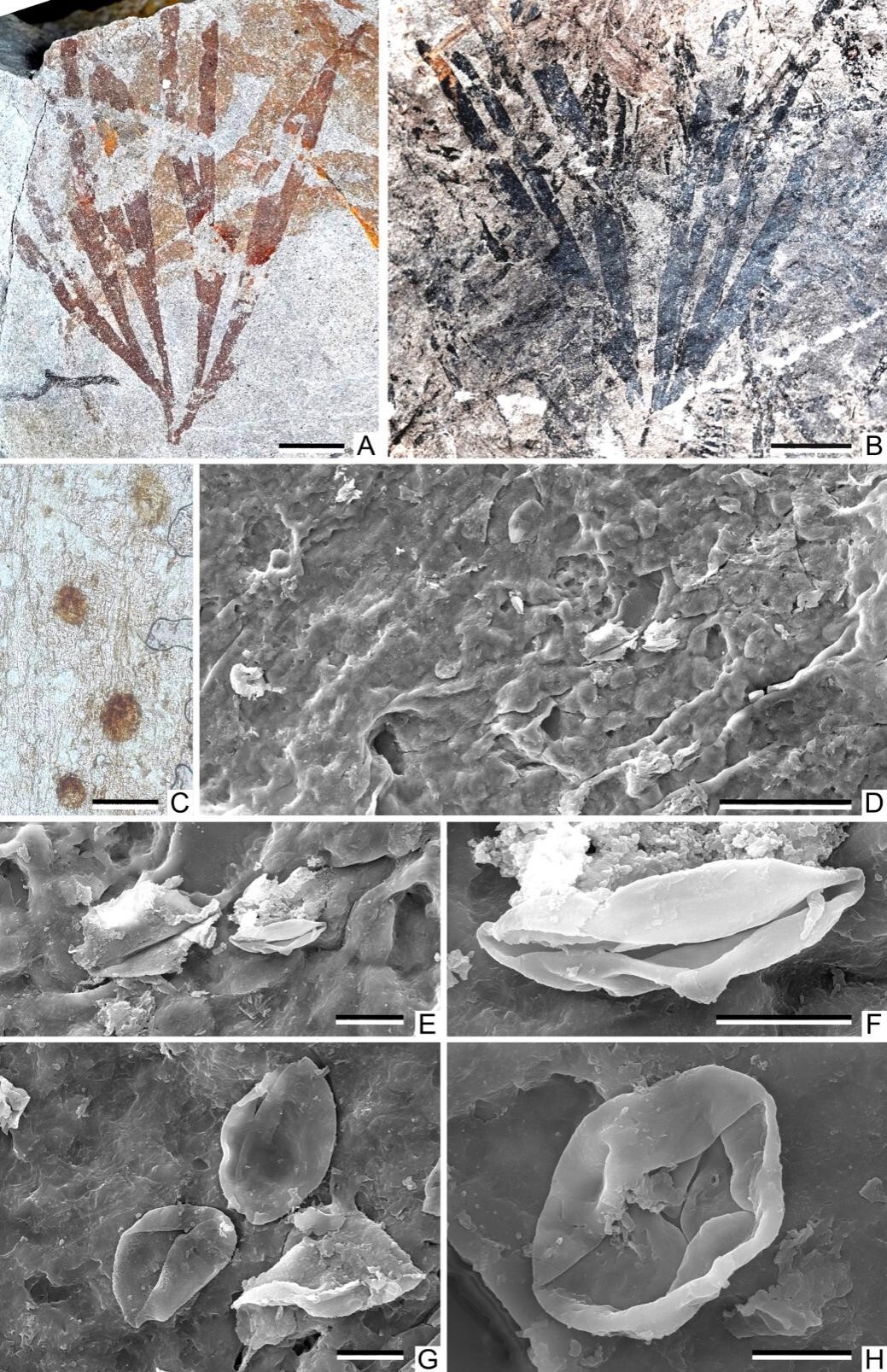
Fig.3 Presentative leaf fossil specimens of Baiera concinna with cuticular structure and associated pollen grains.
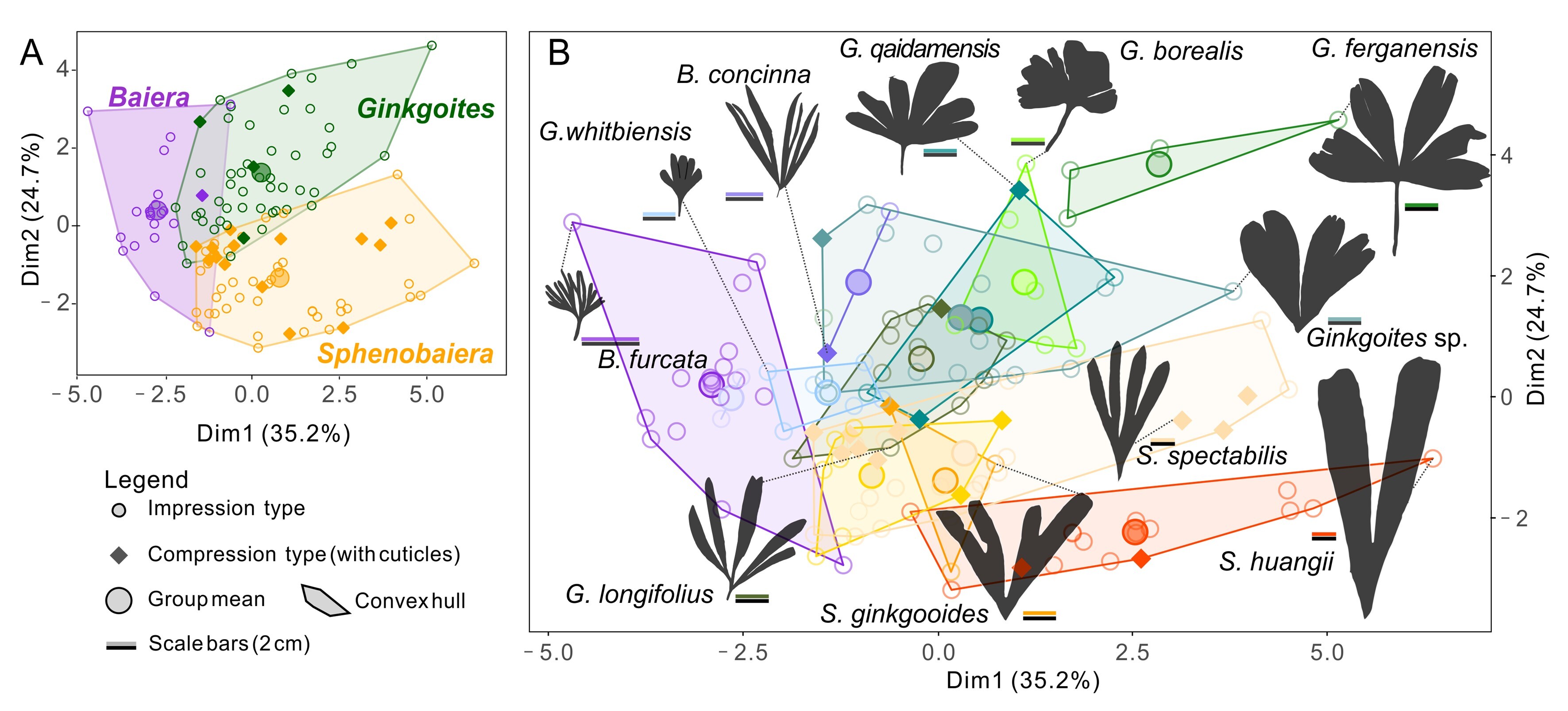
Fig.4 Results of factorial analysis of mixed data (FAMD) performed on Early–Middle Jurassic fossil Ginkgoales specimens from the Qaidam Basin
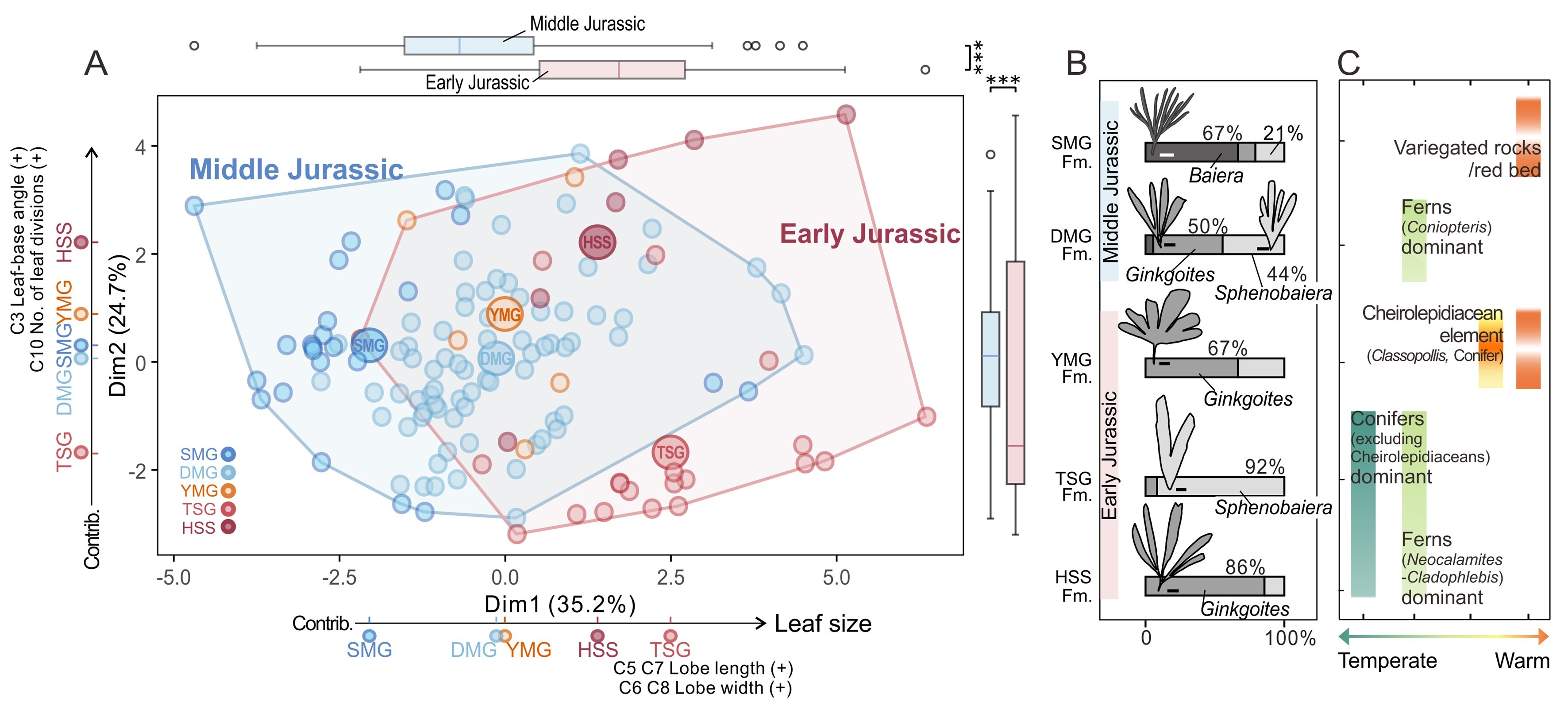
Fig.5 Variations in fossil Ginkgoales across the Early to Middle Jurassic in the Qaidam Basin, China.
Download: