
The Silurian is the key period for the origin and evolution of early vascular plants, witnessing initial plant diversification and phytogeographic zonation. As an important group of early land plants, the Zosterophyllopsida, first appeared with Euphyllophytopsida in South China, Australia, Kazakhstan and Canada during the Silurian. Zosterophyllopsida is represented by its type genus Zosterophyllum, which definitive fossil records begin in the late Silurian (Pridoli), and the genus experienced appearance, expansion, and eventual extinction during the Early Devonian, leaving a widespread fossil record globally.
Recently, the Early Land Plant Evolution working group of Nanjing Institute of Geology and Palaeontology, Chinese Academy of Sciences (NIGPAS), led by Prof. XU Honghe, made new progress in a systematic study on plant fossils from the Pridoli of western Junggar, Xinjiang. The evolutionary patterns of species diversity and morphological disparity in the globally distributed early land plant genus Zosterophyllum was also quantitatively analyzed in this study. The research result was published in the international botanical journal Annals of Botany.
The research team discovered a new species of Zosterophyllum from the Wutubulake Formation in the western Junggar, naming it Zosterophyllum mangkeluense. This plant exhibits a tufted habit characterized by H- or K-shaped branching in the basal part, with smooth erect axes terminating in relatively compact spikes composed of helically arranged, unequal-valved sporangia. The discovery of this new species enriches the composition of the late Silurian flora in this region and represents one of the earliest global fossil records for the genus Zosterophyllum.
Furthermore, the team collected global fossil occurrence data of Zosterophyllum and morphological data from 18 Zosterophyllum species. Using methods such as morphospace and disparity analyses, diversity estimation etc., we traced the evolutionary trajectory of the genus from the Pridoli to the Emsian. The study found that while the species diversity of Zosterophyllum peaked during the Pragian of the Early Devonian, the principal expansion of its morphospace occurred earlier from the Pridoli to the Lochkovian. This reveals a decoupled evolutionary pattern between species diversity and the whole-plant morphological disparity, suggesting that morphological innovations serve as a key factor promoting species diversification in early vascular plants.
In this study, the research group recognizes a new Zosterophyllum species and introduces qualitative description with quantitative statistical methods, revealing the uncoupling of species diversity and morphological disparity in Zosterophyllum during early land plant evolution. It provides a clearer depiction of the evolutionary trajectory of this group and offers new evidence for understanding Silurian–Devonian plant evolution.
The research was supported by National Key R&D Program of China, the National Natural Science Foundation of China, Shandong Provincial Natural Science Foundation, and the State Key Laboratory of Palaeobiology and Stratigraphy (NIGP, CAS).
Reference: Wang Y.†, Liu B.C.†, Zong R.W., Wang K., Wang Y., Xu H.H.*. 2025. Uncoupling of morphological disparity and species diversity in Zosterophyllum, with its new species from the Pridoli (Silurian) of West Junggar, Xinjiang, China. Annals of Botany. https://doi.org/10.1093/aob/mcaf337.
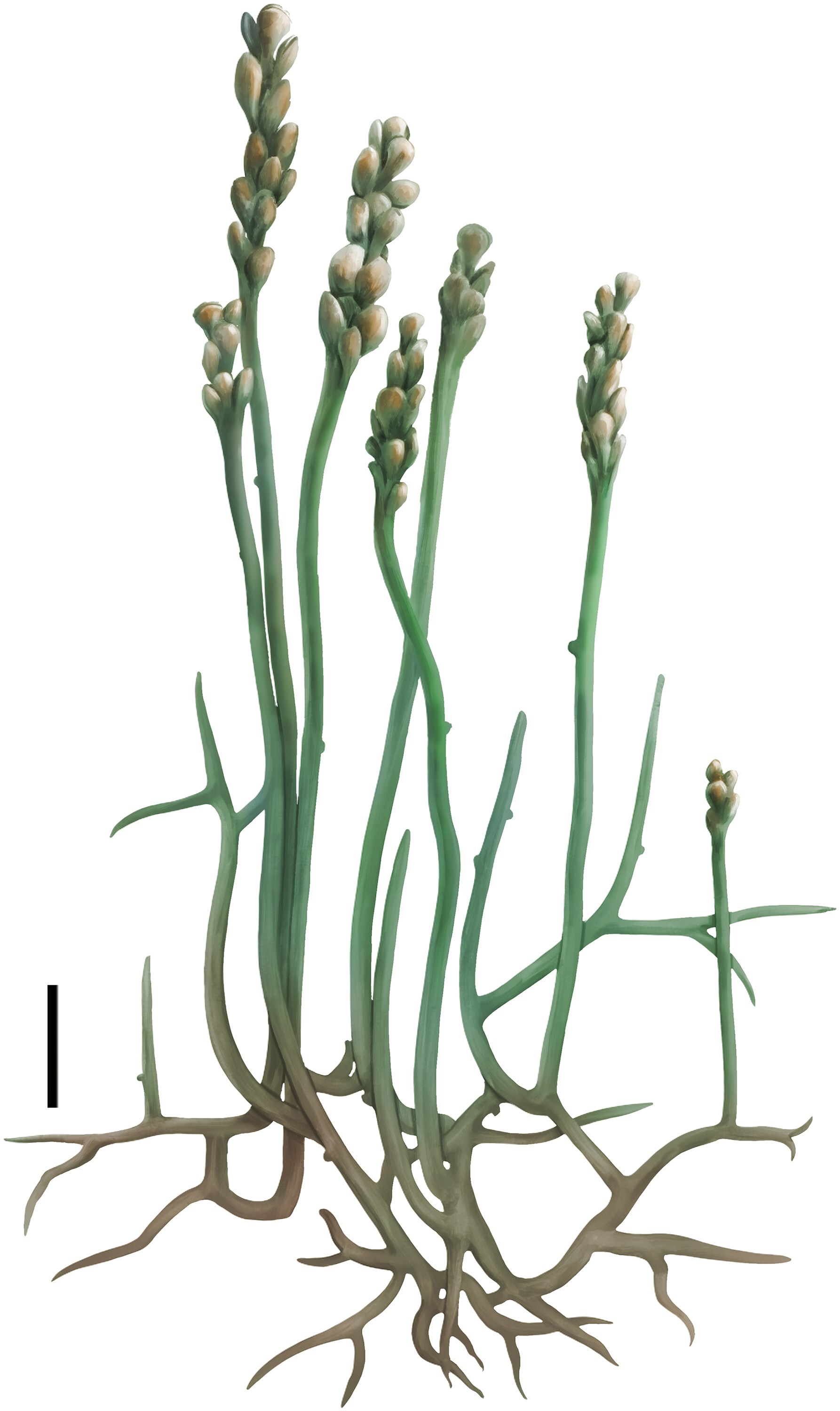
Fig.1 Reconstruction ofZosterophyllum mangkeluensesp. nov. Scale bars: 10 mm.
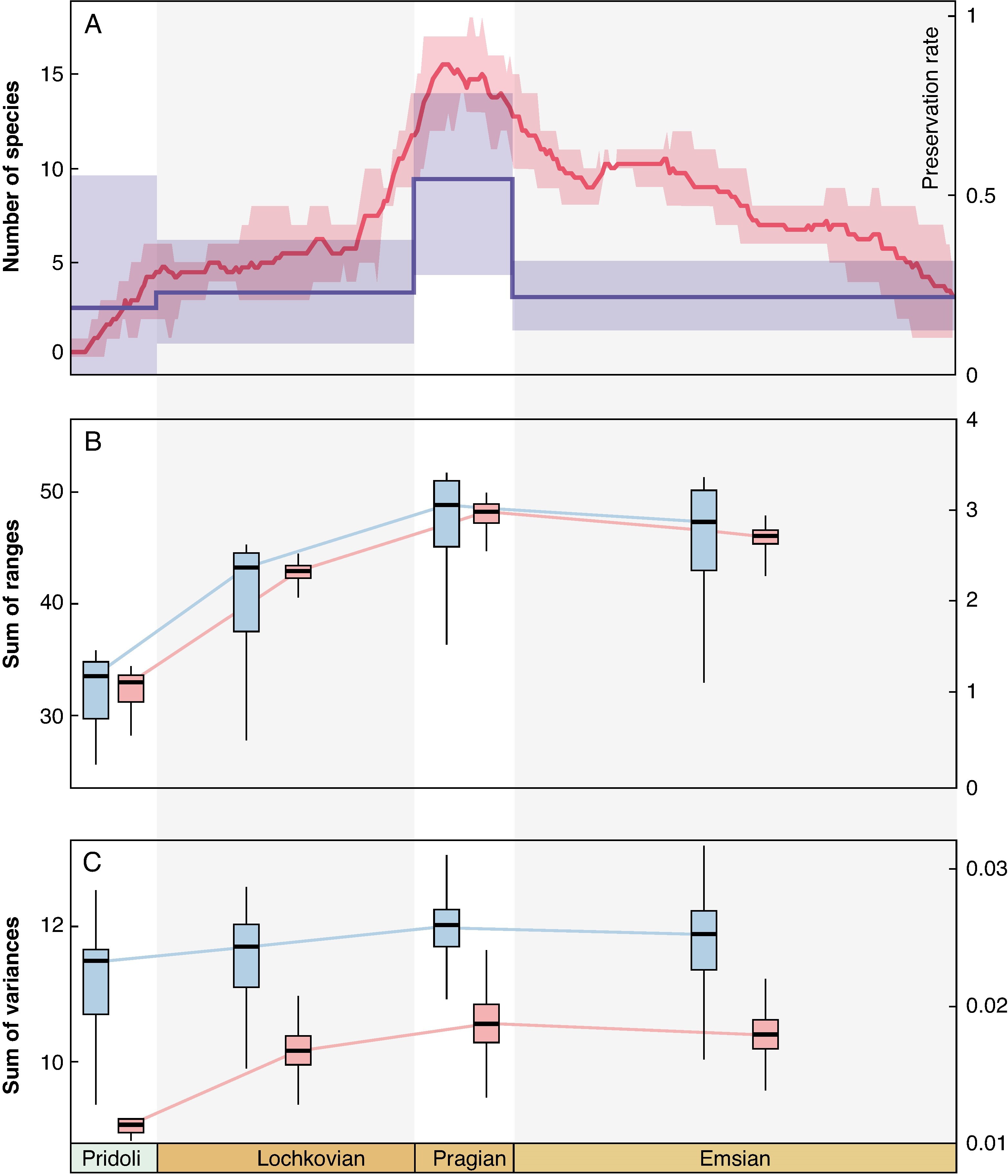
Fig.2 Diversity and morphological disparity of all Zosterophyllum species.
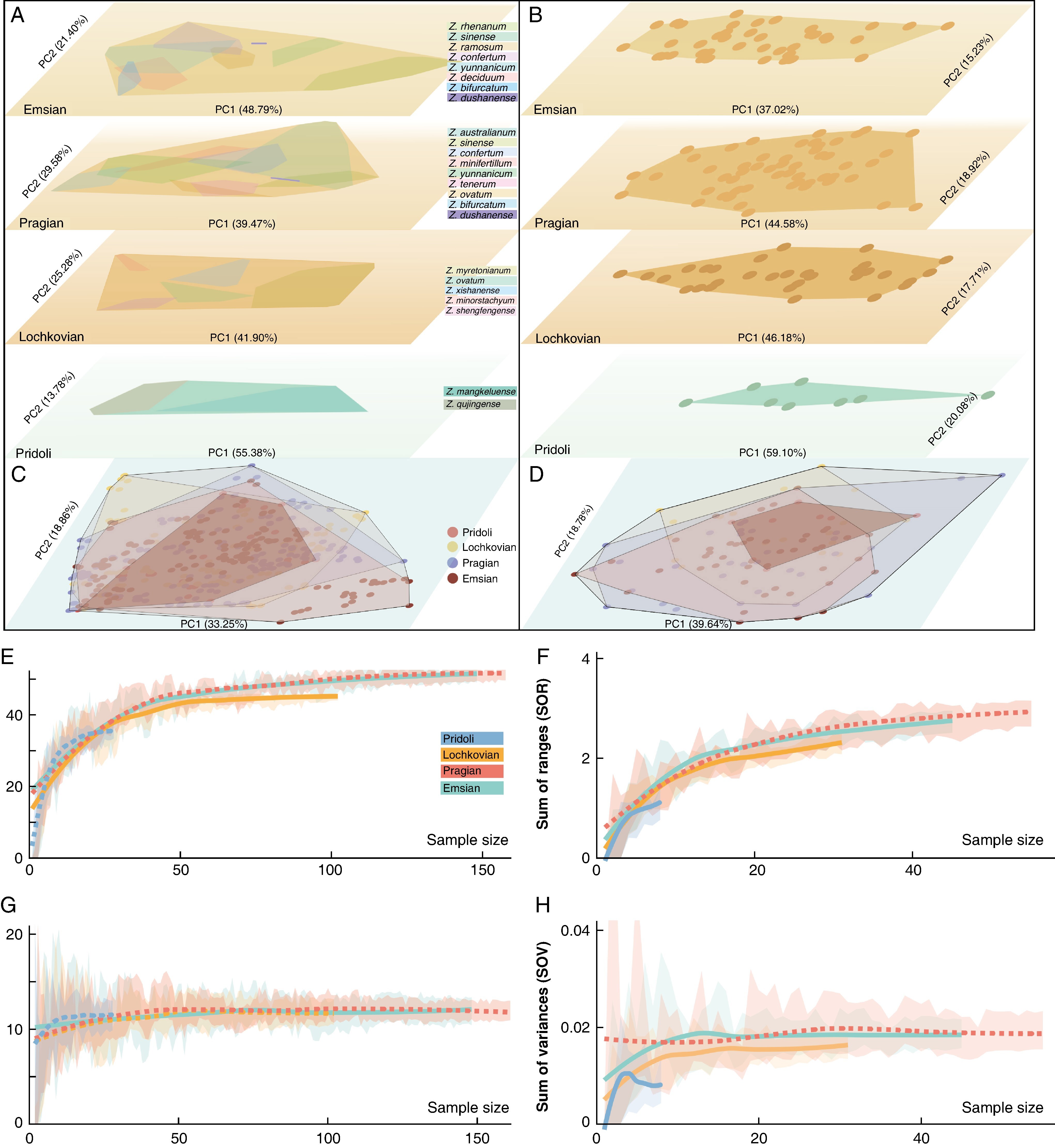
Fig.3 Morphological analysis of all species of the genus Zosterophyllum.
Download: