
Tommotiids are an enigmatic group of early Cambrian lophotrochozoans, and an important component of the Cambrian Small Shelly fossils (SSFs). They are known exclusively from Cambrian strata and exhibit diverse morphological types (e.g., mitral-, plate-, cap-, and sallate-shaped), representing bizarre body plans that emerged during the Cambrian explosion. Owing to the lack of completely articulated scleritome fossils, tommotiids have long been regarded as a problematic group of uncertain phylogenetic affinity. Studying articulated tommotiids can therefore provide key fossil evidence for exploring the origin and early evolution of key lophotrochozoans, like brachiopods and phoronids.
Recently, PhD candidate FJELD Alyssa (Monash University, Australia), under the supervision of Prof. ZHANG Zhiliang (Nanjing Institute of Geology and Palaeontology, Chinese Academy of Sciences) and Prof. BROCK Glenn (Macquarie University, Australia), together with Prof. PATERSON John, Dr. BETTS Marissa (University of New England, Australia), and Dr. HOLMES James (Uppsala University, Sweden), systematically analysed the phylogenetic relationships between early Cambrian tommotiids and stem-group brachiopods from the perspectives of skeletal fusion, ultrastructure, and surface ornamentation. This work revealed the synapomorphy characters and homologies of eccentrothecimorph tommotiids. The scientific results were recently published in Palaeontology.
The study focused on the early Cambrian strata of the Arrowie Basin in South Australia (Fig. 1). Limestone samples were systematically collected from the Wilkawillina Limestone, Ajax Limestone, and Mernmerna formations, yielding a total of 36 well-preserved specimens, including tommotiids with articulated sclerites (Eccentrotheca helenia, Kulparina rostrata, Paterimitra pyramidalis) and stem-group brachiopods (Askepasma saproconcha, A. toddense). Detailed investigations of the internal ultrastructure and surface ornamentation were carried out on the partly fused scleritomes of Eccentrotheca, Kulparina, and Paterimitra (Fig. 2). These structures were also compared with those of the coeval stem-group brachiopod Askepasma. Articulated sclerites of Kulparina rostrata were discovered for the first time, revealing that its main tubiform scleritome was constructed by the upward stacking of L-type sclerites. Comparative analyses further demonstrate that the early Cambrian eccentrothecimorph tommotiids from South Australia all possess a organo-phosphatic tubiform body plan formed by the fusion of multi-element sclerites, reflecting an adaptation to a sessile epifaunal filter-feeding life habit (Fig. 3).
The investigation of ultrastructural reveals that Eccentrotheca helenia and Kulparina rostrata share identical interlocking dome and saddle structures (IDS), which fuse L-type sclerites into a conical tube via initially stacked sclerite rings. Furthermore, all eccentrothecimorph tommotiids share distinctive penetrative polygonal ultrastructures (PPS), typically in the form of closely packed columns (in longitudinal section) composed of alternating microlaminae.
In cross-section, the PPS form distinctive hexagonal honeycomb structures within second-order lamellar sets. This study introduces and describes new terminology for shell ornament features, including ordered triangular scales, wrinkled texture, reticulate networks (related to disposition of PPS), bulbous ornament and granular spherulitic texture on the inner surface of tubes.
The surface micro-ornament of eccentrothecimorph tommotiids varies with different biomineral accretion modes, and the position of first-order laminate may influence the expression and type of shell ornamentation. A uniform narrow band of ordered and flattened to inflated triangular scales is also a synapomorphy of eccentrothecimorph tommotiids. Through this integrated study of sclerite fusion, ultrastructure, and micro-ornament, the phylogenetic hypothesis of the problematic tommotiid fossils is refined, demonstrating that eccentrothecimorph tommotiids are closely related to stem-group brachiopods and constitute a sister group with linguliform brachiopods (Fig. 4).
This study was supported by the National Key Research and Development Program of China.
Reference: Fjeld, A.K.*, Zhang, Z.L.*, Betts, M.J., Holmes, J.D., Paterson, J.R. and Brock, G.A.* Sclerite fusion, ultrastructure, micro-ornament and homology in early Cambrian eccentrothecimorph tommotiids. Palaeontology, 2026, 69: e70060. https://doi.org/10.1111/pala.70060.
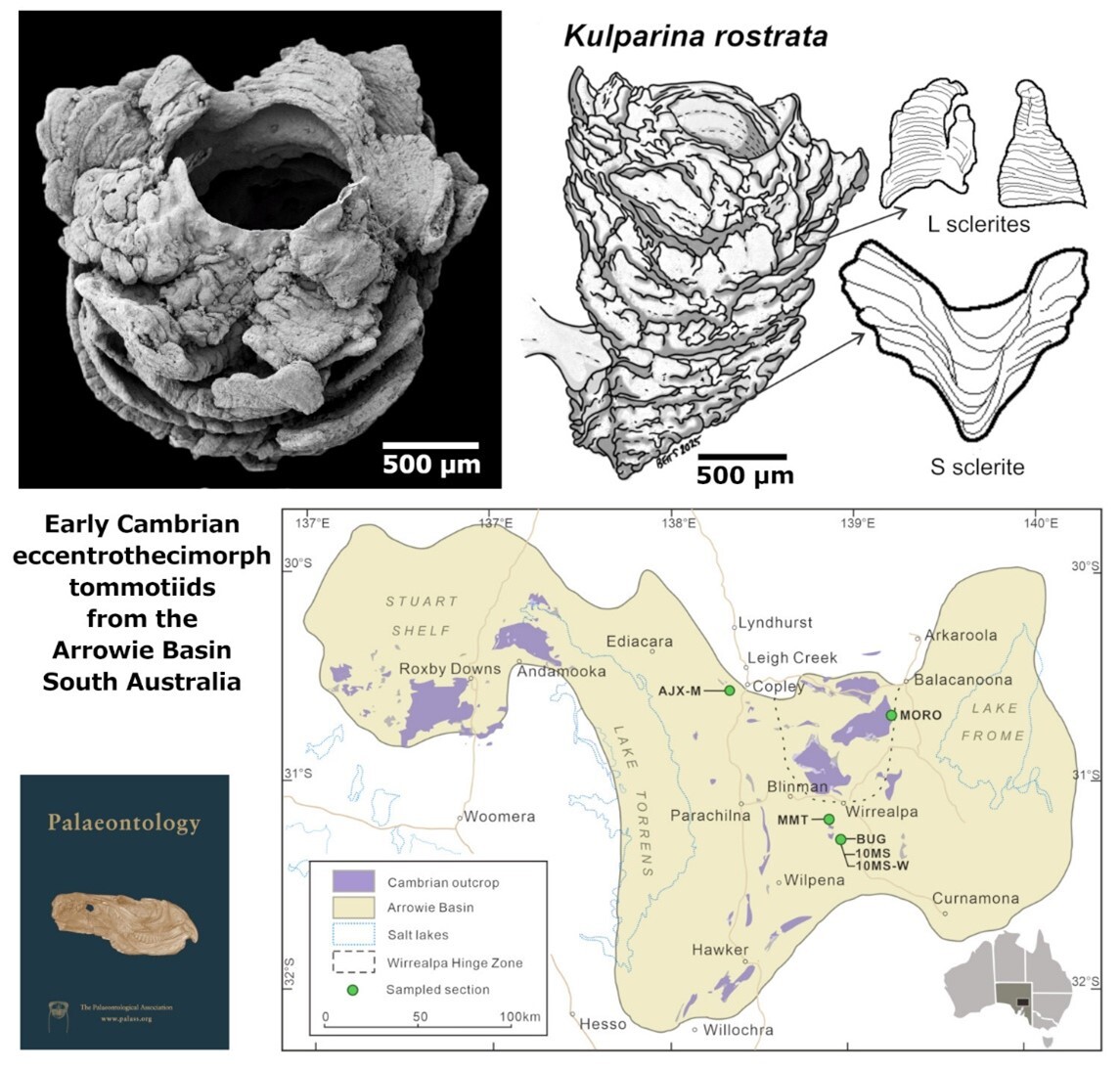
Fig.1 Early Cambrian fossil localities and tommotiid fossils from South Australia.
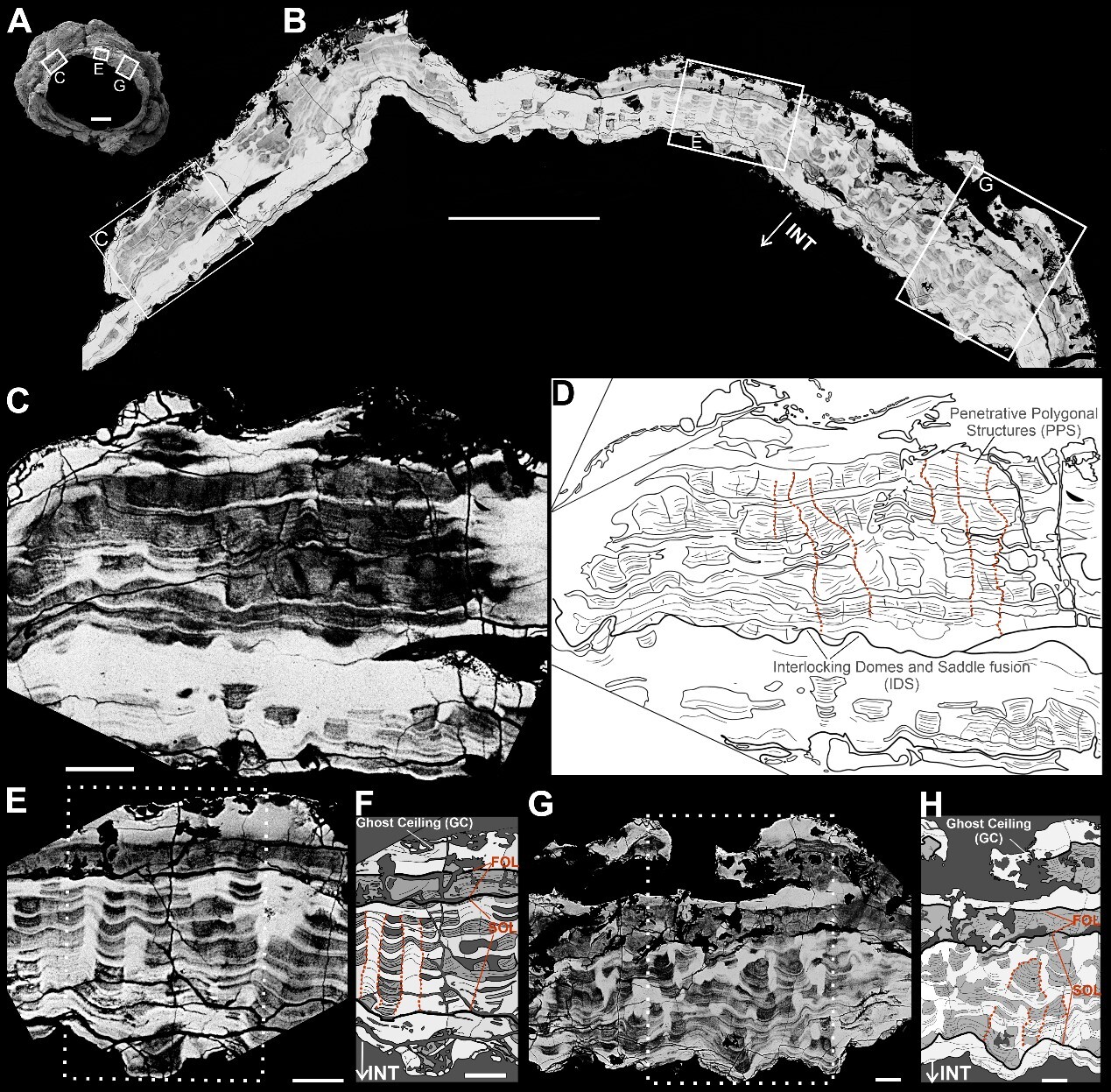
Fig.2 Shell ultrastructure of articulated Eccentrotheca helenia
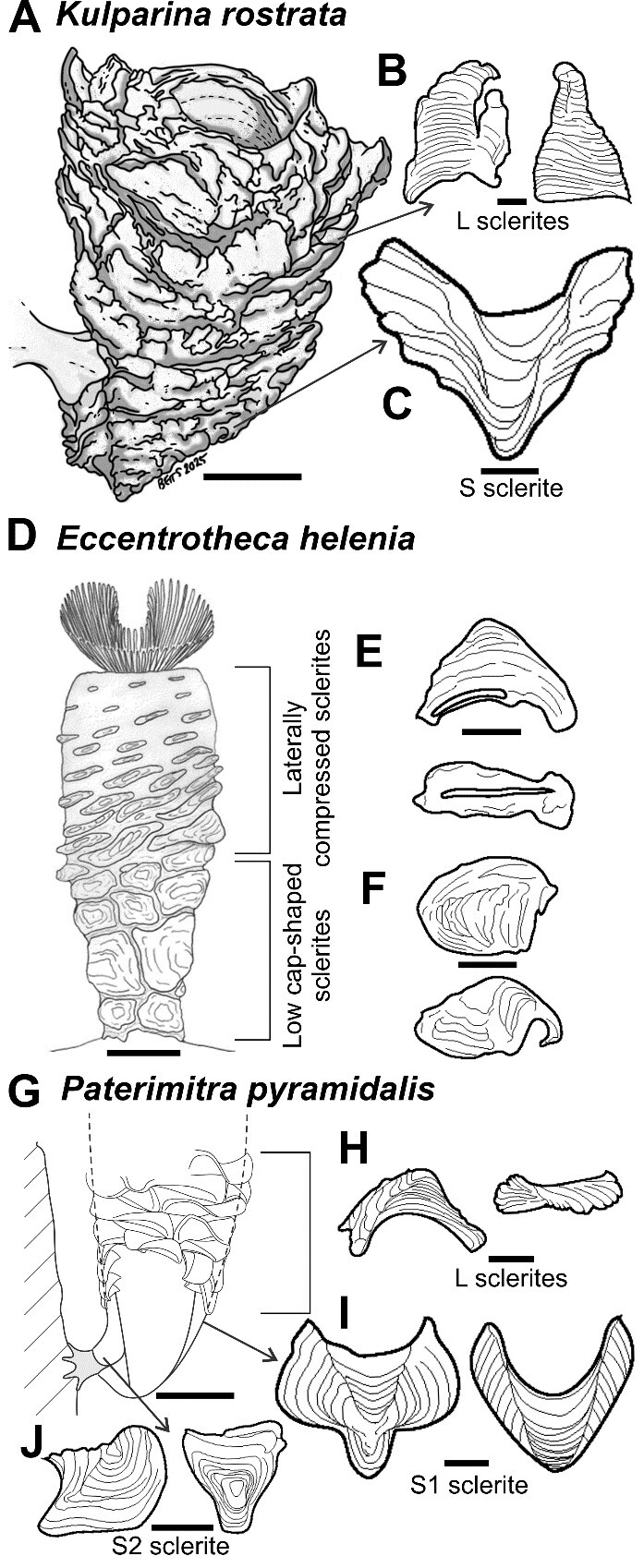
Fig.3 Scleritome reconstruction of eccentrothecimorph tommotiids, showing the multi-element scleritomes.
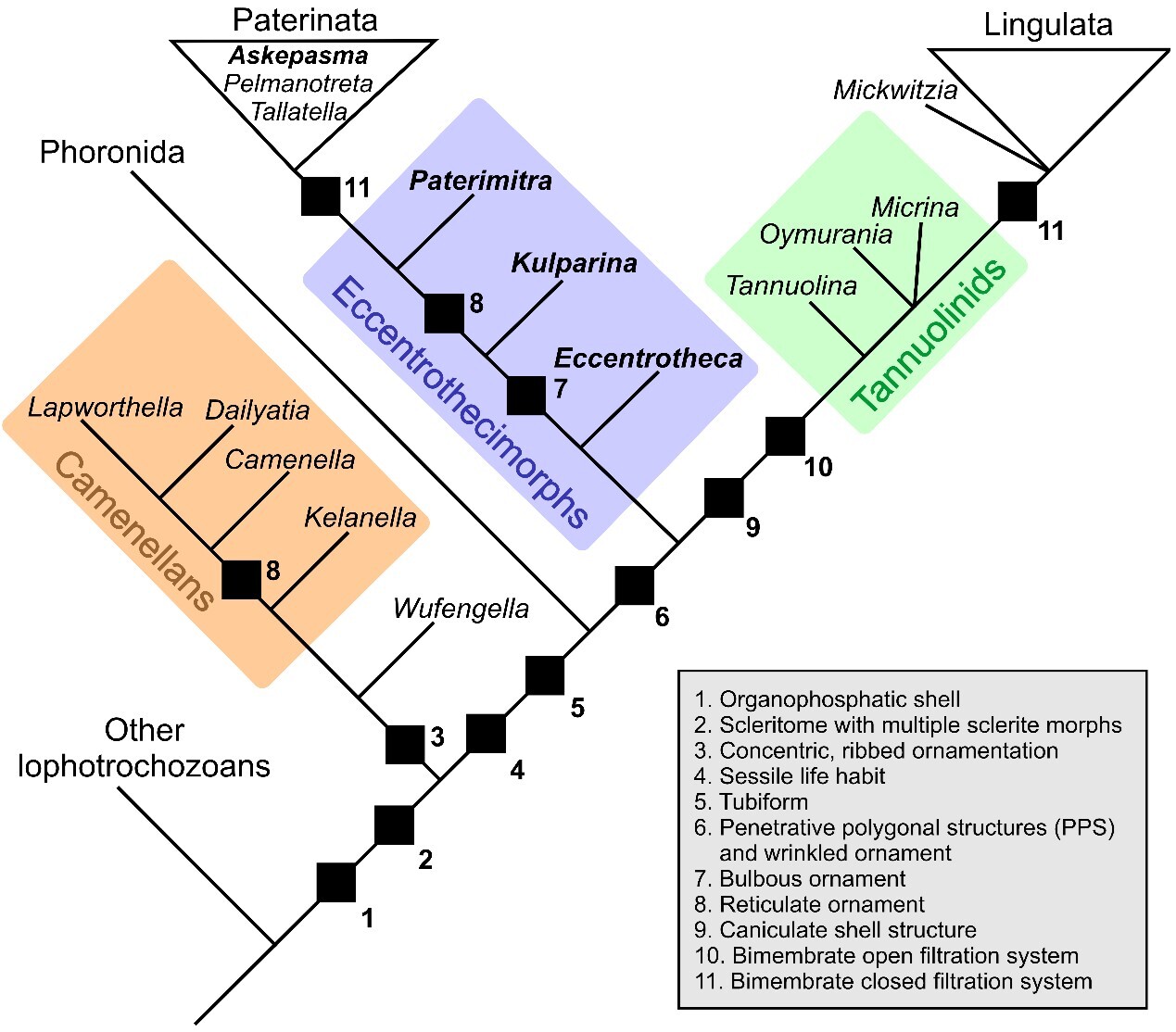
Download: