
In arthropods, queueing behaviour represents a stereotypical and visually striking form of collective locomotion. This behaviour is most commonly observed in highly social insects, such as ants, termites, and lepidopteran larvae. Additionally, some non-social or sub-social arthropods can also form queues under specific ecological conditions, for example, migratory spiny lobsters in autumn and juvenile tarantulas when dispersing from their burrows. However, the fossil record of queueing behaviour in arthropods is extremely sparse. Only a few Palaeozoic marine arthropod fossils have been interpreted as possible “queues”, such as the Cambrian putative crustacean Synophalos and Ordovician and Devonian trilobites, but little is known about their function and formation mechanism. In terrestrial ecosystems, no analogous fossil record has been discovered to date, leaving the early evolution of queueing behaviour in terrestrial arthropods completely unexplored.
Recently, PhD candidate XUAN Qiang (Nanjing Institute of Geology and Palaeontology, Chinese Academy of Sciences), under the supervision of Prof. HUANG Diying (NIGPAS), together with Prof. ZHANG Zhiqiang (Manaaki Whenua – Landcare Research, New Zealand), reported evidence of queueing behaviour in larval mites from the Cretaceous Burmese amber. In this study, adjacent individuals within the queue are connected by fine silk threads, thereby physically reinforcing the queue structure, revealing a previously unknown silk-mediated mechanism of group alignment. The mites were identified as a new genus and species within the family Erythraeidae, named Protofilum ordinatum gen. et sp. nov. The scientific results were recently published online in Proceedings of the Royal Society B: Biological Sciences.
In this fingernail-sized piece of amber, 13 larval mites are aligned head-to-tail, with the body axis of all individuals pointing in the same direction, forming an almost straight queue with only minor local deflections. These mites all possess extremely long legs, and leg-to-leg contact between adjacent individuals suggests that tactile feedback played an important role in maintaining the queue. Furthermore, the research team discovered fine thread-like structures, only 1–3 micrometres in diameter, preserved on the legs of the individuals. These threads form physical connections between adjacent individuals and may have functioned as mechanical “tethers”: when direct contact was temporarily interrupted, the silk connections could enhance cohesion between individuals, thereby stabilising the structure of the moving queue.
Even more remarkably, one mite was captured in the act of spinning silk. Using high-resolution laser confocal microscopy, the team identified the silk-producing organ located on the mid-dorsal region of the cheliceral base. An elliptical glandular opening with distinctly sclerotised margins is visible, and residual filamentous secretions are preserved at the opening in some individuals. This study represents the first fossil evidence of silk utilisation in mites.
The research team suggests that the queueing migratory behaviour of the fossil mites might have facilitated the superparasitism of larval mites and subsequent mate-finding in adults. Superparasitism refers to the common phenomenon where multiple larval mites parasitise the same arthropod host. Because mites have limited locomotory abilities and rely primarily on host-mediated dispersal, the establishment of a new population largely depends on the chance of encountering a mating partner. If only a single larva is transported to a new area, the probability of encountering a mate after moulting is extremely low. In contrast, superparasitism allows multiple conspecific larvae to disperse together via the same host, significantly increasing their mating opportunities after metamorphosis. In this context, queueing migration may have facilitated the coordinated location of hosts by larval mites, allowing multiple individuals to simultaneously reach and attach to the same host. The silk threads could then have acted as “safety lines”, reducing the risk of being dislodged during parasitism and host movement. This behaviour may have increased the likelihood of conspecific larval co-dispersal, thereby enhancing reproductive success and population persistence. This interpretation is further supported by another amber specimen, in which three conspecific larval mites are preserved in a linear arrangement together with a dipteran host.
This paper reports queueing migratory behaviour in mite larvae from the mid-Cretaceous Burmese amber. This discovery not only represents the first fossil evidence of such behaviour from the Mesozoic, but also the earliest known fossil evidence of queueing migratory behaviour in terrestrial arthropods. This finding pushes back the evolutionary origin of queueing behaviour in terrestrial arthropods by nearly 100 million years, while also revealing unexpected behavioural complexity in early small-bodied arthropods. Together with previously reported fossil queues, this study demonstrates that queueing behaviour has evolved independently in both marine and terrestrial ecosystems in response to different ecological pressures, highlighting its adaptive significance in the evolutionary history of arthropods.
This study was supported by the National Key Research and Development Program of China (2024YFF0807601) and the National Natural Science Foundation of China (42288201).
Reference: Xuan, Q., Zhang, Z.-Q., Cai, C., Li, S., & Huang, D. 2026. Silk-mediated queueing migration in Cretaceous mites. Proceedings of the Royal Society B: Biological Sciences, 293: 20260271. https://doi.org/10.1098/rspb.2026.0271.
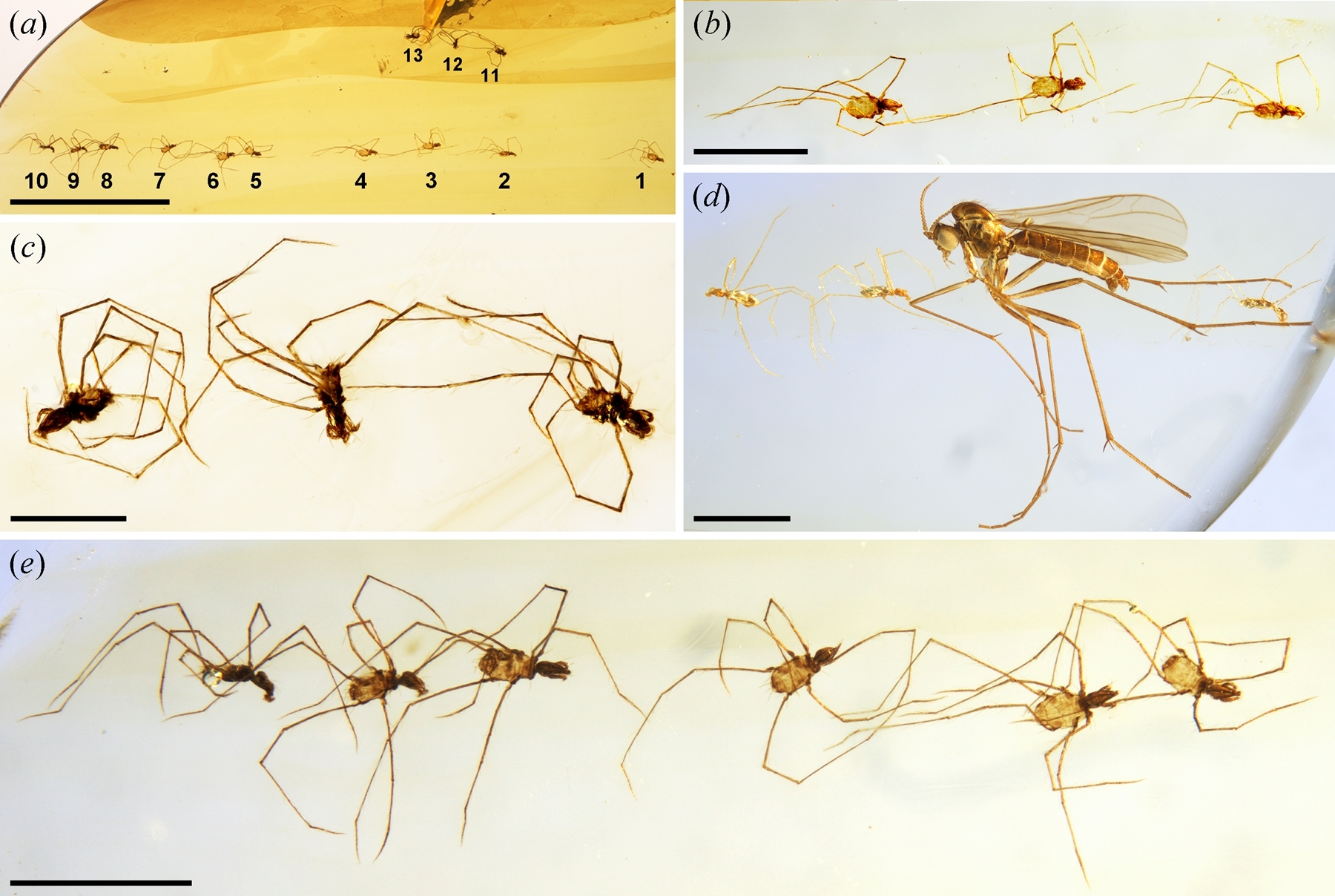
Fig. 1 Migratory queue of fossil larval mites from mid-Cretaceous Burmese amber.
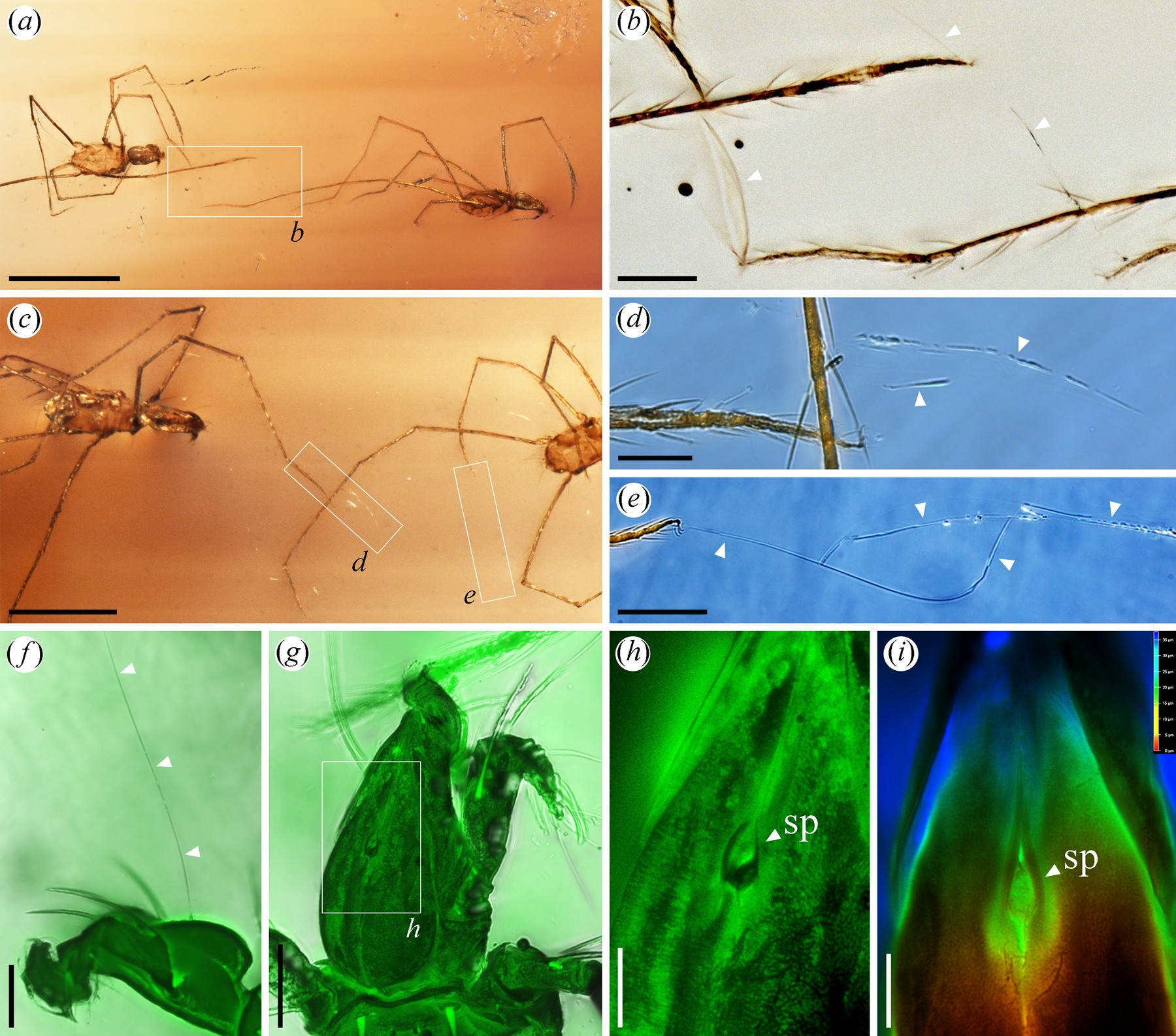
Fig. 2 Silk-mediated connections between adjacent mites and the silk-producing apparatus.

Fig. 3 Morphological details in P. ordinatum gen. et sp. nov.
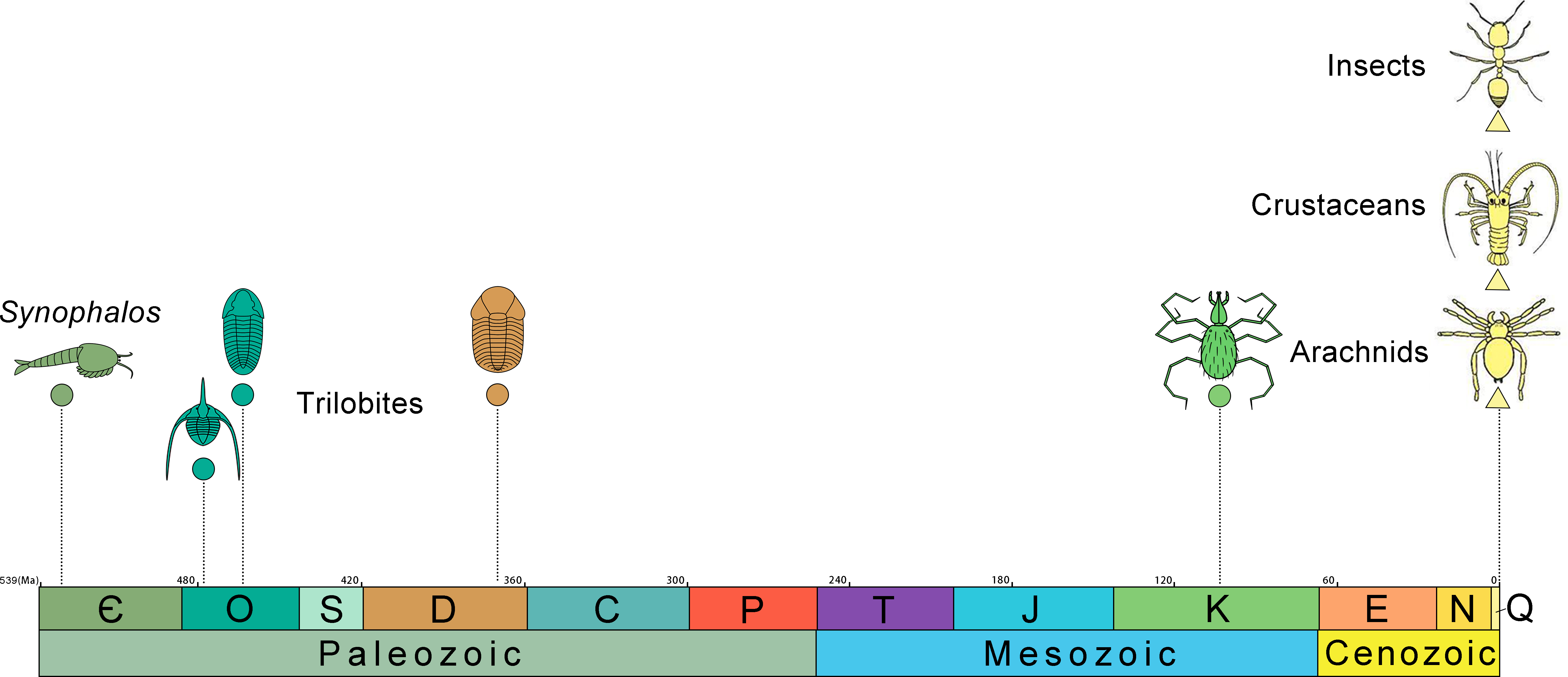
Fig. 4 Queueing behaviour in fossil and extant arthropods
Download: