
Gymnosperms are one of the most significant taxa of the Mesozoic flora worldwide. Reproductive organs, which often exhibit relatively stable morphological characteristics, provide valuable materials for investigating the taxonomic relationships and evolutionary patterns of this plant group. Ixostrobus Raciborski, a form genus, is considered as the male cone of Czekanowskiales, widely reported from the Mesozoic flora. However, because of the usually poor preservation, especially the male reproductive organs heavily affected by phenology, the understanding of their key morphological characteristics remains limited. Besides, the reports on Ixostrobus are rather scattered in literature in different languages and regions, presenting some difficulties for a comprehensive comparison of these fossil records.
Under the supervision of Prof. WANG Yongdong of Nanjing Institute of Geology and Palaeontology, Chinese Academy of Sciences (NIGPAS), the Ph.D. student CHEN Hongyu at NIGPAS, in collaboration with Prof. Dieter Uhl and Dr. XIE Aowei from the Senckenberg Research Institute and Natural History Museum, Germany, Dr. ZHANG Li from NIGPAS, as well as colleagues from Nanjing Center of China Geological Survey, Chengdu University of Technology has performed investigations of Ixostrobus male cones based on new material from the Qaidam Basin, NW China. This work provides a taxonomic revision based on the global fossil record, explores the spatio-temporal distribution patterns of the genus, and achieves insights into the morphological characteristics. The findings have been published in the international journal Review of Palaeobotany and Palynology.
Recently, well-preserved fossil specimens of Ixostrobus have been collected from the Lower Jurassic Tianshuigou and Yinmagou formations in the northern margin of the Qaidam Basin, Qinghai Province. Based on this, the researchers conduct in-depth and detailed investigations on systematic morphology, and formally revised its generic diagnosis to clarify the key diagnostic traits and improve the accuracy of morphological descriptions.This study clarifies that the main diagnostic characteristics of Ixostrobus are represented by an axis bearing only microsporophylls without any bracts or other appendages, with pollen sacs and scales at the distal end of microsporophyll, and the pollen sacs borne on the adaxial side of microsporophyll.
Based on investigations on newly collected fossil specimens of Ixostrobus cones from the Qaidam Basin in China and examination of all reported taxa, several previously assigned specimens are revised (Figs.1, 2), a new record of I. heeri is documented from the local flora (Fig.3), and a new species, I. bilobus Chen, Wang et Zhang sp. nov., distinguished by its bilobed scale, is recognized (Fig.4).
A comprehensive re-appraisal of previously reported global species is conducted through direct examination of specimens and assessment of the original fossil records. Among the 18 species documented as Ixostrobus so far, 13 species are proposed to be valid, i.e., I. bilobus, I. daohugouensis, I. grandis, I. groenlandicus, I. heeri, I. laxus, I. longicalcaratus, I. longus, I. punctatus, I. schmidtianus, I. siemiradzkii, I. tunguscanum, I. whitbiensis. Among the valid species, 5 species, i.e., I. grandis, I. laxus, I. longus, I. punctatus, and I. tunguscanum, are indeed poorly preserved, which require more collections and further investigation.
Geologically, Ixostrobus ranges from the Early Triassic to the Early Cretaceous, with peak in species diversity during the Early Jurassic period (Fig. 5). Geographically, Ixostrobus are widely distributed across the Northern Hemisphere, with significant occurrences in Europe (Poland, Hungary, UK, Greenland), Russia, Iran, Afghanistan, as well as Central and East Asia, indicating a primary occurrence within the warm temperate zone of eastern Laurasia at middle to high latitudes (Fig. 5).
This represents the first re-appraisal of the genus Ixostrobus, and substantially advances our understanding of the Mesozoic gymnosperm diversity evolution. These findings elevate Ixostrobus to a pivotal reference taxon for reconstructing the systematics, diversification dynamics, and extinction patterns of Mesozoic gymnosperms.
This study is co-sponsored by the National Natural Science Foundation of China, the Deep Earth Probe and Mineral Resources Exploration-National Science and Technology Major Project of China, the China Postdoctoral Science Foundation, the Basic Research Program of Jiangsu, the China Scholarship Council, and the Government of Ireland Postdoctoral Fellowship Programme.
Reference information: Chen, H.Y. (陈泓宇), Wang, Y.D.* (王永栋), Zhang, L., Zhu, Y.B., Xie, A.W., An, P.C., Uhl, D., 2026. Re-appraisal of the Mesozoic male cone Ixostrobus Raciborski (Czekanowskiales) based on new material from the Qaidam Basin, NW China: New insights into systematics, diversity and spatio-temporal distribution. Review of Palaeobotany and Palynology 352, 105605. https://doi.org/10.1016/j.revpalbo.2026.105605.
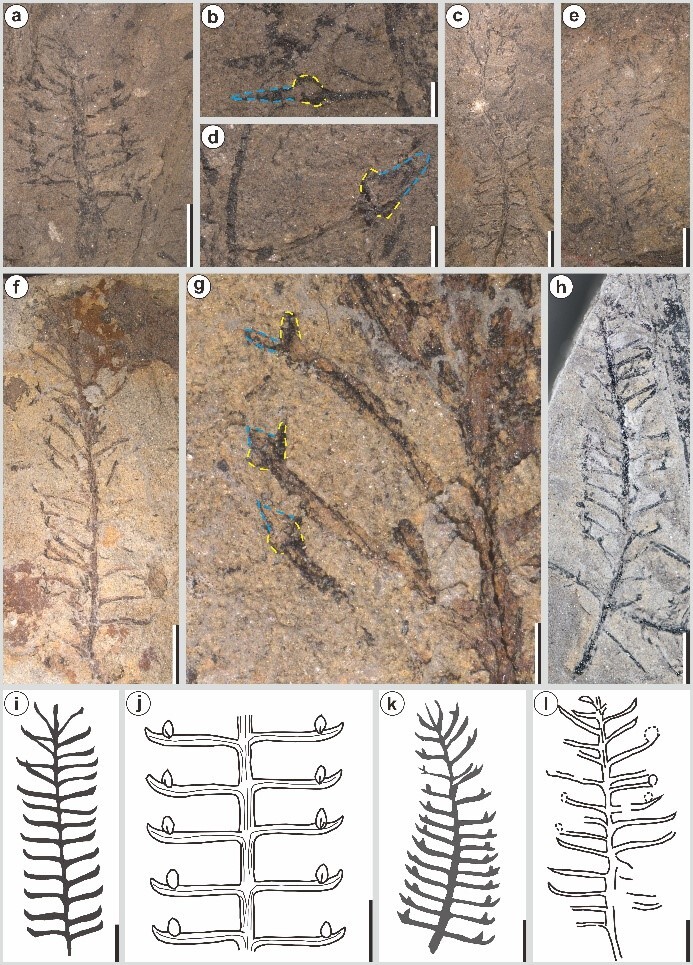
Fig.1 Ixostrobus siemiradzkii from the Qaidam Basin, and the illustration of holotype.
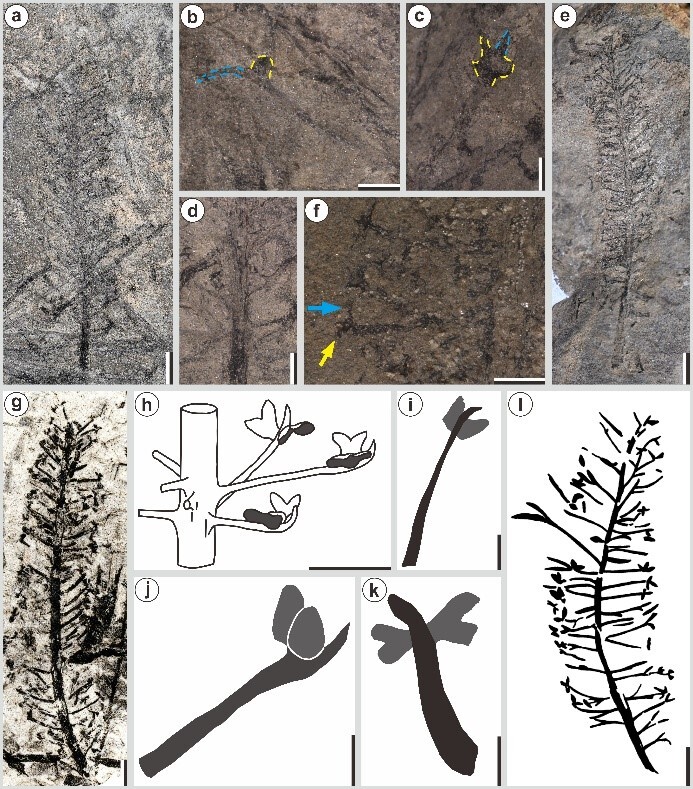
Fig.2 Ixostrobus groenlandicus from the Qaidam Basin, and the illustration of holotype.
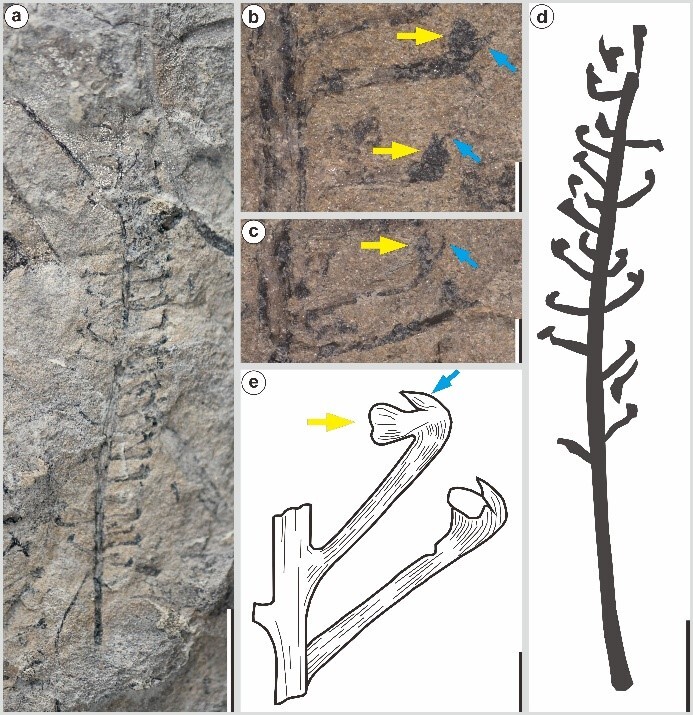
Fig.3 Ixostrobus heeri from the Qaidam Basin, and the illustration of holotype.
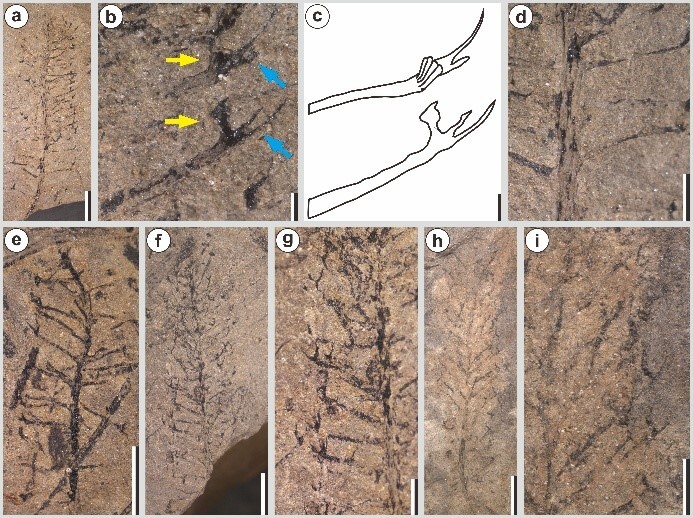
Fig.4 Ixostrobus bilobus sp. nov. from the Qaidam Basin.
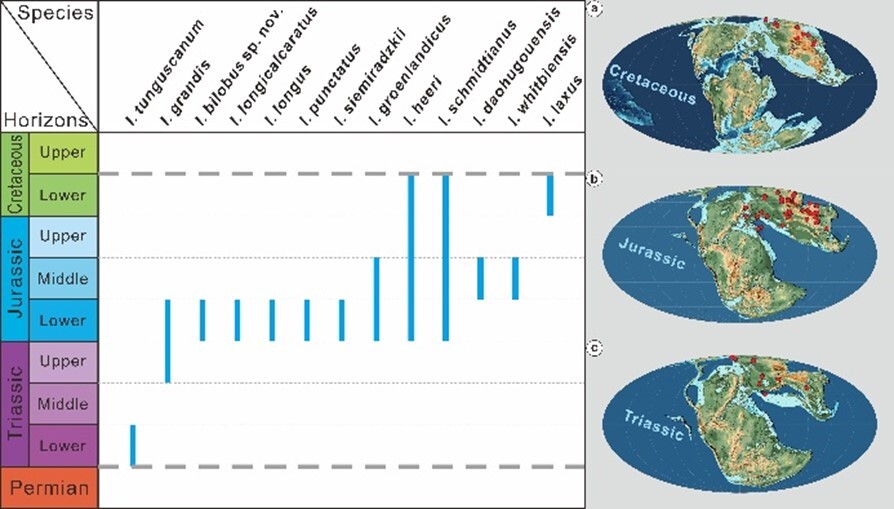
Fig.5 Global stratigraphic ranges and palaeogeographic distributions of the valid Ixostrobus species.
Download: