
Cold-water corals are widely distributed in the global deep ocean. The barium-to-calcium (Ba/Ca) ratio in their skeletons serves as a key proxy for tracing seawater Ba concentration, and thus for reconstructing past ocean productivity and deep ocean circulation. However, existing calibration curves exhibit significant genus offsets and data scatter, mainly due to the Rayleigh fractionation effect during coral biomineralization, which leads to non-equilibrium partitioning of elements such as Ba and Sr between the skeleton and seawater, causing the skeletal record to deviate from the true seawater signal.
Recently, a research team led by Prof. LI Tao from the Nanjing Institute of Geology and Palaeontology, Chinese Academy of Sciences (NIGPAS), in collaboration with scientists from the University of Bristol, Nanjing University, and Shanghai Jiao Tong University, innovatively integrated coral elemental ratios with a quantitative biomineralization model. They established a new quantitative correction method for seawater Ba concentration based on the Ba/Ca ratios of cold-water corals, significantly advancing the application of cold-water coral geochemistry in paleoenvironmental reconstruction. The relevant findings have been published in the internationally renowned journal Earth and Planetary Science Letters.
By integrating elemental composition data from nearly one hundred cold-water coral specimens of different genera collected from various ocean regions, including the Southern Ocean, the North Atlantic, and the equatorial Atlantic, along with the corresponding physicochemical parameters of the ambient seawater, the team found that under the same seawater Ba concentration, different coral genera exhibit significant and systematic differences in Ba/Ca ratios. Moreover, these differences show a strong positive correlation with Sr/Ca ratios, indicating that the Rayleigh fractionation effect is the key factor controlling the inter‑genus offsets. Based on this, the team introduced a quantitative biomineralization model (Fig. 1) to correct the Ba/Ca ratios using paired Sr/Ca data, successfully establishing a unified and robust cold-water coral Ba/Ca–seawater Ba concentration calibration curve. This significantly improves the paleoceanographic reconstruction capability of the cold-water coral Ba/Ca proxy.
The team further conducted cross‑validation using cold-water coral samples collected from different water depths on the Burdwood Bank seamount in the Drake Passage, Southern Ocean (Fig. 2). The results show that without correction, the seawater Ba concentrations reconstructed from Ba/Ca ratios of different coral genera at the same water depth exhibit large scatter and obvious inter‑genus offsets, deviating significantly from the measured seawater values. However, after correction using paired Sr/Ca ratios and the biomineralization model, the data from different genera converge toward the same seawater Ba concentration, and the reconstructed vertical profile of seawater Ba concentration is in much better agreement with the measured values, substantially improving the accuracy of seawater Ba concentration reconstruction.
This research lays a solid foundation for the widespread application of the cold-water coral Ba/Ca proxy in reconstructing past seawater Ba concentrations, and is expected to provide key technical support for revealing the coupled relationship between ocean productivity changes and deep ocean circulation evolution during the glacial‑interglacial cycles of the late Pleistocene.
This study was supported by the National Natural Science Foundation of China and the Natural Science Foundation of Jiangsu Province.
Reference: Feng, Q., Li, T.*, Chen, S., Robinson, L.F., Kershaw, J., Stewart, J.A., Liu, Q., Wang, M., Chen, T., 2026. A revised calibration of cold-water coral Ba/Ca versus seawater Ba concentration using paired Sr/Ca and a biomineralization model. Earth and Planetary Science Letters 690.https://doi.org/10.1016/j.epsl.2026.120142.
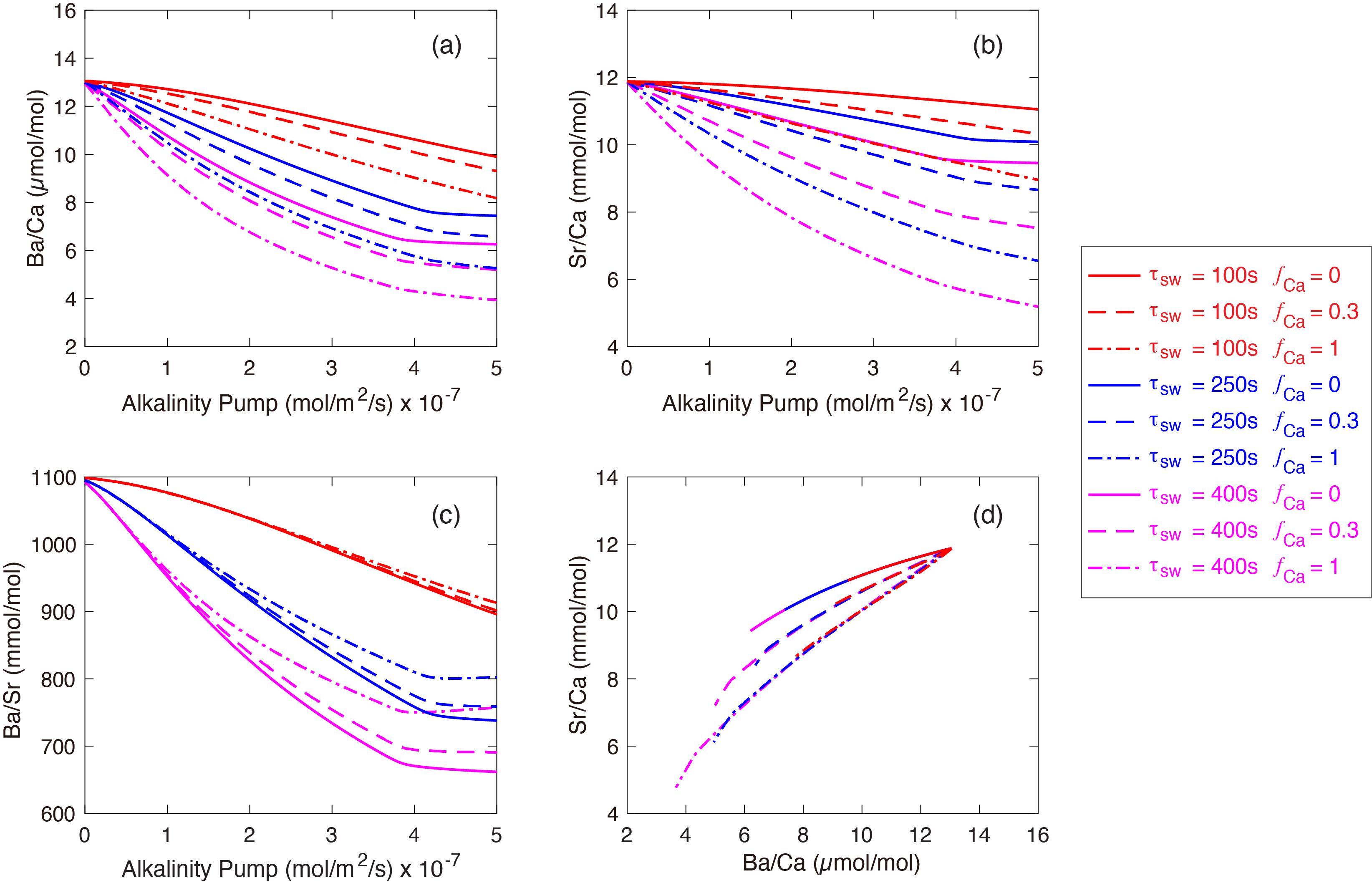
Fig.1 Quantitative biomineralization model for elemental ratios in cold-water corals.
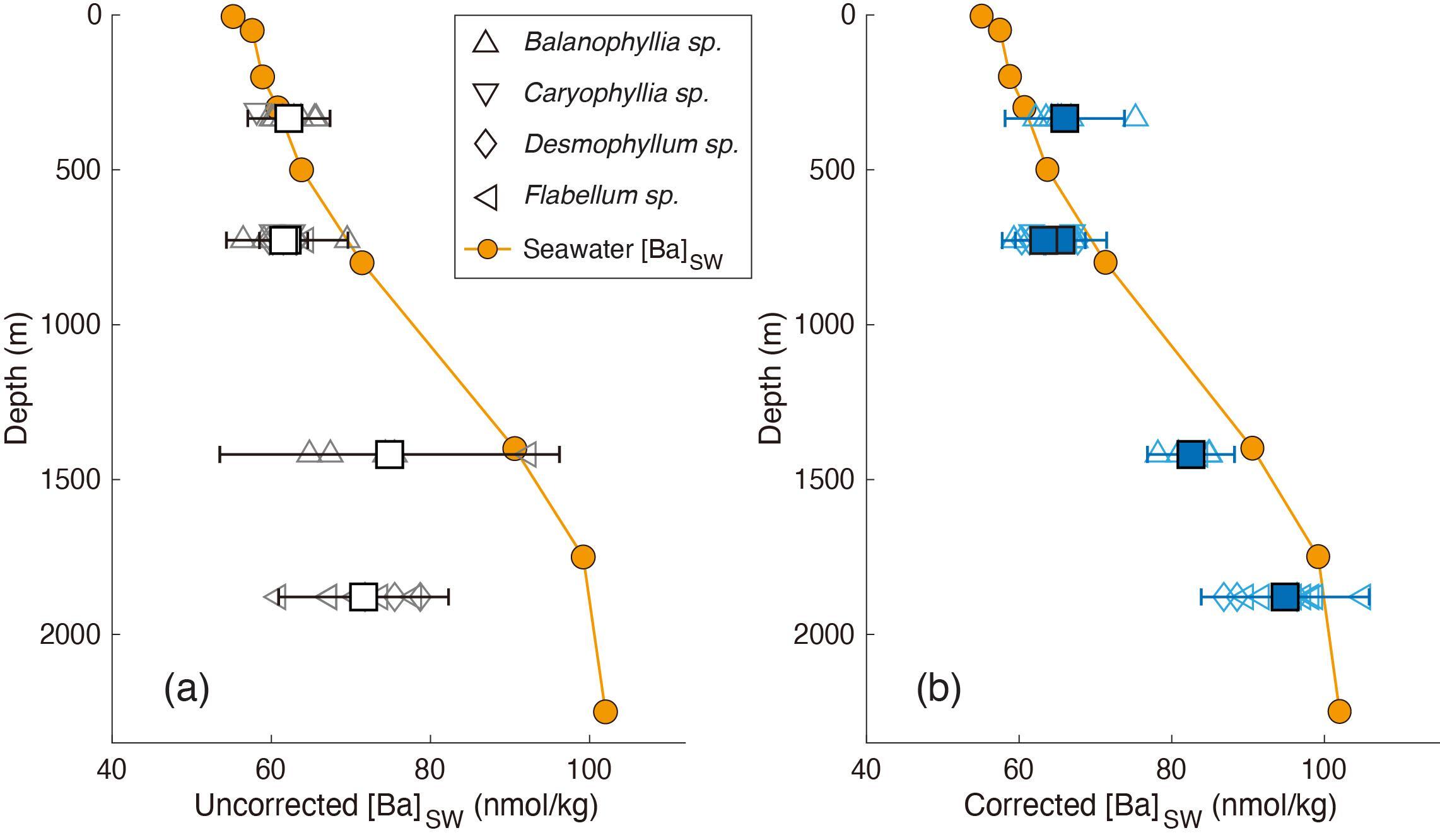
Fig.2 Comparison of reconstruction results from cold-water corals on the Burdwood Bank seamount in the Southern Ocean.
Download: