
Following rock formation, primary magnetic records are commonly modified by diagenesis, tectonic deformation, and fluid activity, resulting in secondary magnetization, or remagnetization. Chemical remagnetization (CRM), which results from fluid–rock reactions and the formation of new magnetic minerals, can not only overprint primary paleomagnetic records but also preserve information about subsequent tectonic, diagenetic, and fluid-related processes. Understanding the mechanisms of chemical remagnetization therefore requires addressing not only when a magnetic record was acquired, but also why the secondary magnetic minerals carrying that record formed, and under what conditions of fluid source, temperature, and fluid–rock interaction.
Magnetite is an important carrier of remanent magnetization in natural rocks, and its formation is closely associated with Fe mobilization and redistribution during fluid–rock reactions. Serpentinization, a typical fluid–rock reaction that can generate abundant secondary magnetite, provides a natural laboratory for investigating the physicochemical conditions governing magnetic mineral formation. However, previous studies have rarely established direct, systematic links among reaction temperature, Fe redistribution, magnetite formation, and rock magnetic properties within the same samples. Furthermore, identifying fluid sources and reaction temperatures can help distinguish serpentinization associated with oceanic crust formation at mid-ocean ridges from that occurring in later subduction settings.
Recently, a research team led by Associate Professor ZHANG Yong at the Nanjing Institute of Geology and Palaeontology, Chinese Academy of Sciences (NIGPAS), investigated the Troodos ophiolite in Cyprus (Fig.1). By integrating rock magnetic measurements, triple oxygen isotope analyses, mineralogical observations, and major-element geochemistry, the researchers identified serpentinization processes associated with different tectonic stages and established links among fluid sources, reaction temperatures, Fe redistribution, magnetite formation, and rock magnetic properties. These findings provide new constraints on the mechanisms responsible for the formation of secondary magnetic minerals during chemical remagnetization. The results have been published in the international geoscience journal Geology.
1. Rock Magnetism and Triple Oxygen Isotopes Distinguish Different Stages of Fluid–Rock Interaction
Ophiolites may undergo multiple episodes of serpentinization during their evolution, from formation in an oceanic setting through subduction-related processes to eventual emplacement. Because fluid–rock interaction signatures acquired at different stages may overlap, distinguishing their formation environments remains challenging.
The research team combined rock magnetic measurements with triple oxygen isotope analyses, using δ18O to constrain reaction temperatures and Δ’17O to trace potential fluid sources. Together with magnetite abundance and rock magnetic properties, these measurements enabled the identification of distinct serpentinization episodes.
The results reveal two types of serpentinization in the Troodos ophiolite, characterized by markedly different temperatures and magnetic properties. The Cumulate–STTFZ zone mainly experienced seawater-related serpentinization at approximately 200–310 °C, producing relatively high magnetite contents, magnetic susceptibilities, and natural remanent magnetization intensities. In contrast, the Olympus–Artemis zone predominantly records lower-temperature serpentinization at approximately 150–220 °C, associated with slab-derived fluids, and exhibits substantially lower magnetite contents and weaker magnetic properties (Fig.2).
Combined with paleomagnetic evidence and the regional tectonic framework, these two serpentinization processes are interpreted to record fluid–rock interactions associated with oceanic crust formation and subsequent subduction-related processes, respectively.
2. Temperature Controls Fe Redistribution and Magnetite Formation
The study identifies a significant quantitative relationship between serpentinization temperature and magnetite formation. Both magnetic susceptibility and magnetite abundance increase rapidly above approximately 200–220 °C.
At lower temperatures, Fe is largely retained in Fe-rich serpentine minerals, limiting magnetite formation. At higher temperatures, Fe is redistributed from serpentine, accompanied by the formation of Fe-poor serpentine and increased magnetite production. The temperature interval of approximately 200–220 °C therefore represents an important transition in Fe redistribution and magnetite formation within the investigated serpentinization system.
These findings establish a quantitative link among reaction temperature, Fe behavior, magnetite formation, and rock magnetic properties. They demonstrate that even where fluid–rock reactions occur, the resulting magnetic mineral assemblages and magnetic responses can differ substantially depending on reaction temperature (Fig.3).
3. Implications for Understanding the Mechanisms of Chemical Remagnetization
Chemical remagnetization requires the formation of secondary magnetic minerals capable of carrying stable remanent magnetization during subsequent geological processes. Consequently, fluid activity alone does not necessarily produce significant chemical remagnetization. Instead, fluid sources, reaction temperatures, elemental mobility, and mineral reactions can all influence the formation and magnetic properties of secondary minerals.
This study demonstrates that, in serpentinization systems, temperature governs Fe redistribution between serpentine and magnetite, thereby influencing secondary magnetite formation and the enhancement of rock magnetic properties. These findings provide new evidence for how fluid–rock reactions can modify rock magnetism through mineralogical and chemical transformations, offering important insights into the physicochemical conditions that may favor chemical remagnetization.
More broadly, the study highlights the potential to extend remagnetization research beyond the traditional objectives of identifying secondary magnetization and determining its acquisition age toward understanding the physicochemical mechanisms governing magnetic mineral formation.
Integrating rock magnetism and paleomagnetism with stable isotope geochemistry, mineralogy, and other geochemical approaches offers opportunities to constrain the fluid sources, temperatures, and fluid–rock reaction conditions under which secondary magnetic minerals form. Such an integrated framework may provide new avenues for using chemical remagnetization to investigate ancient fluid activity in fault zones, sedimentary basins, orogenic belts, and mineralizing systems.
ZHANG Yong is the corresponding author of the paper. Dr. Qi Liang of the Institute of Geology and Geophysics, Chinese Academy of Sciences, and Dr. WU Guanghui of Nanjing University are co-first authors.
This research was supported by the National Natural Science Foundation of China.
Reference: Qi, L.#, Wu, G.#, Muxworthy, A.R., Cao, X., Yang, X., Allerton, S., and Zhang, Y.*, 2026. From ridge to subduction zone: Dual-temperature serpentinization of the ophiolitic mantle revealed by triple oxygen isotopes and magnetite formation. Geology. https://doi.org/10.1130/G54915.1.
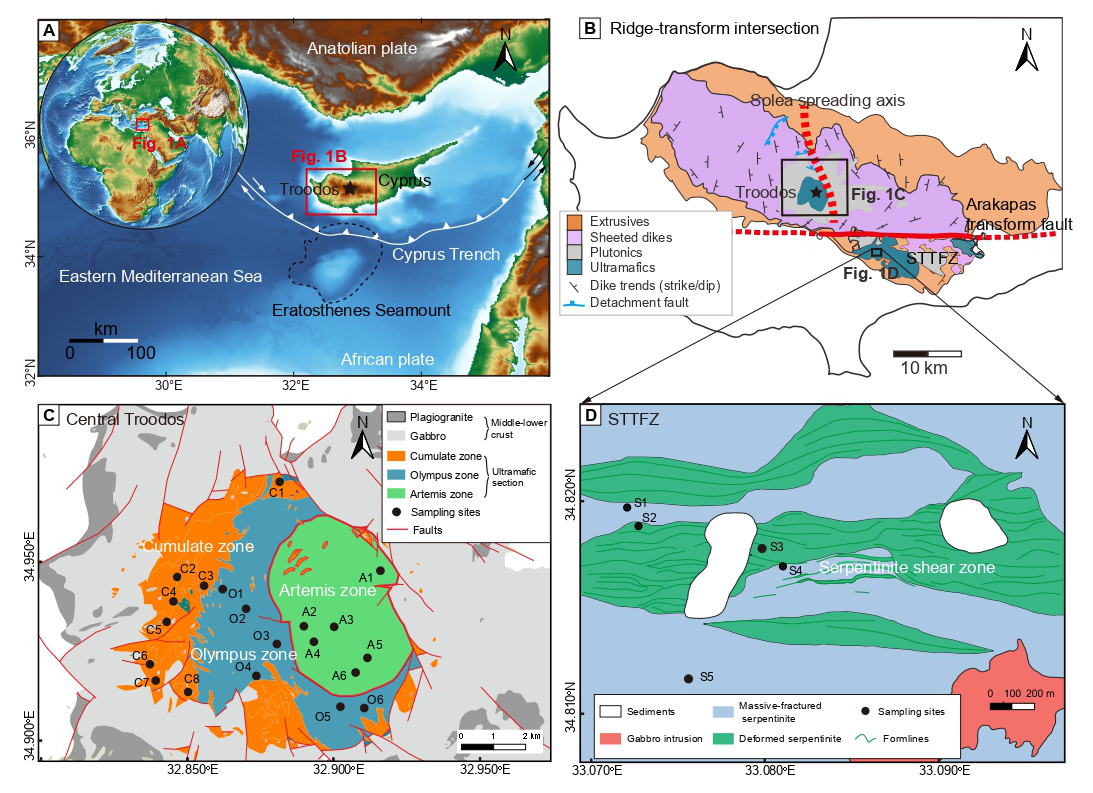
Fig.1 Sampling locations and regional geological setting.
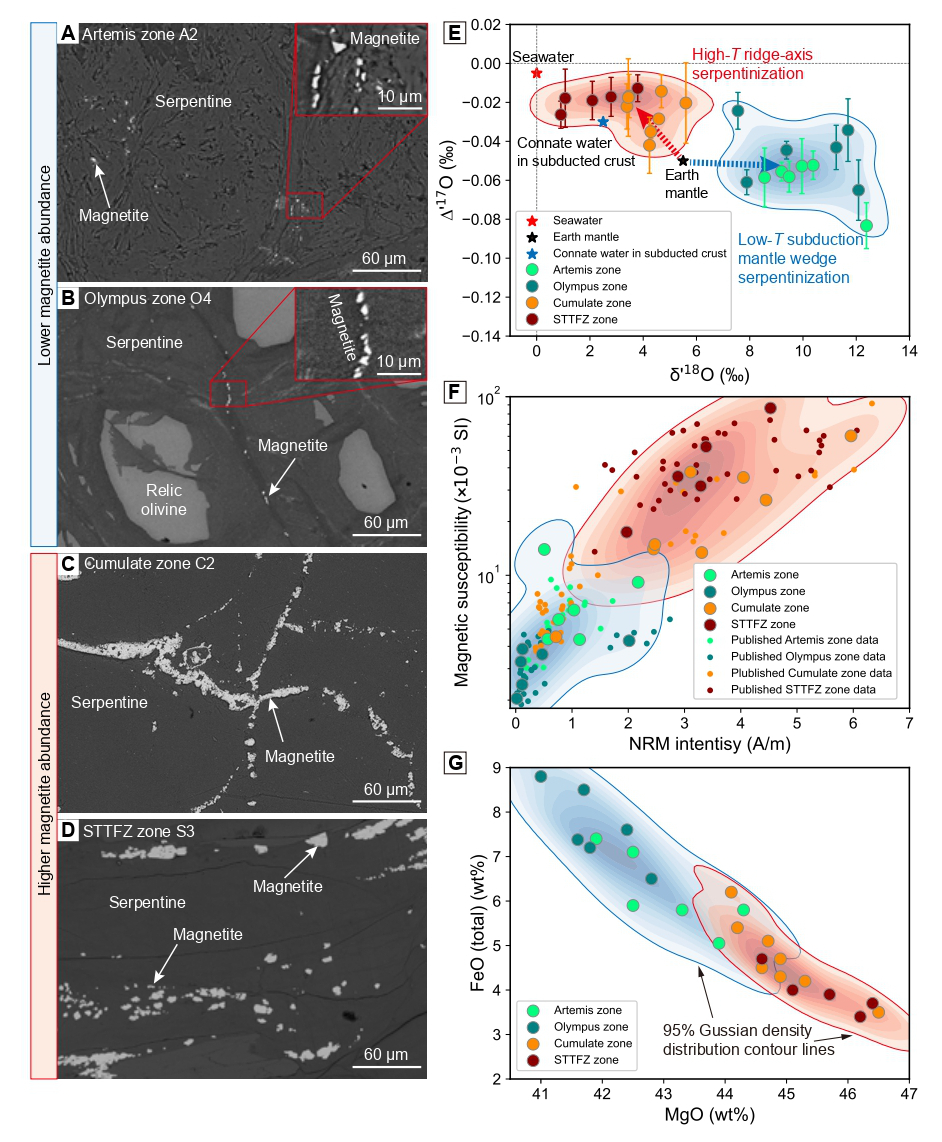
Fig.2 Scanning electron microscopy (SEM) images, geochemical data, and rock magnetic results.
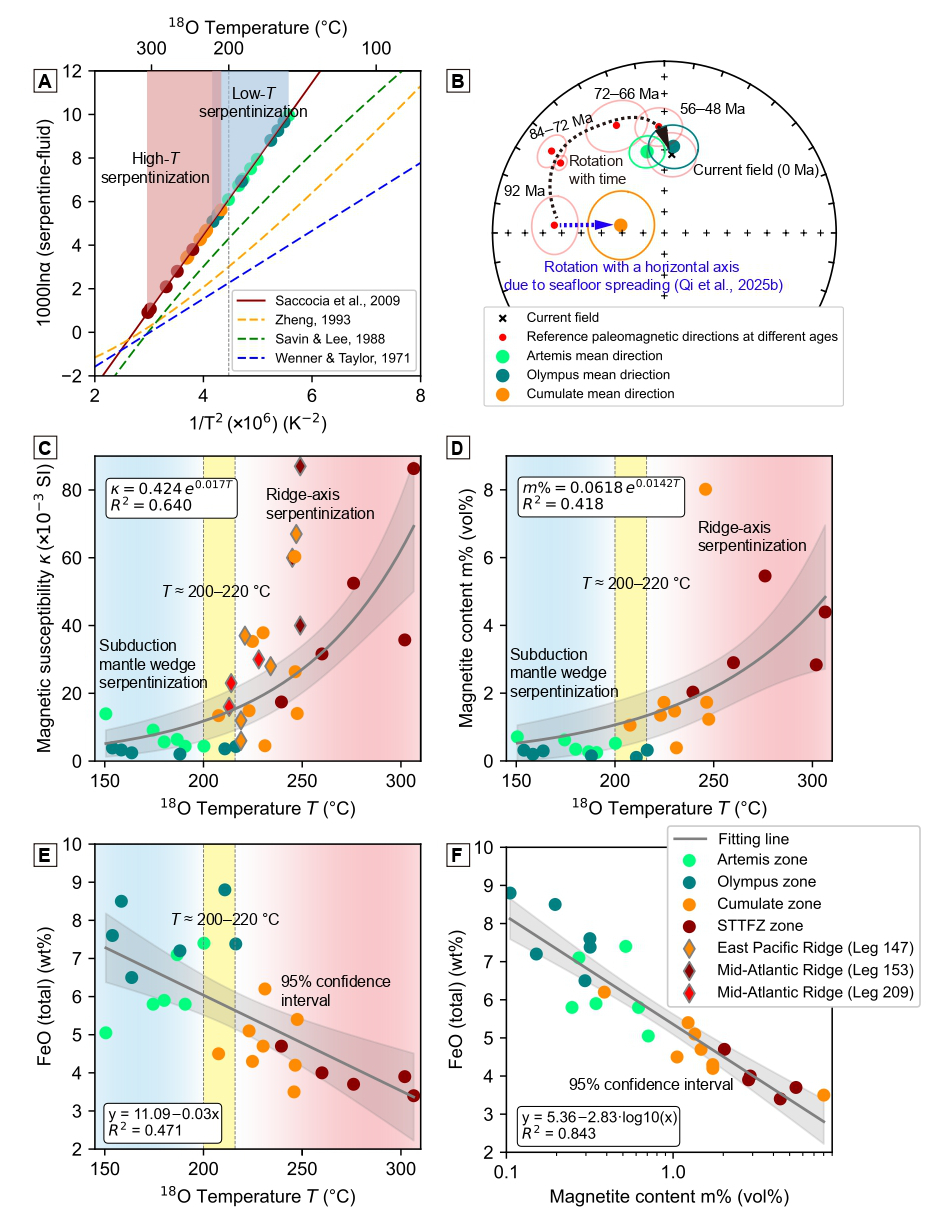
Fig.3 Relationships among temperature, magnetite formation, and iron redistribution.
Download: