Recently, LI Yanda, a PhD student at the University of Bristol, together with Professor CAI Chenyang from the Nanjing Institute of Geology and Palaeontology, Chinese Academy of Sciences (NIGPAS), and co-authors described a distinctive new genus of lampyroid beetles from mid-Cretaceous Kachin amber of Myanmar. Phylogenetic analyses indicate that the new genus, Icaroramus, likely belongs to the extinct family Cretophengodidae. The fossil specimen preserves elaborate antennae alongside fully intact abdominal light-emitting organs. The co-occurrence of these two diagnostic traits in a single fossil individual provides pivotal evidence for reconstructing the early evolution of sensory and signalling systems in fireflies and their close relatives. This research was published in Proceedings of the Royal Society B.The capacity of insects to perceive environmental cues and transmit information constitutes a critical foundation for their remarkable evolutionary success and extraordinary taxonomic diversity on Earth. Over their long evolutionary history, insects have evolved sophisticated sensory organs and diverse signal communication strategies, relying on chemical odours, acoustic signals, colour patterns and bioluminescence for interindividual signalling. Nevertheless, direct fossil evidence documenting the origin and evolutionary trajectories of these intricate sensory and communication systems, as well as the interplay between distinct signalling modalities, remains scarce, given the extremely low preservation potential of soft tissues and delicate microstructures.Recently, LI Yanda, a PhD student at the University of Bristol, together with Professor CAI Chenyang from the Nanjing Institute of Geology and Palaeontology, Chinese Academy of Sciences (NIGPAS), and co-authors described a distinctive new genus of lampyroid beetles from mid-Cretaceous Kachin amber of Myanmar. Phylogenetic analyses indicate that the new genus, Icaroramus, likely belongs to the extinct family Cretophengodidae. The fossil specimen preserves elaborate antennae alongside fully intact abdominal light-emitting organs. The co-occurrence of these two diagnostic traits in a single fossil individual provides pivotal evidence for reconstructing the early evolution of sensory and signalling systems in fireflies and their close relatives. This research was published in Proceedings of the Royal Society B.The most striking morphological trait of Icaroramus lies in its unique antennae. The antennae consist of twelve segments; antennomeres 4 to 11 each bear two pairs of lateral rami with disparate morphologies. The proximal pair of rami at the base of each antennomere is elongated with dilated apices and coarse setae, whereas the medial pair near the segment midpoint is shorter, slender and covered only with fine hairs. Such heteroramose antennae—characterised by two morphologically distinct pairs of lateral branches on a single antennomere—are unprecedented across the entire Coleoptera order. From a developmental evolutionary perspective, this specialised antennal morphology may arise from partial reactivation of the antennal segmentation programme within individual antennomeres, generating extra branching outgrowths.Numerous extant insect lineages that locate mates via chemical communication possess well-developed branched antennae to enhance detection of trace airborne pheromones. The highly complex ramified antennae of Icaroramus imply that this extinct lampyroid probably relied heavily on pheromonal cues during mate searching. Furthermore, the clear morphological differentiation between the two sets of antennal rami may reflect functional partitioning of olfactory sensilla, enabling the beetle to discriminate between distinct chemical signals. Such highly specialised chemosensory capacity demonstrates that Cretaceous lampyroids had evolved sophisticated ecological adaptations.By contrast, the exact biological function of the abdominal photic organs cannot be definitively resolved solely from fossil material. Extant firefly clades that use light signals for courtship generally exhibit simplified antennae, yet Icaroramus combines elaborate light organs with highly branched antennae—a trait combination inconsistent with most modern fireflies dependent on luminous mating signals. Accordingly, the bioluminescent organs of Icaroramus most likely functioned for aposematic anti-predator defence, though a supplementary role in mate attraction cannot be entirely ruled out.Collectively, Icaroramus reveals that lampyroid beetles already possessed both highly specialised sensory structures and functional bioluminescence by the Cretaceous (~100 Ma), offering novel fossil insights into the evolutionary origins of the complex signalling machinery of fireflies.This work was supported by the National Key Research and Development Program of China. Reconstruction illustrations were created by illustrator Dinghua Yang.Reference: Li, Y.-D., Kundrata, R., Huang, D., Tin Aung Myint & Cai, C. (2026) A firefly relative that smelled and glowed: evidence for complex signalling systems in Cretaceous lampyroids. Proceedings of the Royal Society B, 293, 20260295. https://doi.org/10.1098/rspb.2026.0295.Fig.1 Icaroramus perisi and its unique heteroramose antennaeFig.2 Phylogenetic tree showing the systematic placement of the genus IcaroramusFig.3 Ecological reconstruction illustrating luminous Icaroramus in a Cretaceous forest
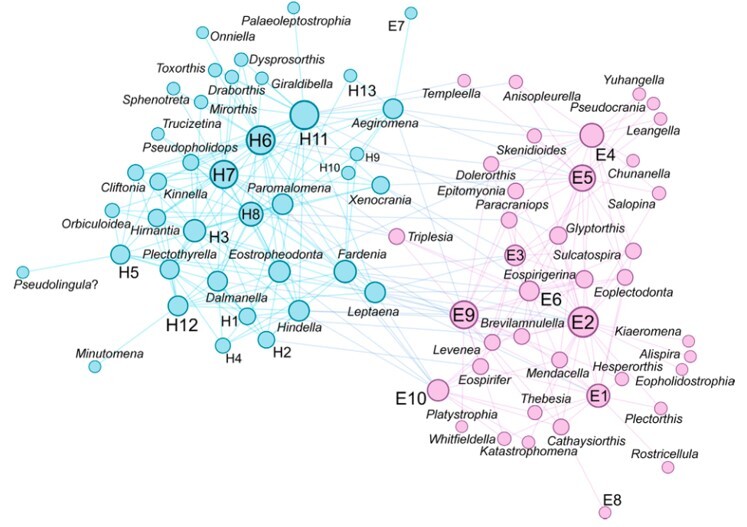
Recently, SHI Kaiyan, a master’s student at the Nanjing Institute of Geology and Palaeontology, Chinese Academy of Sciences (NIGPAS), under the supervision of Prof. HUANG Bin and in collaboration with Prof. RONG Jiayu and Prof. ZHAN Renbin, reported for the first time an EC Fauna from the Wulipo Bed in Meitan, Guizhou Province. The result was published in Palaeoworld.The Edgewood–Cathay (EC) brachiopod fauna, typified by Cathaysiorthis, is an important fossil assemblage for recognizing the survival to early recovery interval following the Late Ordovician mass extinction (LOME). It records the persistence of surviving “Ordovician-type” groups, the emergence of new taxa, and the reorganization of benthic communities after the disappearance of the Hirnantia Fauna. It is therefore of considerable significance for understanding brachiopod macroevolution and palaeobiogeographical patterns across the Ordovician–Silurian transition.Recently, SHI Kaiyan, a master’s student at the Nanjing Institute of Geology and Palaeontology, Chinese Academy of Sciences (NIGPAS), under the supervision of Prof. HUANG Bin and in collaboration with Prof. RONG Jiayu and Prof. ZHAN Renbin, reported for the first time an EC Fauna from the Wulipo Bed in Meitan, Guizhou Province. The result was published in Palaeoworld.A total of 1,224 brachiopod specimens were obtained, representing 13 species in 13 genera. The fauna is dominated by Eospirigerina, Hindella, and Cathaysiorthis (Fig. 1). Non-metric Multidimensional Scaling (NMDS) and network analyses show that the northern Guizhou EC Fauna is closely related to the typical EC faunas of eastern China but is clearly distinct from the Hirnantia Fauna (Fig. 2). This discovery extends the known distribution of the early EC Fauna to the southwestern margin of the Yangtze Platform.Within this fauna, “Ordovician-type” clades, particularly Orthida and Strophomenida, remain dominant, while newly emerged taxa such as Cathaysiorthis are also present, indicating that the fauna belongs to the survival to early recovery interval following the mass extinction. Compared with the possibly younger Cathaysiorthis fauna from Xichuan, He’nan Province, in which the proportion of “Silurian-type” clades had increased, the northern Guizhou fauna represents an earlier stage of brachiopod-community recovery. It also provides new material for comparing regional differences among contemporaneous faunas from eastern China, northern Guizhou, and northeastern Yunnan.The study also reassessed the relationships among the Wulipo Bed, Shiqian Formation, and Weiba Formation. “Wulipo Bed” is the earliest valid name applied to this lithostratigraphic unit. However, the name “Wulipo” had already been used for a Permian formation, resulting in a nomenclatural conflict. The Stratigraphic Lexicon of China: Permian System considers the Permian Wulipo Formation to represent the upper part of the Yangshan Formation and suggests that it should not be recognized as an independent formation. Moreover, the Compendium of Chinese Lithostratigraphic Nomenclature (National Stratigraphic Committee, 2017) lists both names. The present study therefore temporarily retains “Wulipo Bed” as a valid bed-rank unit.Because the Shiqian and Weiba formations are each less than 4 m thick and are too thin to serve as mappable lithostratigraphic units, they are downgraded to the Shiqian Bed and Weiba Bed, respectively, and are regarded as junior subjective synonyms of the Wulipo Bed (Fig. 3). This revision helps to standardize the lithostratigraphic framework across the Ordovician–Silurian boundary in northern Guizhou and adjacent regions, providing a more stable basis for regional stratigraphic correlation and studies of biotic macroevolution.The brachiopod fauna of the Wulipo Bed shows an upward succession from the Eospirigerina–Hindella Association to the Eospirigerina–Cathaysiorthis Association. The palaeoecological setting changes from Benthic Assemblage 2 (BA2) to Benthic Assemblage 3 (BA3), indicating progressive deepening of the water. This succession records a transgressive event after the second phase of the LOME and provides palaeoecological evidence for post-glacial warming, ice-sheet melting, and sea-level rise.The study expands the known palaeogeographical range of the early Cathaysiorthis fauna and reveals the composition and ecological changes of the earliest recovery communities in the southwestern part of the South China plate. It also provides key new data for standardizing the regional stratigraphic framework and understanding the reorganization of benthic ecosystems after the mass extinction.Reference: Kai-Yan Shi, Bing Huang*, Ren-Bin Zhan, Jia-Yu Rong. 2026. A new Edgewood-Cathay Fauna from the Wulipo Bed (uppermost Ordovician to lowermost Silurian) in South China and its palaeoecological significance. Palaeoworld 35, 201152. https://doi.org/10.1016/j.palwor.2026.201152.Fig. 1. Representative taxa of the EC Fauna from northern Guizhou.Fig. 2. Network analysis showing that the studied fauna is closely related to the EC faunas of eastern China but clearly distinct from the Hirnantia Fauna.Fig. 3. The Shiqian Formation in the Shiqian area and the Weiba Formation in the Zhenxiong area, each less than 4 m thick, are revised as the Shiqian Bed and Weiba Bed and regarded as junior subjective synonyms of the Wulipo Bed.
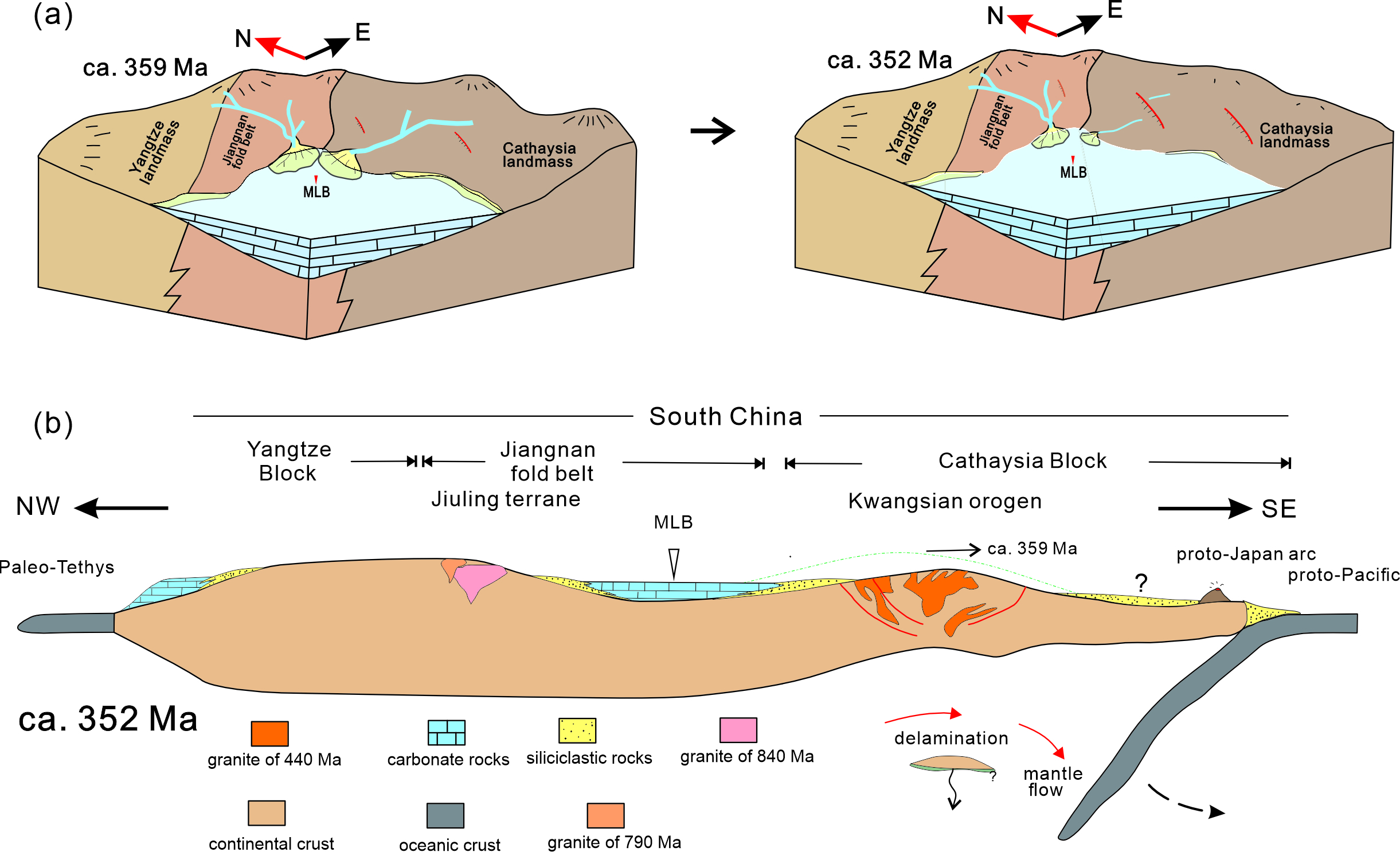
The late Paleozoic witnessed intense tectonic activity, which played a major role in driving the evolution of Earth’s surface systems. Two major continent-continent collisional belts formed during the late Paleozoic, namely the Hercynian orogen and the Uralian orogen. In addition, a series of subduction-related orogenic belts formed around these continents during the late Paleozoic, including the Cordilleran orogenic belt, the Terra Australis orogenic belt, and the Central Asian orogenic belt. Meanwhile, the South China Craton was located to the northeast of the Paleo-Tethys Ocean, at the confluence of the Panthalassa Ocean to the east and the Paleo-Tethys Ocean to the west. However, the tectonic setting of South China during the late Paleozoic remains ambiguous due to the lack of sufficient magmatic and metamorphic records, in addition to the restricted siliciclastic sedimentary system, which hampers our understanding of the regional tectonic evolution and geodynamic processes.As the first-order control on changes in paleogeography, different tectonic settings of continental margins would exert different influences. Therefore, reconstructing the paleogeographic evolution processes of South China can provide additional constraints on the tectonic setting of the South China Craton. Over the past decade, numerous late Paleozoic detrital zircons have been reported from Devonian to Triassic siliciclastic strata in South China, providing an opportunity to explore its tectonic setting and geodynamics. The occurrence of two late Paleozoic magmatic rocks, with ages of 334 Ma and 317 Ma, from the southeastern region of South China, confirms magmatic activity in southeastern South China. Most of these studies focused on the tectonic setting of southeastern South China, and different models have been proposed to account for those magmatic activities. By contrast, the northwestern margin of South China was claimed to be a passive continental margin, although its tectonic setting has received limited attention. Therefore, reconstructing the paleogeographic evolution of South China is critical for elucidating its late Paleozoic tectonic setting, which remains poorly understood.Here, Prof. CHEN Jitao and QIE Wenkun from the Nanjing Institute of Geology and Palaeontology, Chinese Academy of Sciences (NIGPAS), leading a team including assistant researchers GAO Biao and ZHONG Yutian, and Master’ degree candidate GUAN Yifan, conducted heavy mineral assemblage analyses, detrital zircon cathodoluminescence (CL) imaging, geochronological analyses, and zircon geochemical analyses, to explore the provenance and paleogeographic evolution of South China during the late Paleozoic. The results of this study were recently published in the Journal of Asian Earth Sciences.The three samples from the MLB section show relatively similar zircon U–Pb age spectra. Specifically, they consist of two major age clusters at 470–410 Ma and 860–800 Ma, with peaks at ca. 440 Ma and 830 Ma. Six subordinate age populations peak at 2.5 Ga, 1.8 Ga, 990 Ma, 910 Ma, 790 Ma, and 680 Ma. The remaining sporadic zircons fall within the age ranges of 3.1–2.6 Ga, 2.4–1.9 Ga, and 1.7–1.0 Ga. In conclusion, the siliciclastic sandstones in the MLB section have broadly similar provenance compositions, including the early Paleozoic Kwangsian orogenic rocks from the Cathaysia Block, detritus from the eastern Yangtze Block, and material from the central Jiangnan orogenic belt.Although the above provenance analysis indicates a relatively stable source-to-sink system for the MLB section, a provenance shift can still be recognized. The proportion of zircons aged 470–410 Ma, derived from the Kwangsian orogenic belt in the Cathaysia region, decreases from 24% in sample MLB-0 to 16% in MLB-71.8, and finally to 8% in MLB-129. In contrast, the proportion of zircons peaking at ca. 830 Ma (860–800 Ma), derived from the central Jiangnan fold belt in the eastern Yangtze Block, increases from 15% in sample MLB-0 to 32% in MLB-71.8, and then decreased slightly to 26% in MLB-129.A Monte Carlo test was used to assess the error ranges of the detrital contributions from the Cathaysia Block for the three MLB sandstone samples. Considering their error ranges, the probability of a strict decreasing trend in the percentage of the 470–410 Ma zircon cluster is about 64.34%, and the probability of MLB-0 > MLB-129 is about 99.91%. To reveal the long-term paleogeographic evolution of South China, a compilation of detrital zircon ages from late Paleozoic sedimentary rocks was conducted. Correspondingly, a decreasing contribution of detrital zircons aged 470–410 Ma can also be observed in the compiled detrital zircon age spectra of late Paleozoic strata in the Cathaysia Block, further supporting the gradual topographic flattening of the Cathaysia landmass during the late Paleozoic. By contrast, the age spectra of the Yangtze region remain similar over ~120 Myr (from the Early Devonian to the Early Permian), indicating a stable provenance system, which is consistent with a passive continental margin setting. In addition, the tectonic settings of the Yangtze and Cathaysia regions can also be distinguished on the CA–DA diagram.This study was supported by the National Natural Science Foundation of China.Reference: Biao Gao*, Yutian Zhong, Yifan Guan, Wenkun Qie, Jitao Chen*. Provenance analysis of latest Devonian to early Carboniferous siliciclastic deposits in central South China: Implications for paleogeographic change and tectonic setting of the South China Craton. Journal of Asian Earth Sciences, 310:107202. https://doi.org/ 10.1016/j.jseaes.2026.107202.(a) Global paleogeographic reconstruction and tectonic framework at ca. 350 Ma. (b) Lithofacies paleogeography of South China in the earliest Carboniferous, showing the location of the MLB section. (c) Stratigraphic and lithological column of the MLB section, showing sample locations (stars).Violin plots of detrital zircon age groups from the Kwangsian orogenic belt (480–410 Ma). Orange circles represent the proportions of the zircon age cluster at 860–810 Ma.Relative probability plots for detrital zircon ages from late Paleozoic strata in the Cathaysia region (a) and Yangtze region (b). (c) Tectonic setting discrimination diagram. The lines in (c) represent these age compilations from the Yangtze and Cathaysia regions, shown in different colors.Conceptual illustration of the paleogeographic reconstruction and tectonic setting of the South China Craton during the latest Devonian to early Carboniferous. (a) Paleogeographic evolution of the provenance system of the MLB succession. (b) Tectonic and geodynamic model of South China during this interval.
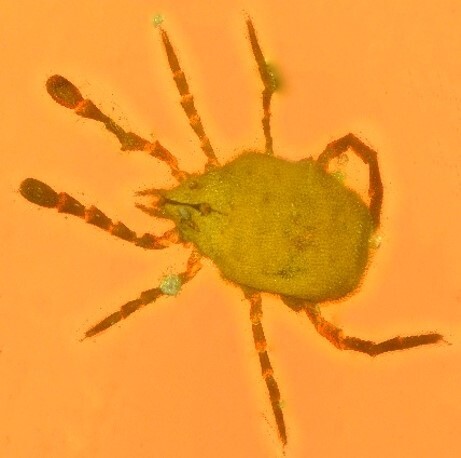
A new study led by post-doctoral researcher Samuel Costa, from the Nanjing Institute of Geology and Palaeontology, Chinese Academy of Sciences (NIGPAS), in collaboration with an international team of colleagues, shows how fossils can do more than reveal extinct life. By combining a 99-million-year-old amber fossil with plate-tectonic reconstructions, palaeoclimate data, modern species records and ecological niche modelling, the study demonstrates how palaeontology can help explain the biology of living species and even identify groups that may be vulnerable to future climate change.A new study led by post-doctoral researcher Samuel Costa, from the Nanjing Institute of Geology and Palaeontology, Chinese Academy of Sciences (NIGPAS), in collaboration with an international team of colleagues, shows how fossils can do more than reveal extinct life. By combining a 99-million-year-old amber fossil with plate-tectonic reconstructions, palaeoclimate data, modern species records and ecological niche modelling, the study demonstrates how palaeontology can help explain the biology of living species and even identify groups that may be vulnerable to future climate change.These relevant findings were recently published in the Proceedings of the Royal Society B.The research focuses on Tanaupodidae, a rare family of tiny mites with an unusual lifestyle. Like many Parasitengona mites, their larvae are parasites associated with other arthropods, while the later life stages are free-living predators that crawl through soil, litter and wet habitats. However, Tanaupodidae are especially remarkable because their active post-larval stages are mainly found during the coldest months of the year. While many small soil arthropods are most conspicuous in spring and summer, these mites are winter-active and may occur in cold, humid habitats, including wetlands, mountains and even icy environments.Today, Tanaupodidae are known only from the Northern Hemisphere. Their living representatives occur mainly in temperate and humid regions of Europe, Asia and North America, and some species are restricted to cold mountainous areas. Until now, their fossil record also seemed to tell a northern story: Eocene Baltic amber from the Kaliningrad region, dating to more than 40 million years ago, and Early Cretaceous French amber from Archingeay-Les Nouillers, dating to more than 100 million years ago, had produced the only known fossil members of the family.The new fossil changes this picture. The specimen, preserved in Kachin amber from Myanmar, belongs to a newly described genus, Calidothrombium gen. nov. Although Kachin amber is found today in Southeast Asia, geological and fossil evidence indicates that it formed on the Burma Terrane, an island-like landmass derived from Gondwana, the ancient southern supercontinent. During the Cretaceous, this terrane was drifting northward before eventually becoming part of Asia.This discovery therefore represents the first record of Tanaupodidae from a Gondwanan-derived landmass. Together with the Cretaceous record from France, it shows that these mites were already present on widely separated landmasses around 100 million years ago. This raises a striking evolutionary question: if living Tanaupodidae are winter-active mites associated with cold and humid environments, why was a member of the family living in a tropical forest on a drifting island during one of the warmest intervals of the last half-billion years?To investigate this question, the authors used MaxEnt, a machine-learning-based ecological niche modelling approach, to identify the climatic conditions and geographic areas most suitable for living Tanaupodidae, based on 131 verified modern occurrence records. The model identified cold and humid winter conditions as key factors associated with the present distribution of the family. In particular, the minimum temperature of the coldest month emerged as the most important climatic constraint, with the highest suitability occurring below 0°C and decreasing sharply under warmer winter conditions.The fossil evidence tells a very different story. Palaeobotanical data indicate that both known Cretaceous amber deposits containing Tanaupodidae — Kachin amber and Archingeay-Les Nouillers amber — formed in warm, wet tropical forests. Palaeoclimate reconstructions conducted by the authors further show that the French Cretaceous locality experienced much warmer winter conditions than those associated with extant Tanaupodidae. By contrast, the Eocene Baltic amber record, which includes the extant genus Eothrombium, comes from a humid warm-temperate forest and shows winter temperatures much closer to those observed in the modern distribution of the family.Together, these independent lines of evidence support a major ecological shift in Tanaupodidae: from a broader Cretaceous distribution that included tropical forest ecosystems to the restricted cold and humid habitats occupied by living species today. The new fossil does not simply add another extinct mite to the fossil record; it reveals that a lineage now associated with winter may once have included relatives adapted to warm tropical worlds.The study also raises a cautious modern warning. If living Tanaupodidae are now limited by warm winter temperatures, ongoing climate warming may further reduce suitable habitats for some species, especially those restricted to cold mountains and humid temperate wetlands. The results therefore highlight the value of fossils for conservation biology: ancient amber can help reveal not only where life came from, but also which living lineages may be most sensitive to future environmental change.This research was supported by the National Natural Science Foundation of China, the Chinese Academy of Sciences, and the Brazilian National Council for Science and Technology Development (CNPq).Reference: Costa, S.G.S., Klimov, P.B., Moreira, D.B.P., Wang, H., Assis-Silva, M.H. & Pepato, A.R. (2026) From warm to cold habitats: a Cretaceous Tanaupodidae fossil reveals a major climatic niche shift and wider past distribution in winter-active mites. Proceedings of the Royal Society B: Biological Sciences, 293, 20261497. https://doi.org/10.1098/rspb.2026.1497.Fig.1 Calidothrombium gen. nov., a 99-million-year-old fossil mite preserved in Kachin amber.Fig.2 Cretaceous fossil records of Tanaupodidae on widely separated landmasses: French amber from the Armorica plate and Kachin amber from the Gondwanan-derived Burma Terrane.Fig.3 Climatically suitable areas for living Tanaupodidae inferred with MaxEnt. Warmer colours indicate higher suitability.Fig.4 From warm to cold habitats: comparison of Cretaceous tropical amber forests, Eocene Baltic amber forests, and the cold-season habitats of extant Tanaupodidae, including modelled mean winter temperatures.
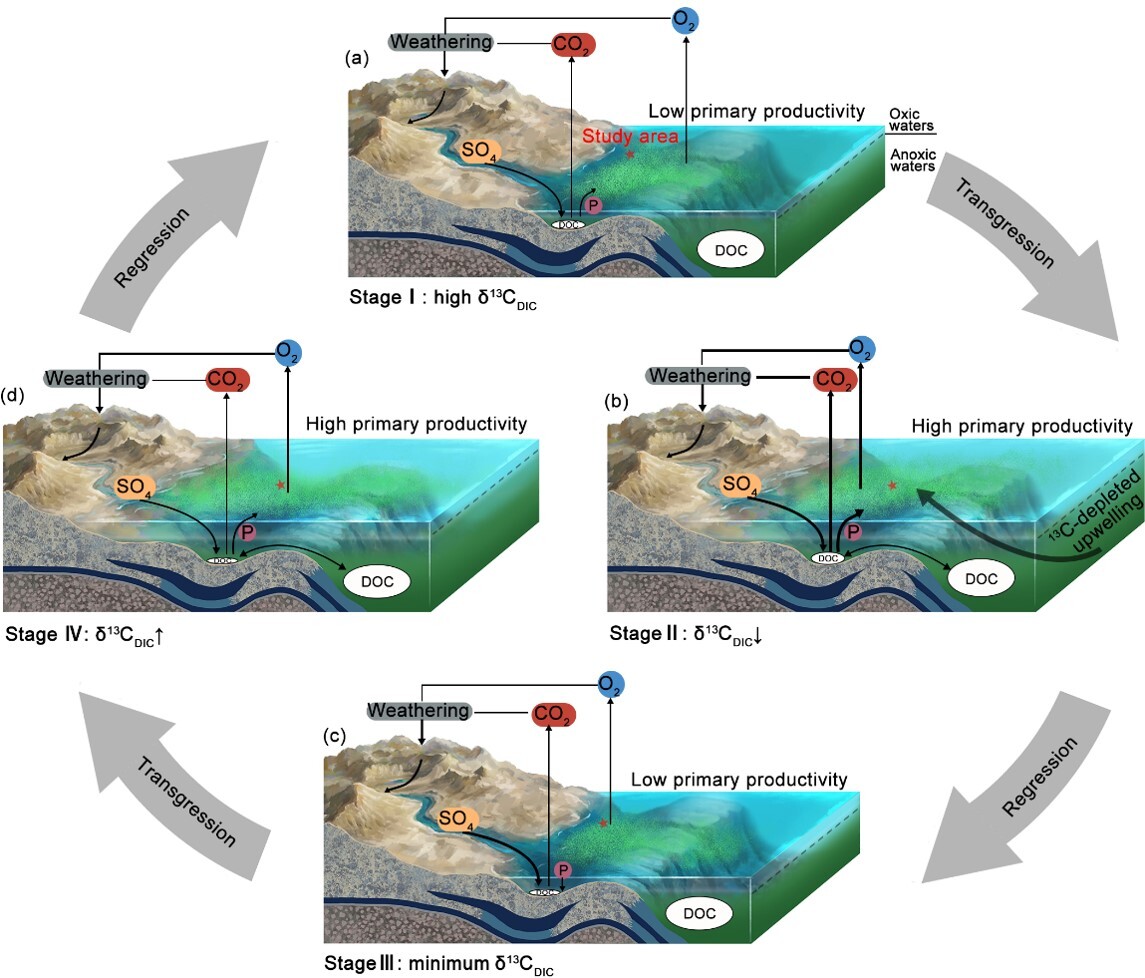
Recently, Professor WANG Wei from the Nanjing Institute of Geology and Palaeontology, Chinese Academy of Sciences (NIGPAS), together with XUE Naihua, a double PhD student from the Vrije Universiteit Brussel (VUB) and the University of Münster, worked with an international research team to establish the longest continuous astronomical time scale (ATS) for the Ediacaran Period to date (635.1 ± 0.6 Ma to 568.3 ± 6.8 Ma), based on drilled core around the Jiulongwan section in Yichang, South China. This ATS provides a series of new age constraints for Ediacaran geochemical perturbations and fossil assemblages, revealing significant temporal heterogeneity of the Shuram carbon isotope excursion, as well as a coupling relationship between carbon isotope fluctuations and the second-order sea-level oscillations in the inner-shelf basin of South China. The related paper was recently published in the international academic journal Precambrian Research.The Ediacaran Period (635–538 Ma) was a critical period in the Earth's habitability evolution. However, the precision of the Ediacaran timeframe significantly lags behind that of the well-anchored astronomical time scales established for the most recent periods. This hinders global stratigraphic correlations and subdivision of the Ediacaran System as well as generating controversies about the tempo of deep-ocean oxygenation and eco-evolutionary dynamics. Cyclostratigraphy enables the construction of high-resolution astrochronology for deep-time sediments through a workflow that identifies geological imprints of Milanković cycles and uses specific orbital forcing cycles as the metronome for time-depth calibration.Recently, Professor WANG Wei from the Nanjing Institute of Geology and Palaeontology, Chinese Academy of Sciences (NIGPAS), together with XUE Naihua, a double PhD student from the Vrije Universiteit Brussel (VUB) and the University of Münster, worked with an international research team to establish the longest continuous astronomical time scale (ATS) for the Ediacaran Period to date (635.1 ± 0.6 Ma to 568.3 ± 6.8 Ma), based on drilled core around the Jiulongwan section in Yichang, South China. This ATS provides a series of new age constraints for Ediacaran geochemical perturbations and fossil assemblages, revealing significant temporal heterogeneity of the Shuram carbon isotope excursion, as well as a coupling relationship between carbon isotope fluctuations and the second-order sea-level oscillations in the inner-shelf basin of South China. The related paper was recently published in the international academic journal Precambrian Research.This research utilized multi-proxy analyses (meter-scale δ13Ccarb analysis, gamma ray (GR) logging with 5-cm measuring interval, and millimeter-scale X-ray fluorescence (XRF) core scanning) and a sedimentation-rate-dependent meshing scheme (recurrence analysis) (Fig.1) to establish continuous astronomical time scale across long temporal spans. In addition, the study comprehensively considered the uncertainties of the absolute age anchor, long eccentricity term, and astronomical tuning within each segment, as well as error accumulation and propagation, ultimately providing an age model with quantified uncertainty assessment.Based on astrochronology, new age constraints have been provided for the major carbon isotope perturbations and fossil assemblages recorded in the inner-shelf basin of South China: EN3/DOUNCE triggered ≤ 584.2 ± 5.2 Ma, lasting 12.2 ± 1.4 Myr–15.9 ± 1.7 Myr; EN2/BAINCE: ≤ 599.5 ± 3.2 Ma to ≤ 593.2 ± 4.0 Ma; the nadir of the WANCE ≤ 613.9 ± 2.0 Ma; large acanthomorphic acritarchs: 632.5 ± 0.48 Ma to ≤ 584.2 ± 5.2 Ma; Lantian biota: ~616 Ma to ~593 Ma; Weng'an biota: ≤ 613.9 ± 2.0 Ma to ≤ 584.2 ± 5.2 Ma; Miaohe biota: <568.3 ± 6.8 Ma to ~550 Ma (Fig.2).Most studies assumed and/or highlighted the isochronism of the Shuram excursion occurs in South China, Oman, northwestern Canada and other locations. The newly established astrochronology would highlight a novel perspective on the temporal heterogeneity of this the Shuram excursion. Compared to the Shuram excursion recorded in open-ocean settings, the Shuram excursion of South China exhibits temporal heterogeneity in terms of potentially earlier onset, prolonged duration. Especially, the Shuram excursion in South China occurred with a moderate trigger tempo (dropping to the nadir form 0‰ around 4.2 ± 0.4 Myr) that is approximately 3.5 times longer than the trigger tempo of the Shuram excursion reported in Oman (Fig.2). Future research on the trigger mechanisms and biogeochemical perturbations of the Shuram excursion should account for the spatiotemporal heterogeneity in δ13C variations.To further investigate the potential drivers of temporal heterogeneity in Ediacaran shallow-marine carbon cycle perturbations, the research team reconstructed ~67-Myr relative sea-level changes in the inner-shelf basin of South China using lithological encoding, astronomically calibrated sedimentation rates, and time-domain ρ1 (lag-1 autocorrelation coefficient) modeling. The research found that the carbon isotope negative excursions in the South China Basin are highly coupled with the "M"-shaped secondary sea-level changes (Fig.3). The ρ1 modeling together with sedimentological and lithological evidence effectively indicates large-scale sea-level oscillations, offering a possible dynamic mechanism for the fundamental carbon-isotope framework of the Ediacaran Period. The sea-level-paced dynamics of the Shuram excursion in South China is compatible with the previous hypothesis of sedimentology and paleogeography, carbon isotope, atmospheric and oceanic redox conditions, phosphorus cycling, and continental weathering.This research was supported by: Strategic Priority Research Program of Chinese Academy of Sciences, National Key Research and Development Program of China, National Natural Science Foundation of China, VUB Strategic Research program, CycloNet: European Cyclostratigraphy Network, and China Scholarship Council.Reference: Naihua Xue, Wei Wang*, David De Vleeschouwer, Chengguo Guan, Mingsong Li, Meng Wang, Xunlai Yuan, Philippe Claeys, Astrochronology of the Ediacaran Period reveals the temporal heterogeneity and sea-level pacing of Shuram excursion. Precambrian Research 445 (2026) 108222. https://doi.org/10.1016/j.precamres.2026.108222.Fig.1 Composite stratigraphic profiles of the Doushantuo Formation in the Wuhe drill core. (a) δ13C (‰, VPDB) profile aligned with high resolution lithology. (b) Gamma-ray logging curve. (c) Recurrence plot of Gamma-ray. (d) Determinism (DET) of recurrence analysis.Fig.2 Astronomically calibrated δ13C (‰, VPDB) profile of South China accompanying sedimentation rate, Ediacaran fossil zonation of South China, and ρ1 model of the astronomically tuned gamma-ray series.Fig.3 A 3D conceptual model for depicting the dynamics of the EN3/DOUNCE in South China, paced by the second-order sea-level oscillations.
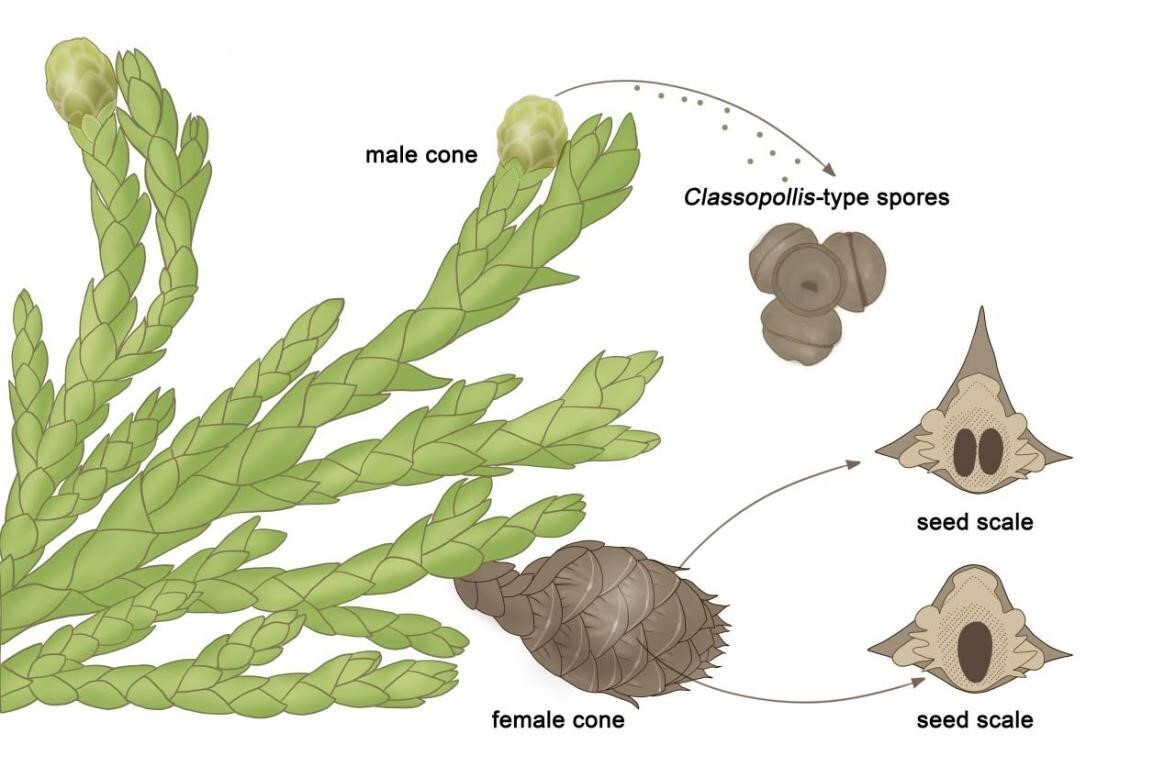
Recently, Prof. WANG Yongdong, from the Nanjing Institute of Geology and Palaeontology, Chinese Academy of Sciences, and Associate Professor ZHOU Ning from the Department of Geology, Northwest University, in collaboration with other colleagues from Anhui University of Science and Technology, as well as Chengdu University of Science and Technology, conducted a systematic palaeobotanical study on well-preserved Pagiophyllum maculosum Kendall fossils from the Lower Jurassic in the Zigui Basin, western Hubei Province, South China. This study marks the first discovery of this species in China, yielding materials with leafy shoots bearing cuticles, male and female cones. The results has been published in the international journal Review of Palaeobotany and Palynology.Pagiophyllum is a form genus of extinct conifers with scale-like, spirally arranged leaves, widely distributed from the Late Permian to the Late Cretaceous. Due to its leaf morphology resembling several conifer families (e.g., Cheirolepidiaceae, Cupressaceae, Araucariaceae), its taxonomic placement has long been uncertain. Although some species have been assigned to the extinct family Cheirolepidiaceae, most fossils are preserved as isolated leafy shoots lacking cuticular details and reproductive structures, hindering definitive natural classification and understanding of their ecological adaptations.Recently, Prof. WANG Yongdong, from the Nanjing Institute of Geology and Palaeontology, Chinese Academy of Sciences, and Associate Professor ZHOU Ning from the Department of Geology, Northwest University, in collaboration with other colleagues from Anhui University of Science and Technology, as well as Chengdu University of Science and Technology, conducted a systematic palaeobotanical study on well-preserved Pagiophyllum maculosum Kendall fossils from the Lower Jurassic in the Zigui Basin, western Hubei Province, South China. This study marks the first discovery of this species in China, yielding materials with leafy shoots bearing cuticles, male and female cones. The results has been published in the international journal Review of Palaeobotany and Palynology.Initially reported only from the Middle Jurassic of Yorkshire, UK, Pagiophyllum maculosum lacks definitive records of cuticles and reproductive organs owing to poor preservation. Here, the research team utilize optical, fluorescence, and scanning electron microscopy, alongside micro-CT, to elucidate the morphology and anatomy of its vegetative shoots, female and male cones, and epidermal structures. The study shows that the leaves of P. maculosum are triangular to ovoid, helically and imbricately arranged (Figs. 1-2). The abaxial leaf surface bears stomatal rows with sunken stomata surrounded by 4-6 subsidiary cells; epidermal cells are irregularly polygonal (Figs. 3-4). The female cone is elliptical, approximately 2.5 cm long, consisting of an estimated 36-40 helically arranged bract-scale complexes (Figs.2). The male cone is subspheroidal, about 6.5 mm in diameter, with peltate microsporophylls producing typical Classopollis-type pollen (Fig.4). Based on these morphological and anatomical features, the research team presents a whole-plant reconstruction of P. maculosum (Fig.5).Different Pagiophyllum species exhibit leaf morphological characteristics that are convergent with those of the families Cupressaceae, Taxodiaceae, Araucariaceae, and Cheirolepidiaceae. This has led to a complex taxonomic history, with Pagiophyllum species being assigned to different families. To assess the morphological similarities among the related leaf specimens, a hierarchical clustering analysis was performed based on a set of discrete character states (Fig.6). The analysis was conducted based on a morphological matrix of 18 characters for 29 fossils and 6 extant species from Taxodiaceae and Araucariaceae. The clustering analysis confirms that the leaf architecture of Pagiophyllum maculosum is clearly assignable to the Brachyphyllum-type morphospace. Its strong morphological affinity with Brachyphyllum and Elatides supports its inclusion within a coherent eco-morphological group. This classification is consistent with earlier studies that place P. maculosum within the Cheirolepidiaceae. Therefore, this fossil material provides direct evidence for the natural taxonomic placement of this form genus and offers new insights into the whole-plant morphology of Jurassic Cheirolepidiaceae.Notably, P. maculosum exhibits typical xeromorphic features, including thick cuticles, sunken stomata, and reduced free leaf parts. Furthermore, the plant assemblage from the same horizon is dominated by gymnosperms such as ginkgoaleans, bennettitaleans, and conifers, with ferns being exceptionally rare. This dominance of gymnosperms, coupled with the xeromorphic traits of P. maculosum, suggests an arid or semi-arid climate during the depositional period. These findings provide important evidence for understanding Early Jurassic paleoclimate and the ecological adaptations of cheirolepidiaceous conifers.This research was jointly funded by the National Natural Science Foundation of China, and the National Key Research and Development Program of China.Reference: Ning Zhou*, Yongdong Wang*, Yuanyuan Xu, Pengcheng An, Ziheng Wu. Whole-plant reconstruction of Pagiophyllum maculosum (Cheirolepidiaceae) from the Early Jurassic of China: Insights from new fossil material. Review of Palaeobotany and Palynology, 348 (2026) 105540. https://www.sciencedirect.com/science/article/pii/S0034666726000424.Fig. 1. Fossil specimens of Pagiophyllum maculosum from the Lower Jurassic in Zigui of Hebei Province, ChinaFig. 2. Female cone of P. maculosumFig.3. Fluorescence micrograph of P. maculosum leaf cuticlesFig. 4. P. maculosum (A–D) Scanning electron micrograph of the cuticle, showing epidermal cells and sunken stomata; (E, F) Light microphoto of Classopollis pollenFig. 5. Restoration of P. maculosum with leafy shoots, male cone, female cone, seed scale and Classopollis-type pollenFig.6. Hierarchical clustering based on a set of discrete character states for the potential fossil relatives and extant conifers, with extant species indicated by an asterisk (*). Different colors represent distinct clusters based on morphological similarity
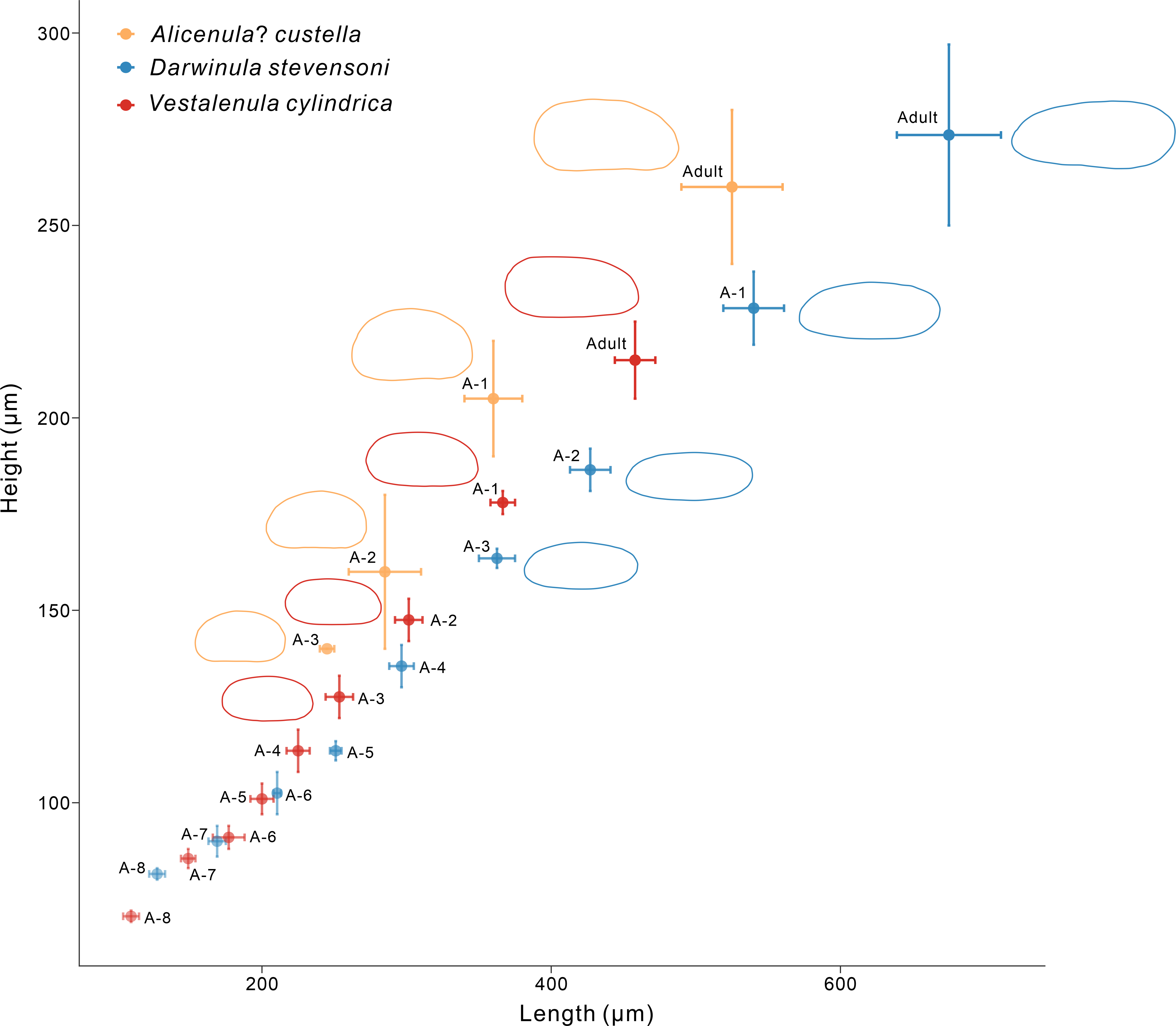
Recently, Associate Professor WANG Yaqiong from the Nanjing Institute of Geology and Palaeontology, Chinese Academy of Sciences (NIGPAS), together with Senior Researcher Robin J. Smith from the Lake Biwa Museum, Japan, Senior Researcher Byung-Do Choi from Daegu National Science Museum, South Korea, and researcher from Nanjing University, conducted a systematic study of ostracod fossils from the Lower Cretaceous Lisangou Formation in the Guyang Basin, Inner Mongolia. The research team identified a freshwater ostracod assemblage consisting of fifteen species from ten genera of three superfamilies. The study provided the first precise biostratigraphic age constraint for the Lisangou Formation, indicating a late Aptian age. Furthermore, the ontogeny of Cretaceous Darwinuloidea was recognized and documented for the first time.The North China Craton (NCC) is one of the important ancient geological units in East Asia. During the Late Mesozoic, the NCC underwent a series of major tectonic processes, including intense lithospheric thinning, extensional basin development, and large-scale magmatism, known as the “destruction of the North China Craton”. These processes not only profoundly reshaped the regional geological framework but also had a significant impact on the evolution of terrestrial ecosystems.Most previous studies on the evolution of terrestrial life and its responses to the NCC destruction predominantly focused on fossils from Konservat-Lagerstätten, with less emphasis on more ubiquitous fossil groups that are abundant, widely distributed, and preserved under relatively generic conditions. While fossils from Konservat-Lagerstätten offer detailed anatomical structures that are crucial for studying the morphology and evolution of significant fossil groups, these assemblages are typically confined to specific burial environments, locales, and time periods, thus complicating continuous, high-resolution studies of regional biological evolution, biodiversity, and biogeographical transitions over extended timescales. Research on Early Cretaceous non-exceptional fossil groups in the NCC offers a more comprehensive perspective on the relationship between terrestrial life evolution and the NCC destruction. The rift basins along the northern margin of the NCC preserve the most complete Early Cretaceous terrestrial sedimentary successions rich in non-exceptional fossil group - ostracods. These ostracod-bearing deposits provide a unique opportunity to explore the relationship between terrestrial ecosystem evolution and the destruction of the NCC from a broader and more general perspective.Recently, Associate Professor WANG Yaqiong from the Nanjing Institute of Geology and Palaeontology, Chinese Academy of Sciences (NIGPAS), together with Senior Researcher Robin J. Smith from the Lake Biwa Museum, Japan, Senior Researcher Byung-Do Choi from Daegu National Science Museum, South Korea, and researcher from Nanjing University, conducted a systematic study of ostracod fossils from the Lower Cretaceous Lisangou Formation in the Guyang Basin, Inner Mongolia. The research team identified a freshwater ostracod assemblage consisting of fifteen species from ten genera of three superfamilies. The study provided the first precise biostratigraphic age constraint for the Lisangou Formation, indicating a late Aptian age. Furthermore, the ontogeny of Cretaceous Darwinuloidea was recognized and documented for the first time.The result was published in Palaeoworld.In recent years, the research group have undertaken extensive field studies in several Cretaceous basins along the northern margin of the NCC where the destruction was most severe, gathering substantial fossil ostracod collections. This study provides a comprehensive revision of the ostracod assemblage from the Lisangou Formation in the Guyang Basin. The ostracod assemblage of the Lisangou Formation includes several typical freshwater taxa, including Cypridea, Lycopterocypris, Candona, Rhinocypris, Timiriasevia, and Alicenula?. Some of these taxa have important biostratigraphic significance for the Early Cretaceous terrestrial deposits of East Asia. Based on ostracod biostratigraphic correlations, the first well-constrained biostratigraphic age is suggested for the Lisangou Formation, placing it in the late Aptian.This study provided the first record of juvenile stages (A-1 to A-3 instars) of Cretaceous Darwinulidae Alicenula? custella and identified potential male individual in Alicenula? sp. A. The family Darwinulidae has garnered significant interest over the past three decades due to its potential status as one of only three “ancient asexual” groups in the animal kingdom. It has been suggested that the group has been reproducing asexually for over 200 million years due to the lack of male fossils in Mesozoic sediments. Therefore, this study not only provides new fossil evidence for understanding the long-term evolutionary history and systematic complexity of Darwinulidae but also challenges the hypothesis that this group maintained asexual reproduction for more than 200 million years.This study also identified at least two darwinuloidean mass-mortality events coinciding with their reproductive period provides compelling evidence that short-lived environmental catastrophes episodically disrupted an otherwise stable fluvial–lacustrine system during the deposition of the Lisangou Formation.This study advances our understanding of Early Cretaceous fossil ostracods from the destruction area of the NCC, and provides essential material for investigating the potential links between terrestrial biodiversity and the craton destruction.This research was supported by the National Natural Science Foundation of China.Reference: Yaqiong Wang*, Huazheng Zhu, Robin J. Smith, Byung-Do Choi, 2026. Lower Cretaceous Ostracoda (Crustacea) of the Lisangou Formation in the Guyang Basin, North China: Implications for Biostratigraphy and Palaeoenvironment. Palaeoworld 35, 201140. https://doi.org/10.1016/j.palwor.2026.201140.Fig 1. Lower Cretaceous lithostratigraphic units of the Guyang Basin and stratigraphic columns showing lithologies and position of ostracod samples from the Lisangou Formation in the Lisangou-Yangduiyaozi outcrop (A) and two sections (B and C) newly exposed due to road construction. Photographs from the studied sections B and C showing the positions of the ostracod samples. Sample numbers in black indicate those that yielded specimens in the present work. Lower Cret. = Lower Cretaceous, Fm.= Formation.Fig 2. Selected non-Cypridea species from the Lisangou FormationFig 3. Alicenula? custellaFig 4. Size-range plot of carapace dimensions of Alicenula? custella, Darwinula stevensoni and Vestalenula cylindrica and line drawings of the carapace outlines of these three species from ontogeny stages A-3 to adult. The size and outline data of D. stevensoni and V. cylindrica are from Smith and Kamiya (2008).
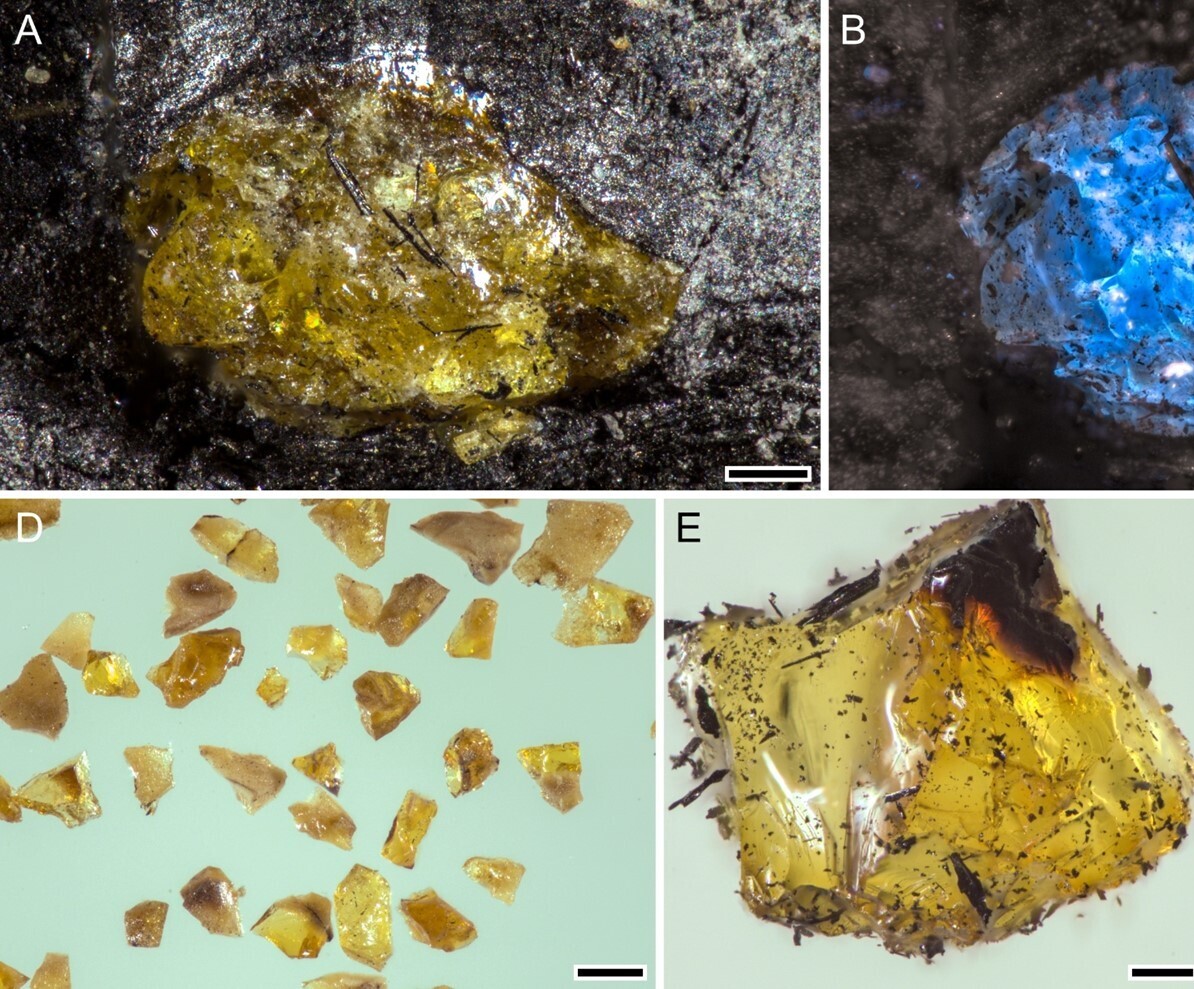
A new study led by Dr. LUO Cihang, under the supervision of Prof. WAGN Bo and Prof. ZHANG Haichun at the Nanjing Institute of Geology and Palaeontology, Chinese Academy of Sciences (NIGPAS), now reports amber from the Middle Devonian Hujiersite Formation of Xinjiang, northwestern China. The study was conducted in collaboration with the team of Prof. XU Honghe and Dr. YANG Huiyuan from the team of Prof. CUI Xingqian at Shanghai Jiao Tong University, together with other international collaborators. The newly discovered Hujiersite amber is approximately 385 million years old. It extends the confirmed fossil record of amber by about 65 million years and challenges the traditional view that amber was produced only by seed plants. The finding provides direct fossil evidence for the early evolution of plant resin production, terpene-based resin biosynthesis, and chemical defense mechanisms in early land plants. Amber is fossilized plant resin. In living plants, resin plays important roles in sealing wounds and protecting tissues against microbes, wildfires, and wood-boring organisms. Once fossilized, resin may preserve organic molecules for hundreds of millions of years and, in some cases, entrap tiny organisms such as insects, spiders, and plant fragments. For this reason, amber has long been regarded as a “time capsule” for ancient terrestrial ecosystems. Amber (resinite) are also important in coal petrology and petroleum geology. They are hydrogen-rich organic components that can undergo thermal evolution and generate liquid hydrocarbons at relatively low maturity levels. Their study therefore provides useful evidence for understanding hydrocarbon generation and assessing the petroleum potential of organic-rich strata. Despite its scientific importance, amber is extremely rare in Paleozoic rocks. Classical accounts of amber have generally regarded fossil resin as a product of seed plants, including gymnosperms and angiosperms. Until now, the earliest widely accepted amber record was from the Late Carboniferous of the United States, about 320 million years ago. The origin and earliest evolution of amber have therefore remained poorly constrained.A new study led by Dr. LUO Cihang, under the supervision of Prof. WAGN Bo and Prof. ZHANG Haichun at the Nanjing Institute of Geology and Palaeontology, Chinese Academy of Sciences (NIGPAS), now reports amber from the Middle Devonian Hujiersite Formation of Xinjiang, northwestern China. The study was conducted in collaboration with the team of Prof. XU Honghe and Dr. YANG Huiyuan from the team of Prof. CUI Xingqian at Shanghai Jiao Tong University, together with other international collaborators. The newly discovered Hujiersite amber is approximately 385 million years old. It extends the confirmed fossil record of amber by about 65 million years and challenges the traditional view that amber was produced only by seed plants. The finding provides direct fossil evidence for the early evolution of plant resin production, terpene-based resin biosynthesis, and chemical defense mechanisms in early land plants.The amber samples were collected from a cutinitic coal seam in the Ancient Petroleum Reservoir Section of the Hujiersite Formation, northwestern Junggar Basin, Xinjiang. This region has yielded the Hujiersite Flora, an important Middle Devonian plant assemblage that includes lycopsids, zosterophylls, iridopteridalean, and progymnosperms. These fossils make the Hujiersite Formation a key locality for understanding the structure and evolution of Devonian terrestrial vegetation. From about 10 kilograms of coal, the research team manually extracted hundreds of tiny amber particles under ultraviolet light. Most particles are only 0.1–0.5 millimetres in diameter, with the largest reaching about 1.5 millimetres. Under natural light, they range from light yellow to dark brown and vary from translucent to opaque. Under ultraviolet light, they show a distinct blue fluorescence, sharply contrasting with the surrounding black coal matrix.Because some organic matter in coal can resemble resin in appearance or fluorescence, the team further analysed the samples using Fourier-transform infrared spectroscopy (FT-IR) and gas chromatography–triple quadrupole mass spectrometry (GC-MS/MS). FT-IR spectra showed that the Hujiersite samples share key absorption features with modern and fossil resins, including signals associated with aliphatic C–H bonds, carboxyl-related C=O and O–H bonds, and methyl and methylene C–H bonds. These results indicate that the overall chemical structure of the samples is consistent with resin or amber. The spectra also lack several features typical of some angiosperm ambers, such as the 887 cm⁻¹ peak common in fabalean ambers and the 1360–1400 cm⁻¹ triplet and 1050 cm⁻¹ peak characteristic of dipterocarpaceous ambers. Instead, the Hujiersite amber shows closer spectral similarity to gymnosperm resins, including those of Pinaceae, Cupressaceae, and Araucariaceae. Organic geochemical analyses further confirmed the resinous nature of the samples. The Hujiersite amber contains abundant sesquiterpenoids, diterpenoids, and naphthalenic acids. Several abietane-type diterpenoids and their derivatives, which are commonly associated with conifer-type resins, were identified. By contrast, the samples lack typical angiosperm resin markers such as oleanane-type triterpenoids. Taken together, the FT-IR and geochemical data demonstrate that these particles are real fossil resin, namely amber, and that their chemical composition is most similar to gymnosperm, especially conifer-type resins.The age of the Hujiersite amber is especially important. It predates the origin and radiation of seed plants, meaning that it was not produced by typical seed plants. Instead, it was most likely derived from other vascular plants. Based on the composition of the Hujiersite Flora, possible source plants include progymnosperms and arborescent lycopsids. This suggests that some Middle Devonian vascular plants had already evolved the capacity to produce complex terpene-rich resins.The discovery also sheds new light on the ecological context in which resin production may have evolved. Devonian was a critical interval in the expansion of land plants and the increasing complexity of terrestrial ecosystems. During this time, plants became larger, rooting systems deepened and became more complex, secondary wood evolved, and large leaves began to appear. At the same time, early land plants faced physical injury, wildfires, and pathogen attacks. Evidence for extensive arthropod herbivory on Devonian vascular plants remains limited, suggesting that the earliest evolution of resin may have been driven less by herbivorous arthropods and more by wound sealing, recovery after fire or mechanical damage, and defence against fungal or microbial invasion.The Hujiersite amber not only pushes back the earliest confirmed record of amber, but also highlights the need to re-examine Paleozoic coal seams and fine-grained deposits for minute resin particles. Early amber may have been extremely small, locally distributed, and easily overlooked. By combining microscopic observation, FT-IR spectroscopy, and molecular organic geochemistry, this study establishes a robust approach for identifying tiny deep-time amber particles and provides key fossil evidence for the early evolution of plant chemical defence, resin biosynthesis, and terrestrial ecosystems.This work was supported by the National Natural Science Foundation of China, the Strategic Priority Research Program of the Chinese Academy of Sciences, and other funding sources.Reference: Luo Cihang, Yang Huiyuan, Xu Honghe, Yang Zixiao, Wang Shengyu, Engel M. S., Liu Bingcai, Jarzembowski E. A., Boudinot B. E., Cui Xingqian, Zhang Haichun, Wang Bo. 2026. The earliest amber from the Middle Devonian of China. https://doi.org/10.1126/sciadv.aeh1266.Fig.1 Middle Devonian Hujiersite amber from Xinjiang, China. The amber occurs as minute particles in coal, mostly 0.1–0.5 mm in diameter, and shows strong blue fluorescence under ultraviolet light.Fig.2 FT-IR spectra of Hujiersite amber and representative fossil and modern resins. Fourier-transform infrared spectroscopy shows that Hujiersite amber shares key absorption features with modern and fossil resins and displays spectral signals closer to gymnosperm resins.Fig.3 Chemical composition of Hujiersite amber. GC-MS/MS analysis reveals abundant sesquiterpenoids, diterpenoids, and naphthalenic acids, supporting the identification of the samples as real amber.
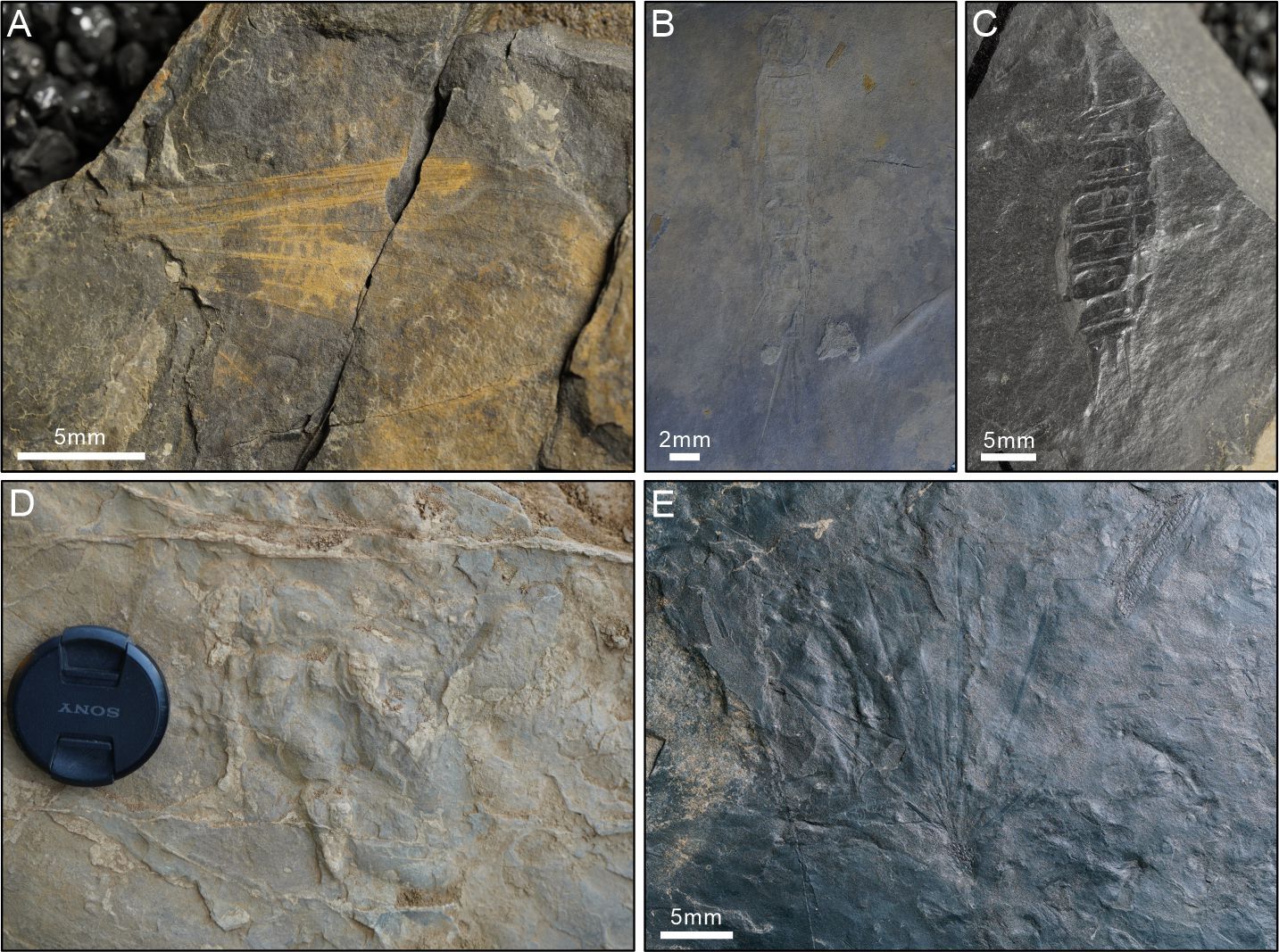
Recently, the PhD candidate SONG Siyu, supervised by Professor ZHENG Daran (Nanjing Institute of Geology and Palaeontology, Chinese Academy of Sciences), has preliminarily recovered the Early Cretaceous terrestrial biodiversity of the QOB based on fossils from the Fengjiashan (Shangxian Basin), Baiwan (Baiwan Basin), and Nanzhao formations (Mashiping Basin) collected in the QOB, and further discussed their palaeobiogeographical and palaeoecological implications. The results were published online in the journal Palaeogeography, Palaeoclimatology, Palaeoecology.As the control center of the modern ecosystem of China, the evolution of the Qinling Orogenic Belt (QOB) influenced the development of East Asian terrestrial ecosystems during the Late Mesozoic. The Early Cretaceous Jehol Biota, distributed along the Shangdan Suture Zone in the QOB, provides key clues for reconstructing the Early Cretaceous terrestrial ecosystems in central China, yet it has lacked research for nearly three decades.Recently, the PhD candidate SONG Siyu, supervised by Professor ZHENG Daran (Nanjing Institute of Geology and Palaeontology, Chinese Academy of Sciences), has preliminarily recovered the Early Cretaceous terrestrial biodiversity of the QOB based on fossils from the Fengjiashan (Shangxian Basin), Baiwan (Baiwan Basin), and Nanzhao formations (Mashiping Basin) collected in the QOB, and further discussed their palaeobiogeographical and palaeoecological implications. The results were published online in the journal Palaeogeography, Palaeoclimatology, Palaeoecology.This study reveals new fossils of dinosaur footprints, bivalves, clam shrimp, gastropods, insects, and megaplants, reconstructs the Jehol Biota in the QOB, and establishes a regional stratigraphic framework. Key findings include abundant invertebrate and plant fossils from the Shangxian Basin in Shaanxi Province, as well as the first report of the Early Cretaceous dinosaur footprint and angiosperm fossils from Henan Province. The invertebrate fossil assemblages include the bivalve Arguniella-Sphaerium assemblage, the clam shrimp Eosestheria-Diestheria assemblage, the gastropod Probaicalia vitimensis-Ptychostylus-Reesidella robusta assemblage, and the middle Jehol Entomofauna. These indicate that the Lower Cretaceous in the QOB could be correlated with the Yixian and Jiufotang formations in western Liaoning, and that the Jehol Biota reached the QOB during its middle evolutionary stage.Within the QOB, the Jehol Biota occur eastward in the Shangxian, Baiwan, and Mashiping basins along the Shangdan Suture Zone. The clam shrimp Eosestheria-Diestheria assemblage co‑occurs in the Shangxian and Baiwan basins, whereas the Jehol Entomofauna is present in all three basins. This distribution pattern suggests the existence of a potential paleo‑drainage system connecting basins in the QOB, which provided suitable palaeoecological conditions for biological flourishing and bridged the southward dispersal of the Jehol Biota in central China.This research was supported by the National Natural Science Foundation of China and the Strategic Priority Research Program (B) of the Chinese Academy of Sciences.Reference: Song, S., Zhang, X., Teng, X., Li, T., Yu, T., Li, J., Xue, Y., Liu, P., Fang, R., Zhao, X., Zheng, D.*, 2026. Early Cretaceous Jehol Biota in the Qinling Orogenic Belt: palaeobiogeographical and palaeoecological implications. Palaeogeography, Palaeoclimatology, Palaeoecology, 698, 113939. https://doi.org/10.1016/j.palaeo.2026.113939.Fig.1 Clam shrimp fossils from the Fengjiashan Formation of the Shangxian BasinFig.2 Insect and megaplant fossils from the Baiwan Formation of the Baiwan BasinFig.3 Dinosaur footprint, insect and megaplant fossils from the Nanzhao Formation of the Mashiping BasinFig.4 Regional correlation of the Lower Cretaceous in the Qinling Orogenetic Belt
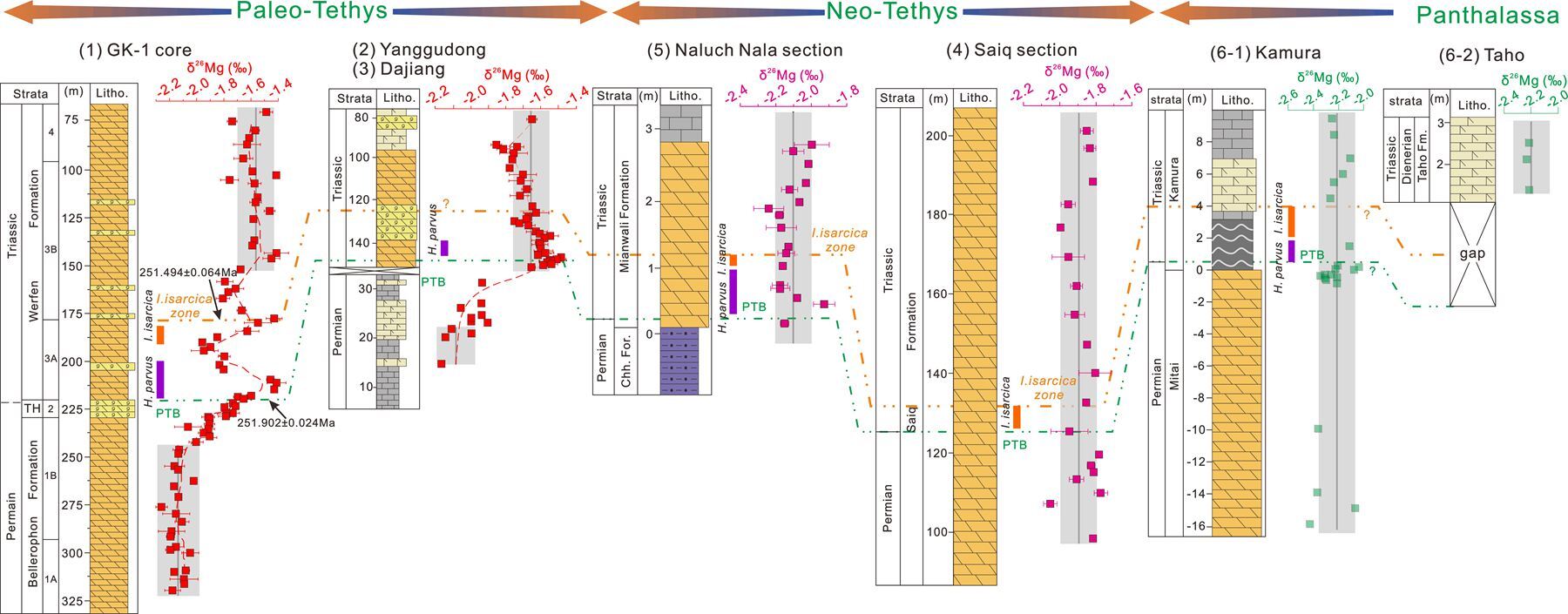
Recently, an international research team led by Professor ZHANG Hua of the Nanjing Institute of Geology and Palaeontology, Chinese Academy of Sciences (NIGPAS), published a study in Earth and Planetary Science Letters that employs magnesium isotopes (δ26Mg) as a novel tracer to constrain inter‑ocean connectivity during the P–Tr transition and its influence on ecosystem resilience. The first author is Associate Professor HU Zhongya of Tongji University, and the corresponding author is Professor ZHANG Hua.The Permian–Triassic (P–Tr) transition, approximately 252 million years ago, witnessed the most severe mass extinction event in Earth’s history, with more than 80% of marine species eliminated and ecosystems virtually collapsed. The crisis is widely attributed to large‑scale volcanic eruptions, including the Siberian Traps and acidic volcanism in the Tethyan realm, which injected massive CO2 and volatile substances into the atmosphere, triggering rapid global warming, ocean acidification, and intense carbon‑cycle perturbations. Rising temperatures further reduced oxygen solubility and enhanced water‑column stratification, weakening oceanic circulation and deep‑water ventilation, leading to widespread marine anoxia and even local euxinia.However, a long‑standing question remains: did the severity of this global catastrophe vary among ocean basins due to differences in circulation intensity and connectivity? This issue is critical for understanding the spatiotemporal patterns of the extinction and the subsequent biotic recovery.Recently, an international research team led by Professor ZHANG Hua of the Nanjing Institute of Geology and Palaeontology, Chinese Academy of Sciences (NIGPAS), published a study in Earth and Planetary Science Letters that employs magnesium isotopes (δ26Mg) as a novel tracer to constrain inter‑ocean connectivity during the P–Tr transition and its influence on ecosystem resilience. The first author is Associate Professor HU Zhongya of Tongji University, and the corresponding author is Professor ZHANG Hua.Magnesium is a major constituent of seawater, second only to sodium, and has a long residence time of approximately 13 million years in the modern ocean. This vast marine Mg reservoir imparts a strong geochemical “inertia” to the open ocean – even under global environmental perturbations, the Mg isotope composition of the open ocean remains remarkably stable. In contrast, published records show that short‑term (<1 Myr) significant variations in seawater δ26Mg are almost exclusively associated with restricted basins. Therefore, Mg isotopes have recently emerged as a powerful proxy for identifying transient basin restriction.During the P–Tr transition, the marine Mg cycle was highly dynamic, influenced by enhanced continental weathering, widespread dolomitization, and reverse weathering. These processes are all accompanied by significant Mg isotope fractionation, providing a theoretical basis for using δ26Mg to trace paleo‑ocean connectivity.The research team systematically analysed Mg isotopes from three major paleo‑oceans – the Paleo‑Tethys, Neo‑Tethys, and Panthalassa. Sampling sections included the Saiq section in Oman and the Naluch Nala section in the Salt Range of Pakistan (Neo‑Tethys), as well as the Kamura and Taho sections in Japan (Panthalassa). All sections preserve complete P–Tr successions with well‑constrained conodont biostratigraphy and carbon isotope correlations.The results reveal a fundamental divergence: seawater δ26Mg remained stable (−0.4‰ to −0.3‰) in the Neo‑Tethys and Panthalassa across the P–Tr transition, whereas it increased by more than 0.5‰ in the Paleo‑Tethys. Previous work by the same group (Hu et al., 2021) demonstrated that the pronounced δ26Mg rise in the Paleo‑Tethys reflects intensified dolomitization under global warming – light 24Mg was preferentially incorporated into dolomite, enriching the residual seawater in heavy 26Mg.This stark inter‑basin contrast indicates that different ocean basins responded in fundamentally different ways to the same global climate perturbation. The Neo‑Tethys maintained effective water exchange with the Panthalassa, and its seawater chemistry was buffered by the vast Panthalassa reservoir. In contrast, the Paleo‑Tethys was relatively restricted, so the local dolomitization signal was amplified and clearly recorded in its Mg isotope composition.To further quantify the buffering capacity of different basins, the team constructed a box model coupling the Mg cycle and water exchange. The model integrates Mg fluxes from riverine input, dolomitization, high‑temperature and low‑temperature alteration, and incorporates inter‑basin exchange parameters.Simulations show that the residence time of Mg in seawater is the key parameter controlling the amplitude of δ26Mg variation. At Early Triassic seawater Mg concentrations of 10–50 mmol/kg, the residence time is estimated at 2–10 Myr. For a shorter residence time (~2 Myr), a roughly three‑fold reduction in exchange is sufficient to produce the observed isotope shift; for a longer residence time (~5 Myr), nearly two orders of magnitude of restriction are required to generate a similar change.More importantly, the model quantitatively evaluates the buffering capacities of the different basins. In the relatively restricted Paleo‑Tethys, enhanced dolomitization over ~0.75 Myr consumed ~3.15 × 10¹⁸ mol of Mg, depleting the basin’s Mg reservoir by ~20%. In contrast, imposing the same relative increase in dolomitization flux on the vast Panthalassa/Neo‑Tethys system would result in a depletion of <5%, producing a δ26Mg change of <0.1‰ – consistent with the observed stability. These results demonstrate that the open ocean’s large Mg reservoir provides strong chemical buffering, whereas restricted basins are highly sensitive to environmental perturbations.Stable seawater chemistry is crucial for the survival and recovery of marine organisms. Palaeoecological evidence indicates that shallow‑water carbonate platforms in the Neo‑Tethys maintained well‑oxygenated conditions after the extinction, hosting diverse benthic assemblages dominated by crinoids, bivalves, gastropods, brachiopods, and ostracods. These communities suggest that the Neo‑Tethys, being effectively connected to the Panthalassa, provided a relatively stable chemical environment that served as a refugium for surviving taxa.In contrast, the restricted setting of the Paleo‑Tethys amplified multiple environmental stresses: enhanced dolomitization consumed alkalinity, potentially accelerating local ocean acidification; limited circulation further exacerbated anoxia; and elevated nutrient inputs from continental weathering accumulated in the semi‑closed basin, promoting eutrophication and widespread oxygen deficiency. The occurrence of pyrite in shallow‑water carbonates supports persistent suboxic to anoxic conditions in the Paleo‑Tethys.This study provides the first inter‑basin geochemical evidence for oceanic differentiation during the P–Tr transition, revealing that the marine system did not respond homogeneously to the global crisis but instead exhibited a fundamental structural divergence. The findings deepen our understanding of the recovery mechanisms following the largest mass extinction in Earth’s history and introduce a new isotopic tool for paleo‑oceanographic circulation reconstruction.This work was supported by the National Natural Science Foundation of China and the China Scholarship Council.Reference: Zhongya Hu, Weiqiang Li, Robert J. Newton, Sylvain Richoz, Yasufumi Iryu, Satoshi Takahashi, Takumi Maekawa, Zhiguang Xia, Shouye Yang, Shu‑Zhong Shen, Hua Zhang*. 2026. Magnesium isotopes constrain connectivity and environmental resilience among ocean basins during the Early Triassic. Earth and Planetary Science Letters 690: 120191. https://doi.org/10.1016/j.epsl.2026.120191.Fig.1 Comparison of δ²⁶Mg variations in typical dolomite sections from the Paleo‑Tethys, Neo‑Tethys and Panthalassa oceansFig.2 (A–C) Geochemical variations during the P–Tr transition (from literature); (D) Reconstructed seawater δ²⁶Mg from dolomite records (this study); (E–G) Element and isotope mass‑balance modeling testing the buffering capacity of Panthalassa vs. Paleo‑Tethys